Austrian Veganderlust contains affiliate links and is a member of the Amazon Services LLC Associates Program. If you make a purchase using one of these Amazon links, I may receive compensation at no extra cost to you. For more info, see the Disclosure Policy.
Central Cemetery in Vienna: A Complete Visitor’s Guide
I lived in Vienna for ten months before I finally made it to the Central Cemetery and honestly, I had no idea a cemetery could be that beautiful.
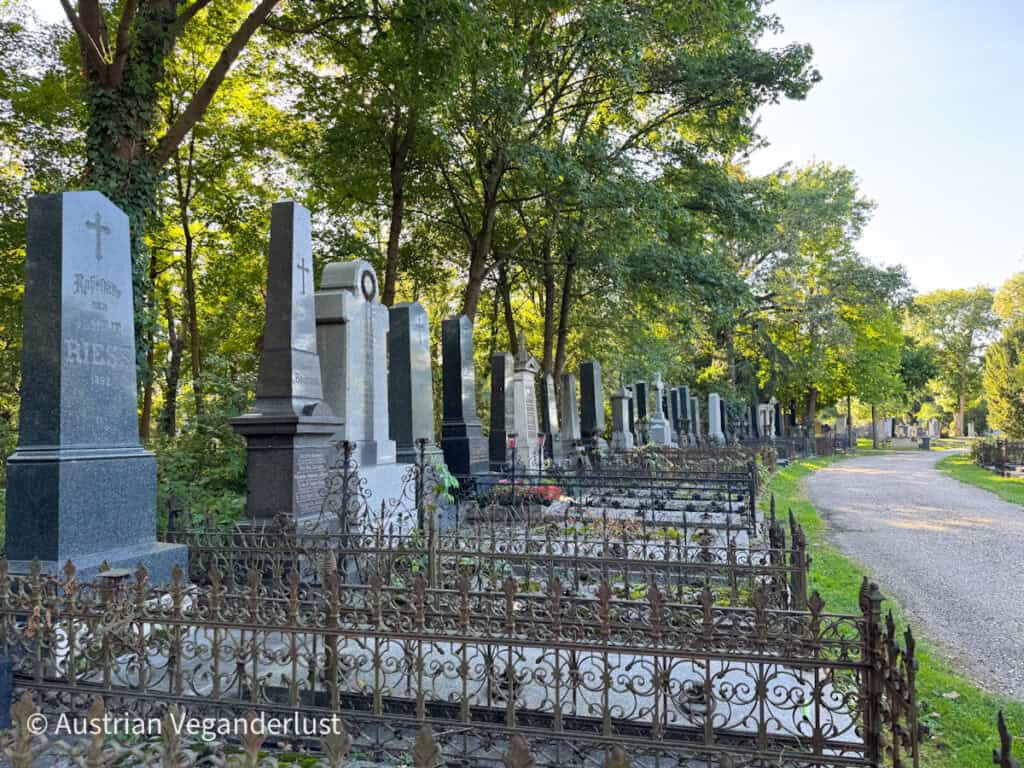
What surprised me most was the atmosphere: peaceful, green, and full of life. Wildlife photographers trying to catch a perfect shot, locals enjoying a quiet afternoon stroll or jog, cyclists going past me. It feels more like a park than a burial ground.
But the cemetery is huge, really huge (it is the second-largest cemetery in Europe), and I felt overwhelmed on my first visit. That’s why I put together this guide, to help you make the most of your visit.
Whether you’re drawn to the famous graves (like Beethoven or Falco), curious about the unique sections like the Buddhist or pet cemeteries, or just looking for a quiet walk far from Vienna’s tourist crowds, this guide will help you plan your visit.
What Makes the Central Cemetery in Vienna Special
Here’s what makes the Wiener Zentralfriedhof truly stand out, and why it’s more than just the final resting place for over 3 million people:
- It’s one of the largest cemeteries in Europe, covering 2.4 km² (590 acres)
- You’ll find graves and memorials of many famous Austrians
- The cemetery includes unique sections, like a forest cemetery, a Buddhist cemetery, and even a pet cemetery
- Wildlife is everywhere, deer, squirrels, and all kinds of birds (you’ll often see wildlife photographers with long lenses)
- Locals use it almost like a park, for example there are designated jogging routes, advertised as Silent Run
- You can rent bikes at the gate to explore more of the grounds at your own pace
It’s a peaceful mix of history, nature, and everyday Viennese life, and it’s unlike any cemetery I’ve ever visited.
How to Get Around the Cemetery
The Central Cemetery is massive, and it’s easy to underestimate just how much ground there is to cover. Luckily, there are a few different ways to get around, depending on how much time and energy you have.
Walk
You can definitely explore on foot, but be prepared: you’ll likely cover several kilometres. The main paths are wide and well-maintained. That said, it’s easy to get turned around, so it’s worth having a map handy (or downloading the app).
Rent a Bike
At the main entrance (Tor 2), you can rent e-bikes to explore more comfortably. It’s a great option if you want to see a lot without spending hours walking. Just keep in mind that cycling is only allowed on marked paths.
Take the Cemetery Bus
Yes, there’s a dedicated bus line that runs through the cemetery. It’s Line 11, and it stops at the most important sections. You can buy tickets directly from the driver or use your regular Vienna transit pass.
Jogging (Silent Run)
Jogging in a cemetery might sound odd, but it’s actually encouraged here. The Silent Run initiative promotes jogging through marked routes in a respectful and mindful way. It’s especially popular with locals who live nearby.
What to See at the Central Cemetery
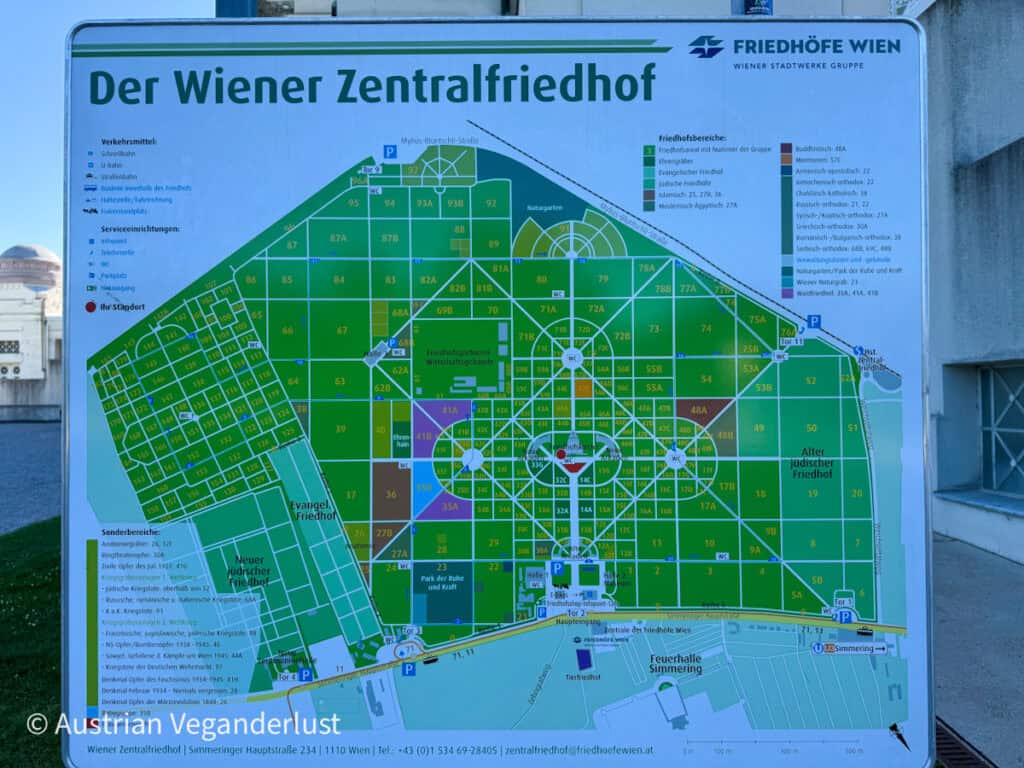
The Central Cemetery is so big that it’s divided into numbered sections. You’ll see signs with section numbers throughout the grounds, which makes it easy to orient yourself, if you know what you’re looking for.
At the entrance, there’s a big map showing all the sections. I recommend taking a photo of it before you head in. Alternatively, you can download the cemetery’s official app, which includes GPS-based orientation (note: the app isn’t free).
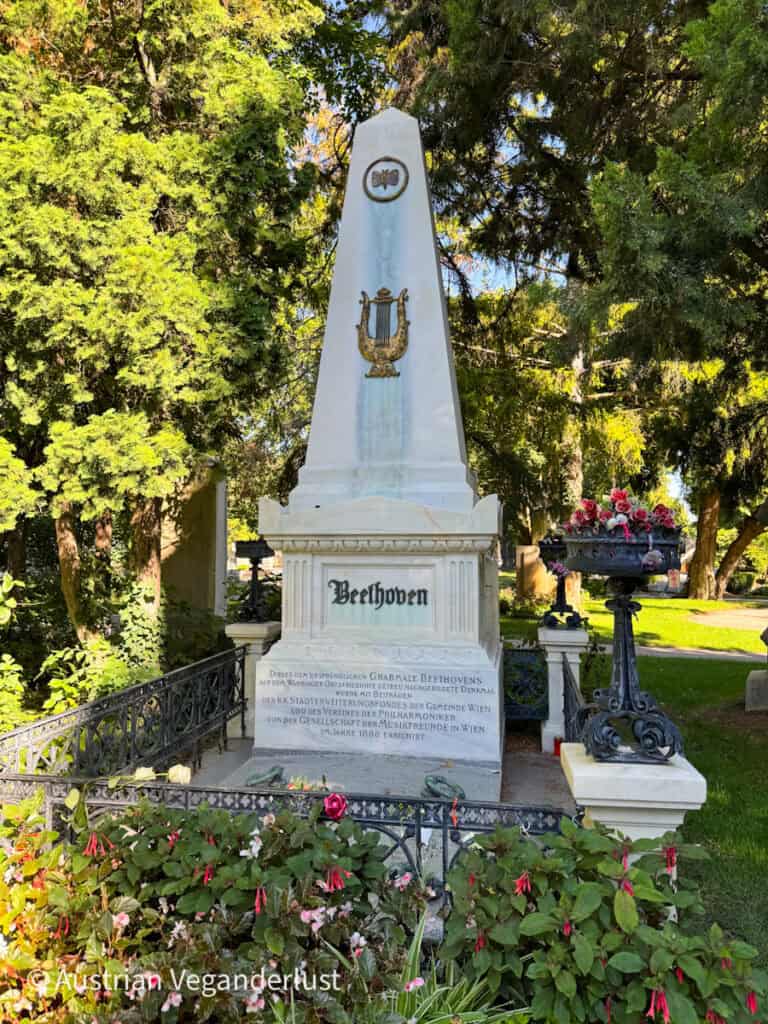
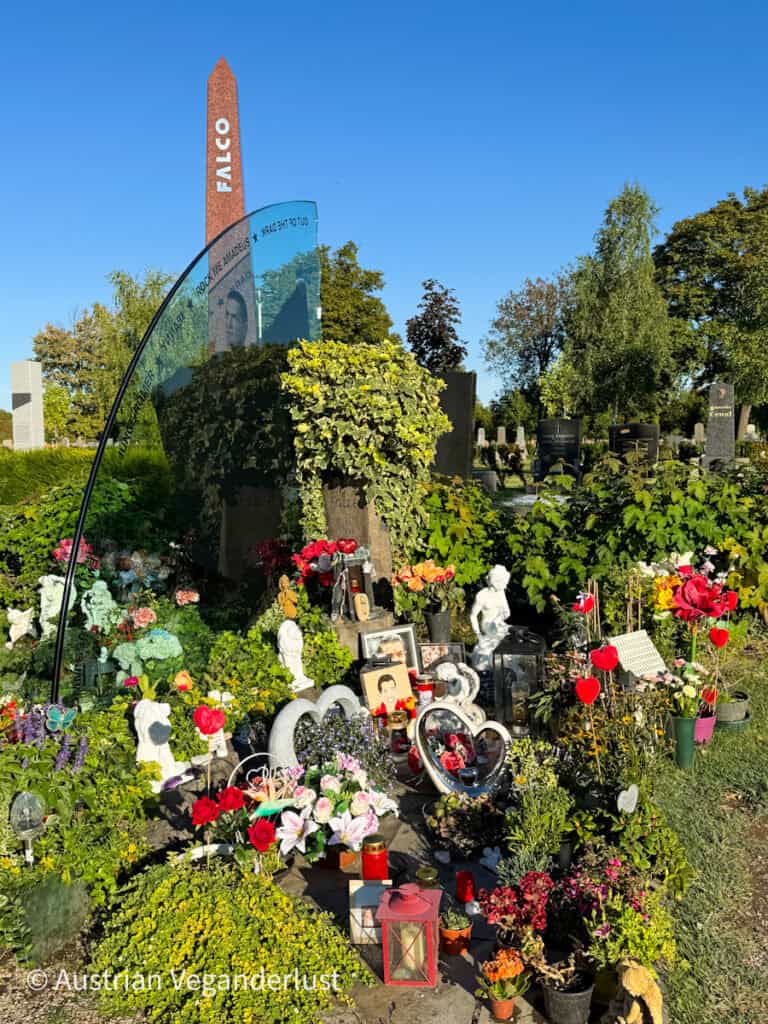
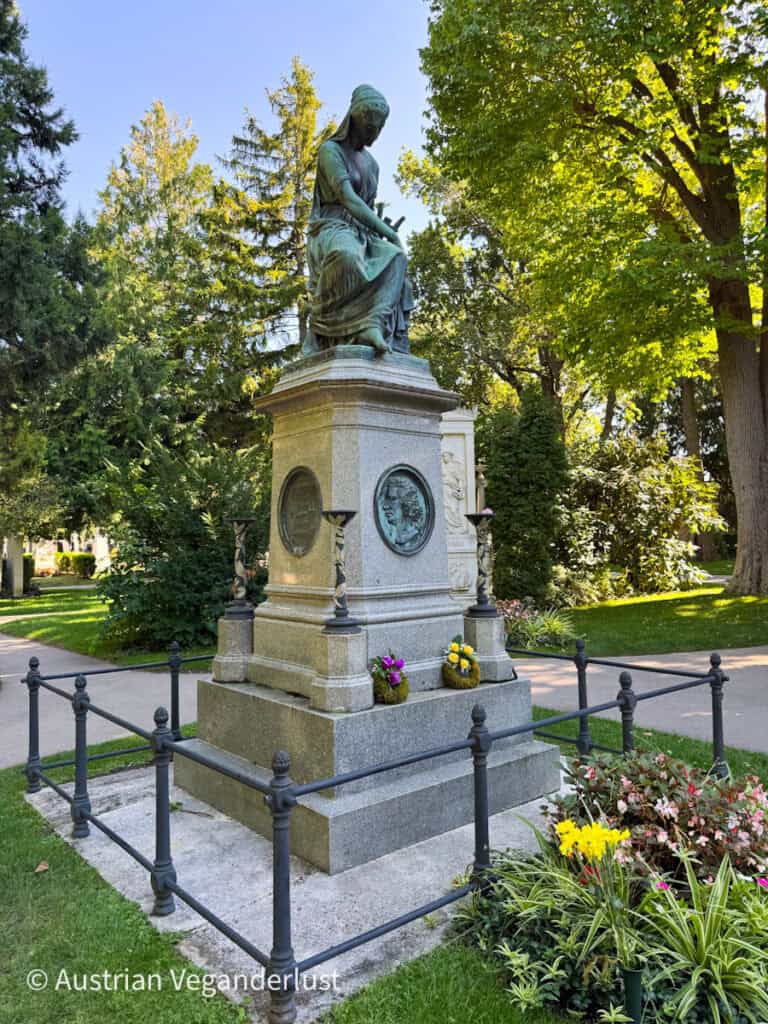
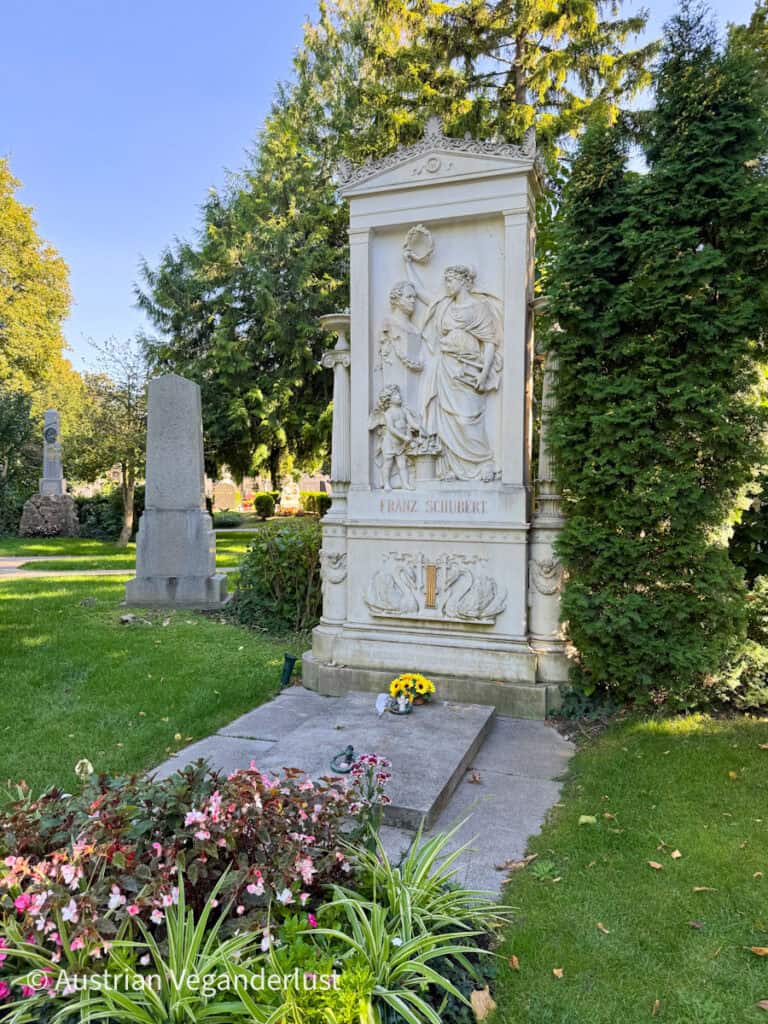

Famous Graves in the Central Cemetery
Many of Austria’s most iconic cultural figures are buried, or honoured, here. Most of them are located in Group 32A:
- Johann Strauss II: Composer of the Blue Danube (which is played every New Year’s Eve at midnight in Austria) and known as the “Waltz King”. (Group 32A)
- Wolfgang Amadeus Mozart: Musical genius of the classical era. His memorial here is a cenotaph, as his true burial site is at the St Marx cemetery. (Group 32A)
- Johannes Brahms: One of the most influential German composers of the 19. century. (Group 32A)
- Franz Schubert: Austrian composer, left behind a very big oeuvre, even though he died young with just 31 year. (Group 32A)
- Ludwig van Beethoven: Legendary German composer known for his symphonies, who lived most of his life in Vienna. (Group 32A)
- Falco: Iconic Austrian pop star best known for Rock Me Amadeus. (Group Ehrenhain, next to 40)
- Udo Jürgens: Beloved singer-songwriter with a piano-shaped tomb that’s become a bit of a modern landmark. (Group 33G)
- Arnold Schönberg: Pioneering composer who revolutionized modern music with his development of the twelve-tone technique. (Group 32C)
Unique Cemetery Sections
The Central Cemetery has countless areas, but these are some of the most remarkable ones:
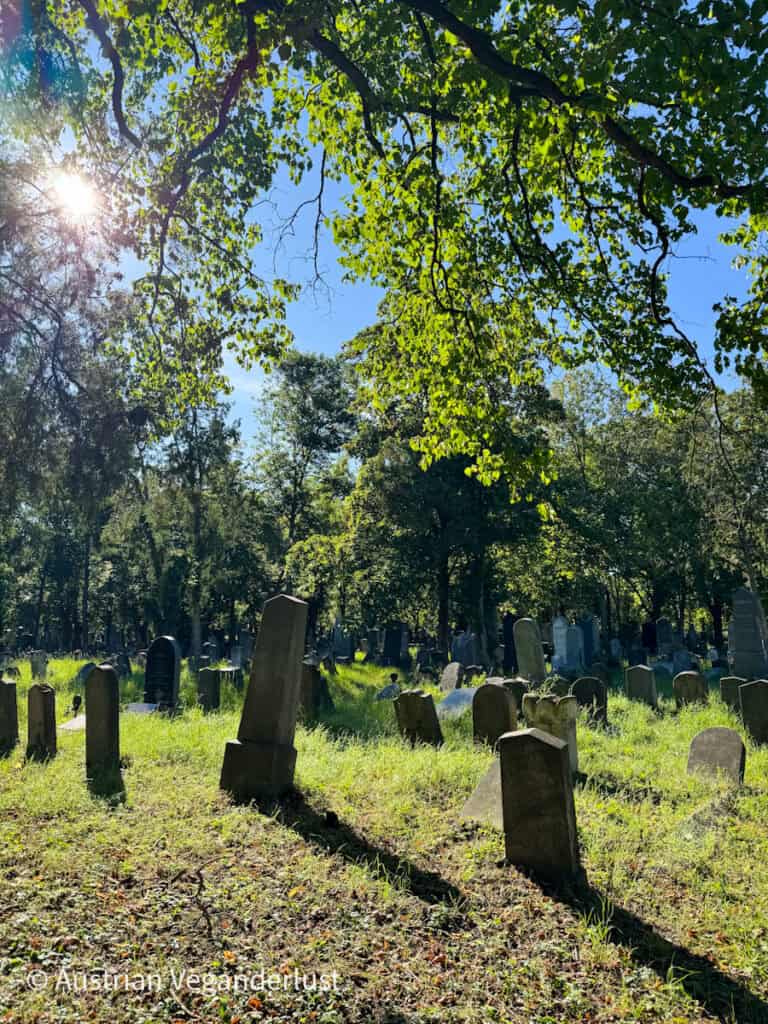
Old Jewish Cemetery (Groups 5B, 6, 7, 8, 19, 20, 49, 50, 51, 52, 52A, 53B)
Dating back to the 19th century, this Jewish section is atmospheric and historic, with ivy-covered stones and a sense of quiet decay.
Many graves are no longer maintained, giving it a haunting beauty.
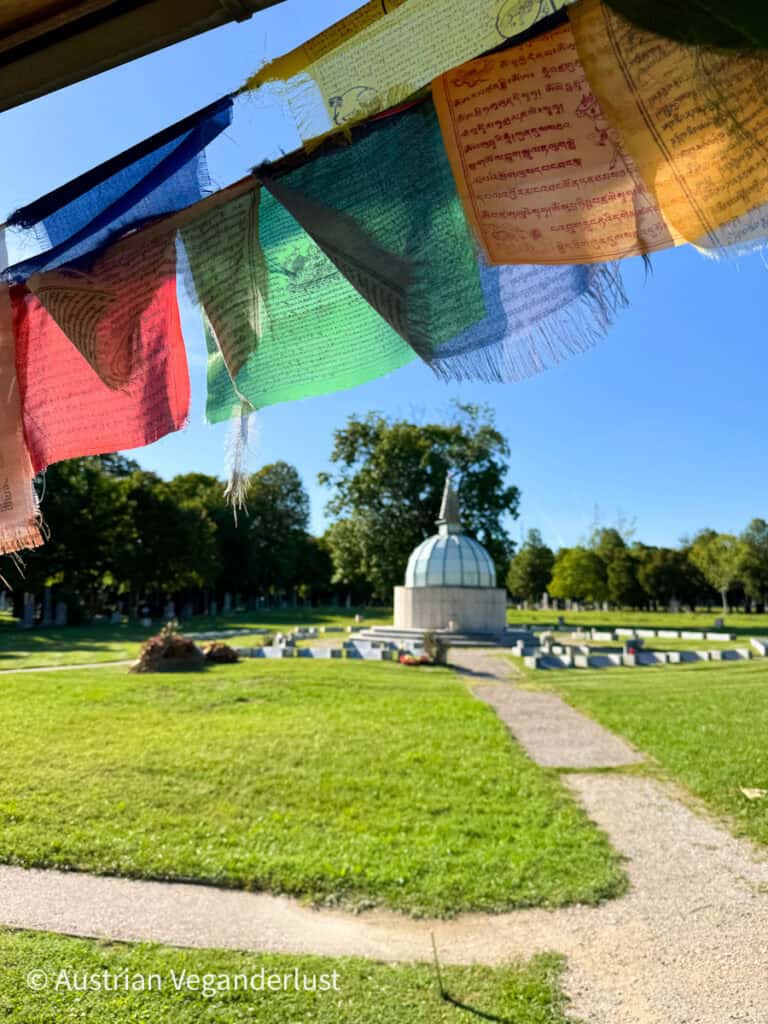
Buddhist Cemetery (Group 48A)
Opened in 2005, this was the first Buddhist cemetery in Europe.
It’s a small but very peaceful spot, reflecting Buddhist traditions of remembrance in form of the Noble Eightfold Path.

Mormon Cemetery (Group 57C)
A reminder of Vienna’s small Mormon community.
The gravestones themselves are not that special but the Mormon sculpture in the middle is very interesting.
And if like me you’ve never seen a Mormon cemetery before, it’s worth a quick stop.
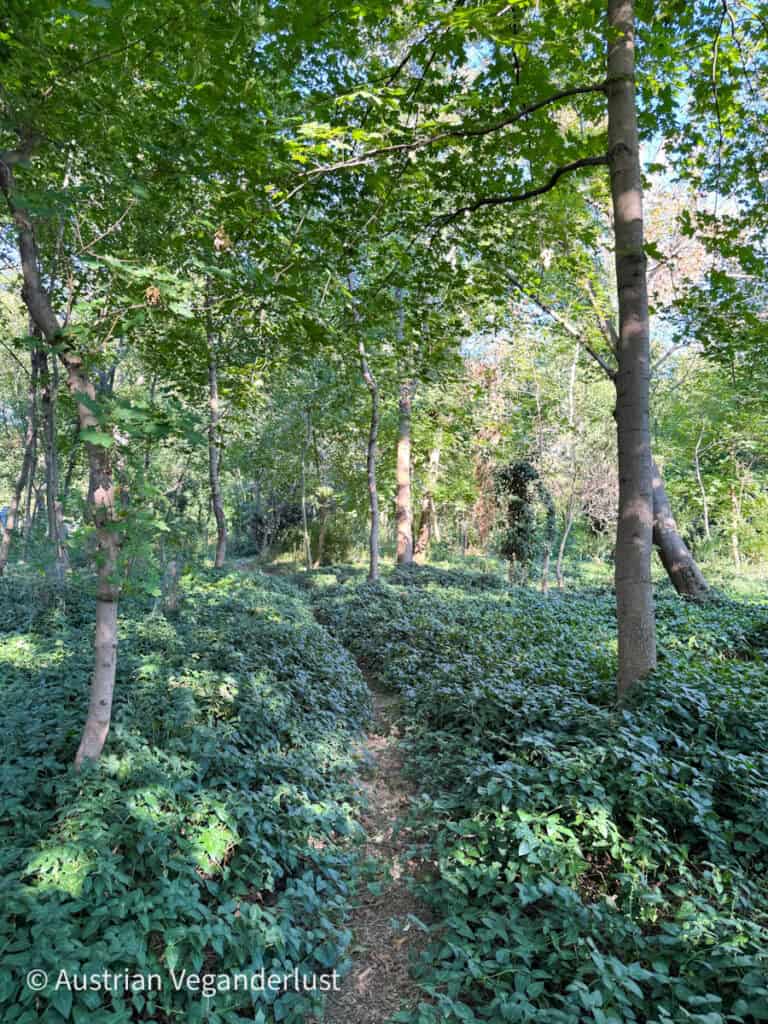
Forest Cemetery (Group 35A, 41A, 41B)
This natural burial site is a very unique place. When I walked through, it felt like a small forest, not a cemetery at all, only the small plaques on trees hint that there’s more to it.
Biodegradable urns are buried next to trees. To preserve the natural look, candles and flowers are only allowed at a dedicated spot.
Nature Graves (Group 23)
This is another very modern and environmentally conscious area in the cemetery. It’s right next to the park, it it still feels like a park. This natural area the only cemetery area of its kind in Europe.
Here, burials are allowed in biodegradable coffins and urns.

Honour Graves (Group 32A, 32C, 33G, 14A, 14C, Ehrenhain)
Known as Ehrengräber, these sections are reserved for Austria’s most celebrated figures in music, culture, politics, and science.

Anatomiegräber (Group 26)
This section is dedicated to those who donated their bodies to science. It’s simple but deeply meaningful place, where their loved ones can still remember them.

Ringtheater Fire Victims (Group 30A)
A mass grave for the 384 victims of the Ringtheater fire in 1881, one of Vienna’s worst disasters. A stark and moving memorial.

Präsidentengruft (No number, right in front of the church)
This is the crypt for Austria’s federal presidents, where several heads of state are buried.
Babygruppe (Group 35B)
A deeply emotional section dedicated to stillborn babies. Many graves are lovingly decorated with toys, flowers, and small memorials. It can be very moving, and might be worth skipping if this is a sensitive topic for you.
Pet Cemetery

Just opposite Gate 2, down a small side road, you’ll find the Pet Cemetery (Tierfriedhof). It’s easy to miss since it’s technically outside the main cemetery grounds, but it’s absolutely worth a stop.
This was the first pet cemetery I had ever visited, and it felt surprisingly moving and unique. You’ll see gravestones for mostly cats and dogs, all lovingly decorated. Some are very simple, others have photos, figurines, or heartfelt messages.
Park der Ruhe und Kraft


Translated as the Park of Rest and Strength, this section feels more like a serene park than a cemetery. When I visited, I saw a couple relaxing on a bench and a wildlife photographer quietly focused on a little mouse.
The park features elements like a stone circle, a fountain ornament, and other designs elements meant to promote energy, calm, and strength. It’s a peaceful place to pause and simply enjoy the atmosphere.
Cemetery Church of St. Charles Borromeo

A beautiful art nouveau church in the centre of the grounds. You can step inside for free, it’s worth it just for the architecture alone.
There’s also a crypt you can visit but I found it a bit underwhelming, there’s not that much to see. The main church is way more interesting.
Funeral Museum Vienna
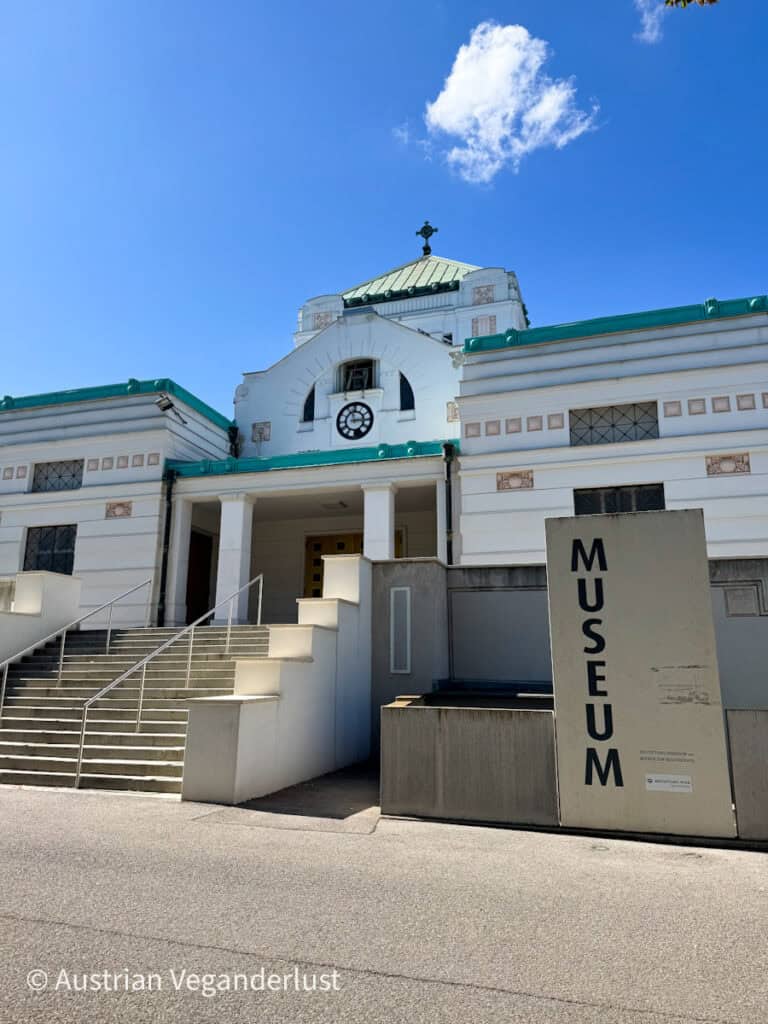

I visited out of curiosity, but to be honest, I wouldn’t recommend it unless you’re really interested in funeral customs. It’s small, and parts of it felt more like an ad for companies that turn ashes into jewellery.
Kurkonditorei Oberlaa
Yes, there’s a café inside the cemetery. It’s a branch of the beloved Vienna chain known for cakes and pastries. They even have some vegan options.
Souvenir Shops & Dark Humour
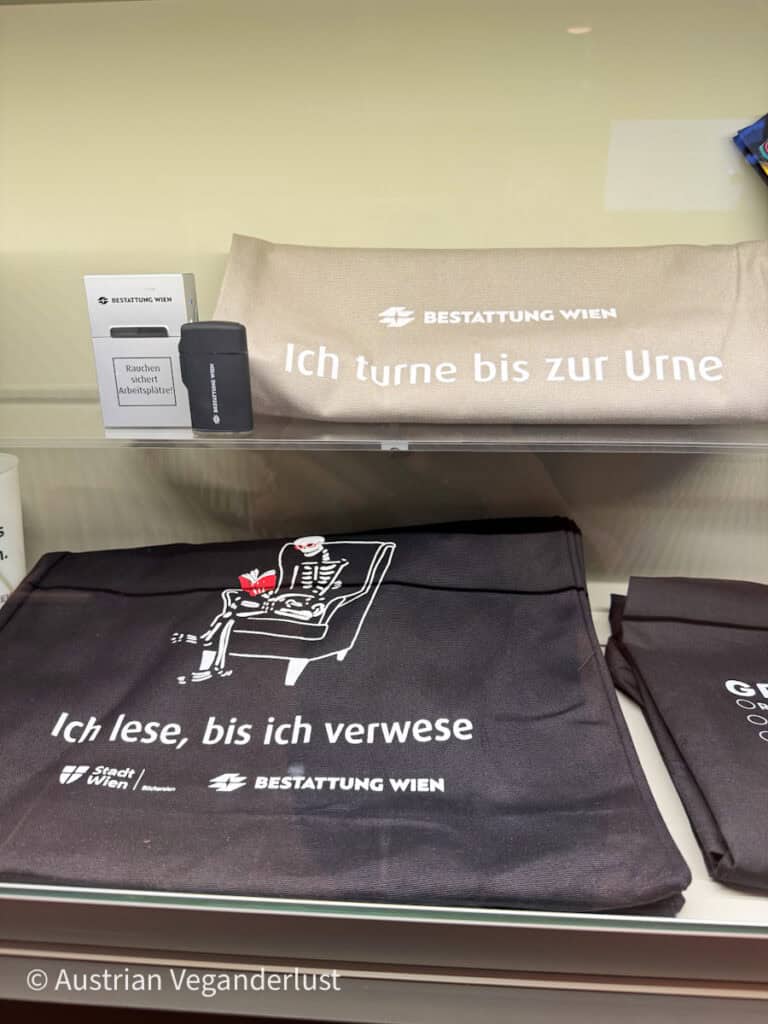
Before you leave, check out the souvenir shop near Gate 2 or the one inside the Funeral Museum. Austrians love a bit of dark humour, and it really shows in the items on display.
You’ll find everything from “death buns” with sayings like Ich lese, bis ich verwese (I read until I decompose), which doesn’t quite work in English, to custom funeral-themed LEGO sets. It’s weird, it’s morbid, and it’s very, very Viennese.
Tips for Visiting the Cemetery
- Respect the atmosphere: The Zentralfriedhof is still an active cemetery, where families visit their deceased loved ones. Please keep your voice down, move respectfully, and avoid treating it like just another tourist attraction.
- Take a map photo at the entrance: The overview board near the gates shows all the numbered sections. Snap a picture before you head in.
- Download the app (optional): The official app has GPS orientation, which can be helpful if you want to find specific graves. Just keep in mind it isn’t free.
- Wear comfortable shoes: Even if you only plan a short visit, you’ll end up walking a lot more than expected.
- Plan your route: Decide what you want to see (famous graves, unique sections, or just a peaceful walk). Otherwise, it’s easy to lose track of time.
- Bring water: Especially if you’re visiting in summer. The only options to buy a drink are at Kurkonditorei Oberlaa café and a vending machine near Gate 2.
- Timing: Early morning or late afternoon are the most peaceful times. Autumn is particularly beautiful with the colourful leaves. On 1 and 2 November (All Saints’ and All Souls’ Day), many Austrians visit the cemetery to remember their loved ones, leaving thousands of candles on graves.
- Insect repellent: When I visited in early September in the evening, I was covered in mosquito bites afterwards.
⚠️ Sensitive Content: Some sections, like the Babygruppe, can be very emotional. If this might be difficult for you, you may want to skip them.

Guided Tour Options
If you’d like a bit more structure to your visit, here are some ways to explore:
Guided Tour with a Local Guide
Several companies offer walking tours of the cemetery, often focusing on the famous graves, the architecture, and Vienna’s unique funeral traditions.
Going with a guide can save you a lot of time wandering and adds fascinating stories you might otherwise miss.
☠️ Book your guided cemetery visit here
Self-Guided Tour with an Audioguide
You can rent an audioguide at the entrance or download the official Hearonymus Cemetery app, which offers GPS-based orientation and information about key sites. The app is convenient, but keep in mind it isn’t free.


Why You Should Visit a Cemetery in Vienna
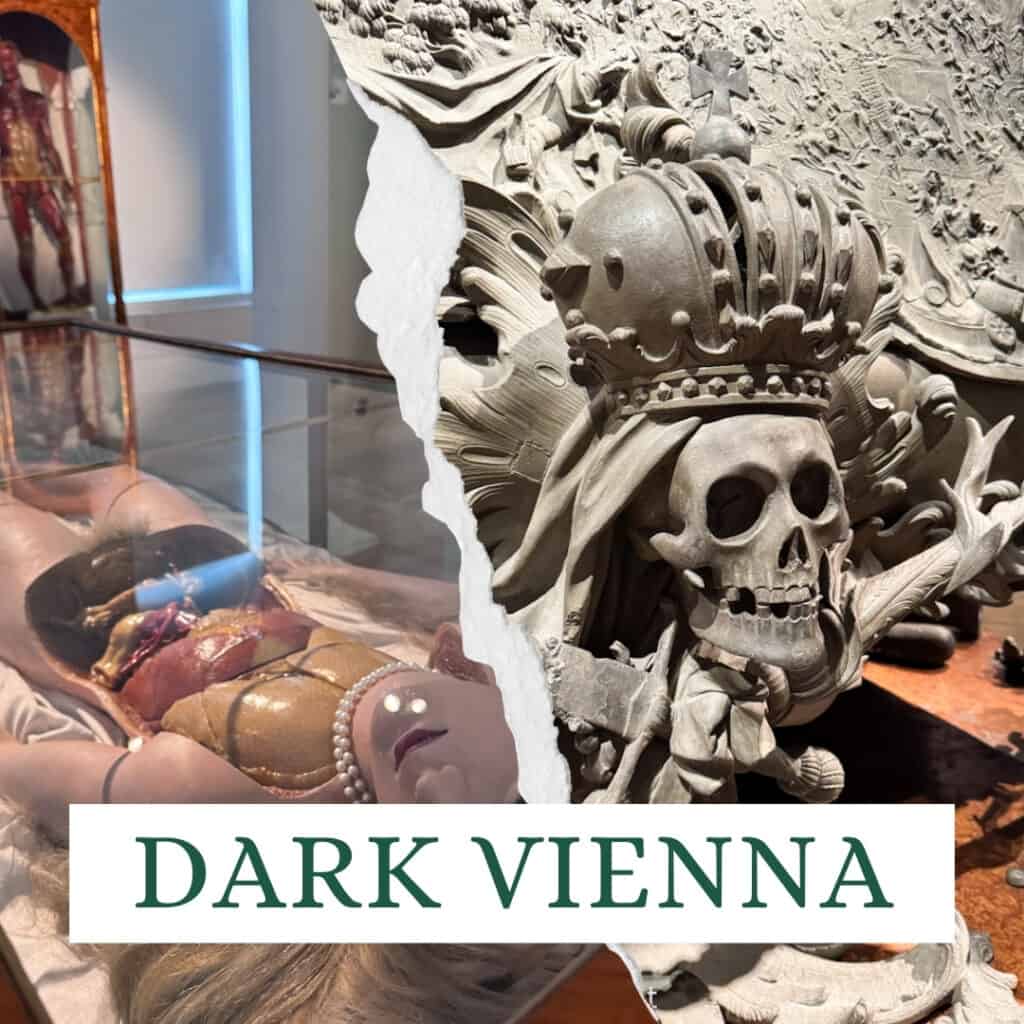
Exploring Vienna’s cemeteries may sound unusual, but they reveal a lot about the city’s character, its history, traditions, and even its (dark) humour.
The Central Cemetery is the most famous, but it’s only the beginning if you’re curious to see Vienna from a quieter, more reflective angle. Two other cemeteries that stand out are:
- Cemetery of the Nameless: A hauntingly small cemetery on the banks of the Danube, dedicated to unidentified bodies washed ashore in the 19th and early 20th centuries. It’s remote and somber, but also deeply moving.
- St. Marx Cemetery: Best known as the original resting place of Mozart, this cemetery is no longer in use but has a romantic, overgrown charm.
Read more about Vienna:
- 11 Absolute Best Things to Do in Vienna from a Local
- Where to Stay in Vienna: Best Areas & Hotels from a Local
- 7 Stunning Palaces in Vienna You Shouldn’t Miss
- Ultimate Guide to Schönbrunn Palace and Gardens in Vienna
- Hofburg Palace in Vienna: What to See & Ticket Comparison
- Sisi in Vienna: 10 Fascinating Places Linked to the Empress
- 13 Unbelievable Free Things to Do in Vienna from a Local
- Unique Things to Do in Vienna You Won’t Find Anywhere Else
- 33 Best Museums in Vienna Sorted by Category
- Free Museums in Vienna: Always Free & Special Free Days
- 13 Top Day Trips from Vienna You Can Do by Train
Pin it for later: