
Austrian Veganderlust contains affiliate links and is a member of the Amazon Services LLC Associates Program. If you make a purchase using one of these Amazon links, I may receive compensation at no extra cost to you. For more info, see the Disclosure Policy.
St. Marx Cemetery in Vienna: A Peaceful Hidden Gem
Most people visit the St. Marx Cemetery in Vienna because it’s where Mozart was buried in 1791. But to be honest, the Mozart memorial was one of the least exciting parts of my visit.
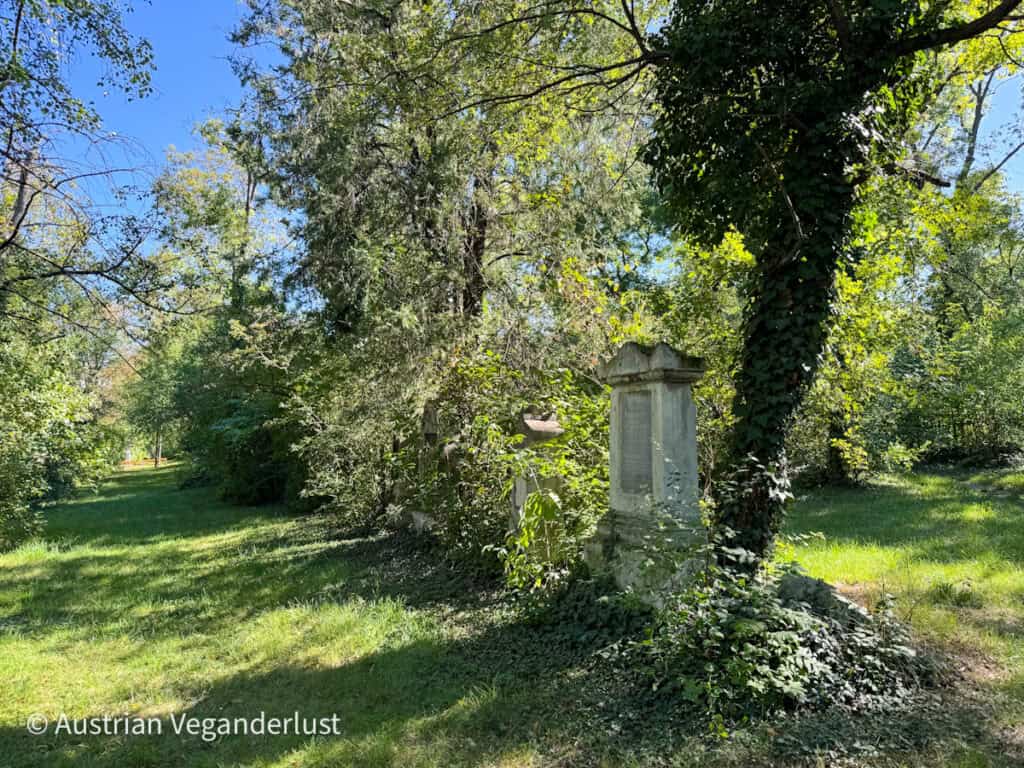
What really makes this cemetery special is its atmosphere. Unlike the grand Central Cemetery, St. Marx feels wild and forgotten, crumbling gravestones covered in ivy, moss taking over the stone walls, and nature quietly reclaiming the space.
It’s the last remaining Biedermeier cemetery in Vienna, and walking through it feels like stepping back in time.
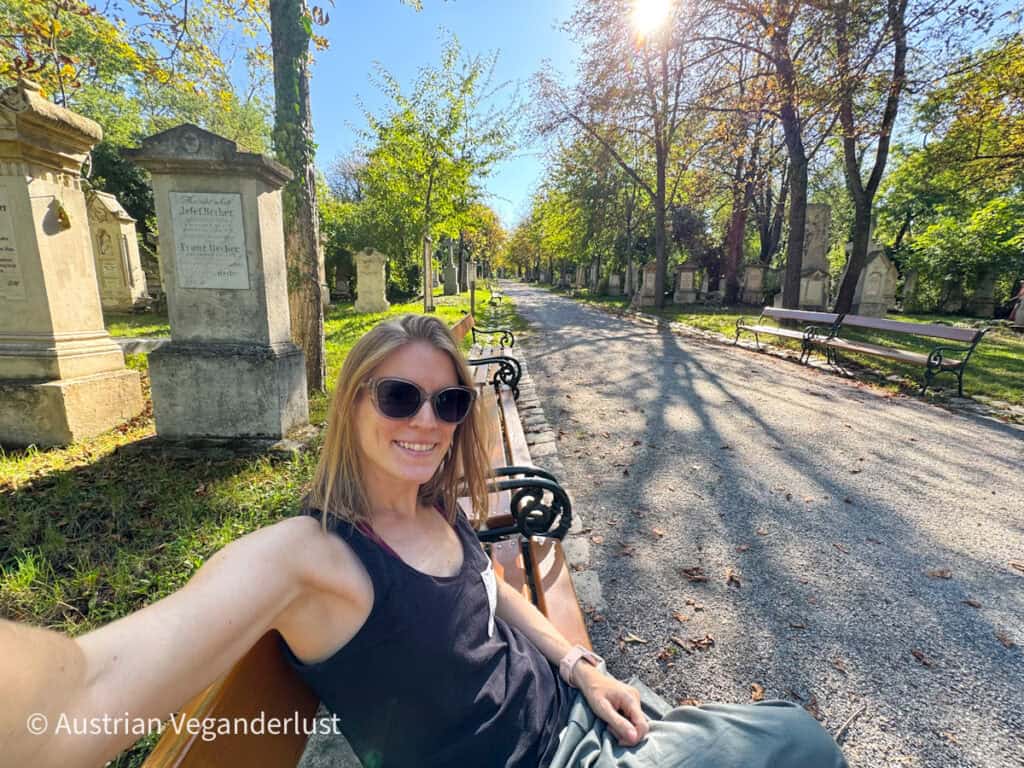
I loved simply strolling through the paths, listening to the rustling leaves, and taking in the mystical, slightly overgrown charm. St. Marx may not be about famous names, but it’s one of Vienna’s most peaceful hidden gems.
History of St. Marx Cemetery
The St. Marx Cemetery was opened in 1784 as part of Emperor Joseph II’s reforms, which banned inner-city burials for sanitary reasons. It soon became too small and was closed in 1874, when the Vienna Central Cemetery opened.
Today, it is the last remaining Biedermeier cemetery in Vienna, preserved as a cultural monument. The term Biedermeier refers to the period between 1815 and 1848 in Central Europe, known for its simple style and focus on middle-class life.
And just to clear up a common misconception: St. Marx has nothing to do with Karl Marx. The name actually comes from St. Markus or Mark the Evangelist, the patron saint of this parish.
Since no burials have taken place here for well over a century, nature has slowly reclaimed the grounds. That’s exactly what gives St. Marx its unique atmosphere today: a quiet, overgrown place where history and nature blend seamlessly.
Mozart’s Grave at St. Marx Cemetery
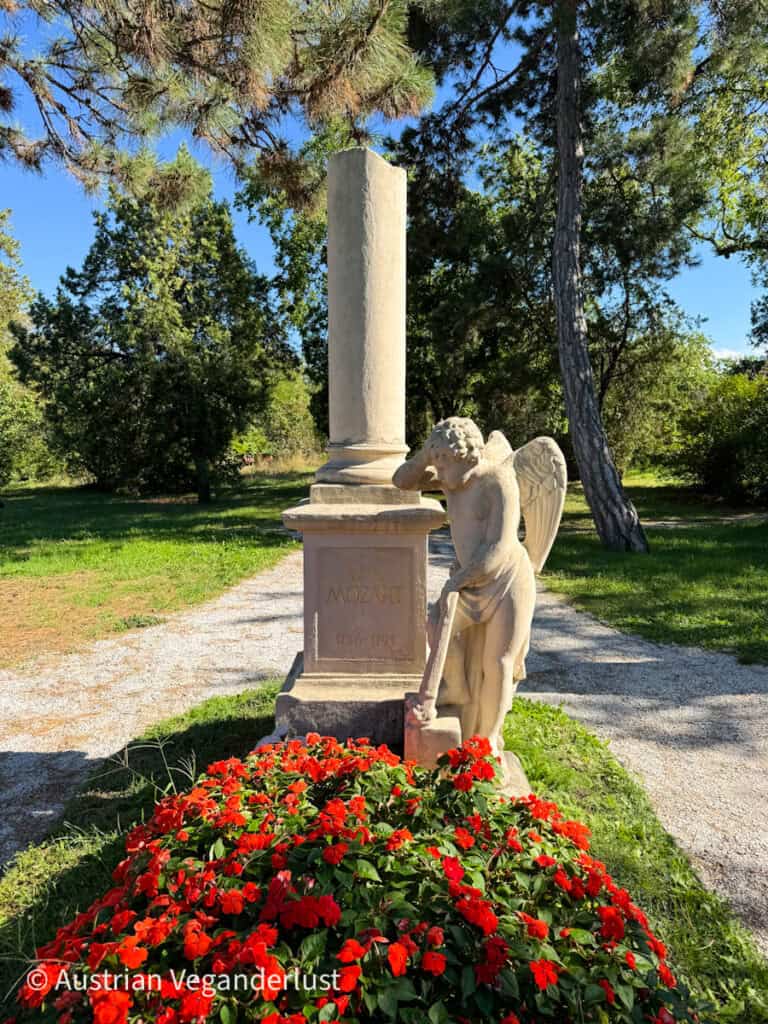
Wolfgang Amadeus Mozart was buried at St. Marx Cemetery in December 1791 in a common grave, as was the custom of the time. His exact burial spot was never recorded, and nobody knows for certain where he rests.
The original monument that once stood here was moved to the Central Cemetery, where Mozart now has a symbolic tomb. At St. Marx, you’ll instead find a newer memorial stone in the area where historians suspect he may have been buried.
To be honest, I found this memorial to be one of the least exciting parts of the cemetery. It’s historically significant, of course, but the real magic of St. Marx lies in the quiet, overgrown atmosphere of the grounds themselves.

Why Visit St. Marx Cemetery
If you love the atmosphere of overgrown cemeteries, St. Marx is a must-visit. This isn’t a place to come for famous names, apart from Mozart, most of the graves belong to people you’ve probably never heard of.
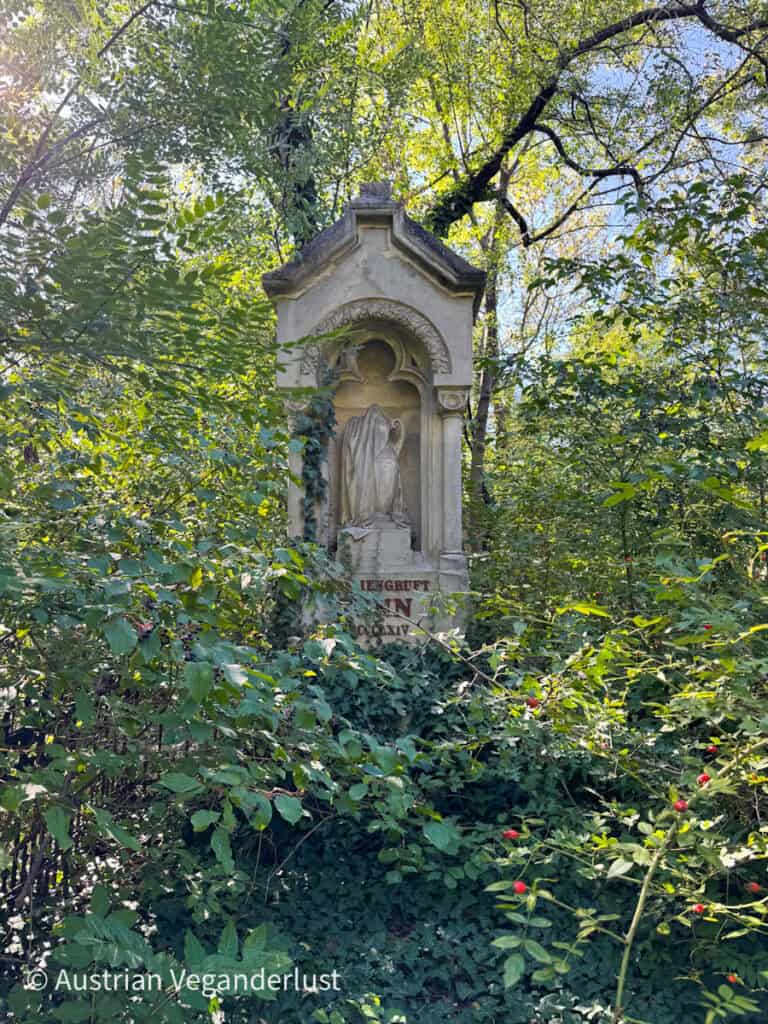
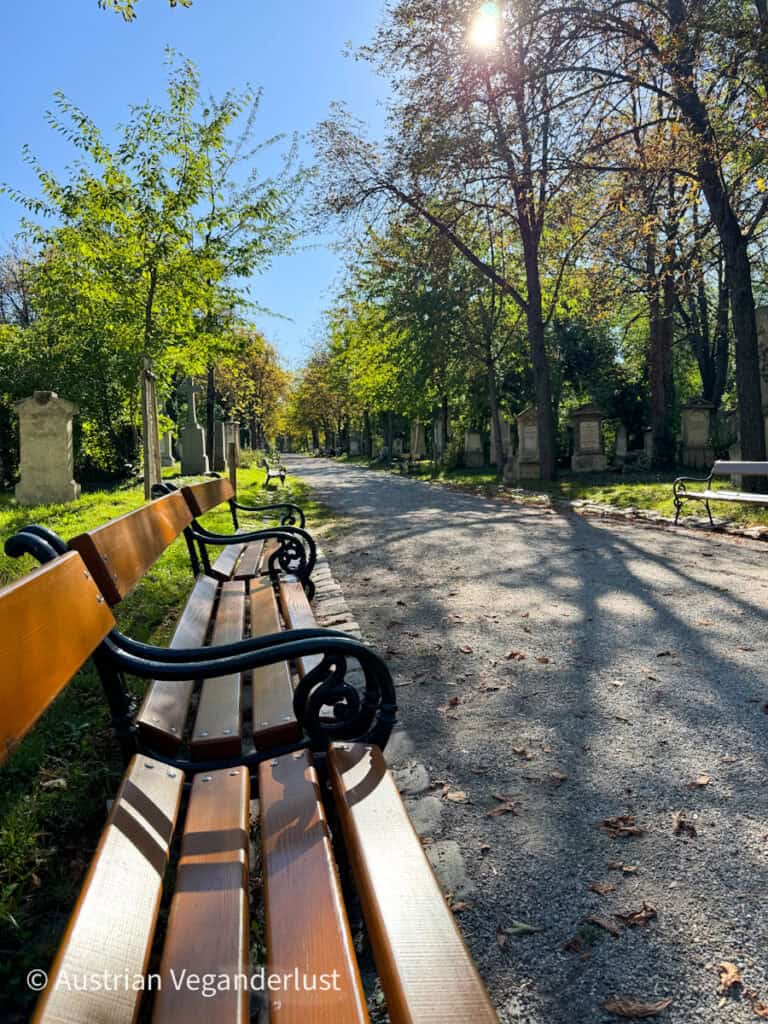
What makes it special is the way nature has taken over. Gravestones are tilted and covered in ivy. Trees and plants weave around the paths, creating a mystical, almost forgotten atmosphere. It feels more like a secret garden than a cemetery.
There’s also a surprising amount of life here. When I visited, I came across beehives tucked among the greenery, and there are even wild hamsters living in the grounds, although I didn’t see any during my visit.
Practical Information for Visiting
Opening Hours & Admission
St. Marx Cemetery is free to visit and open daily. The hours change depending on the season, so make sure to check ahead, it would be a shame to arrive and find the gates closed.
How to Get There
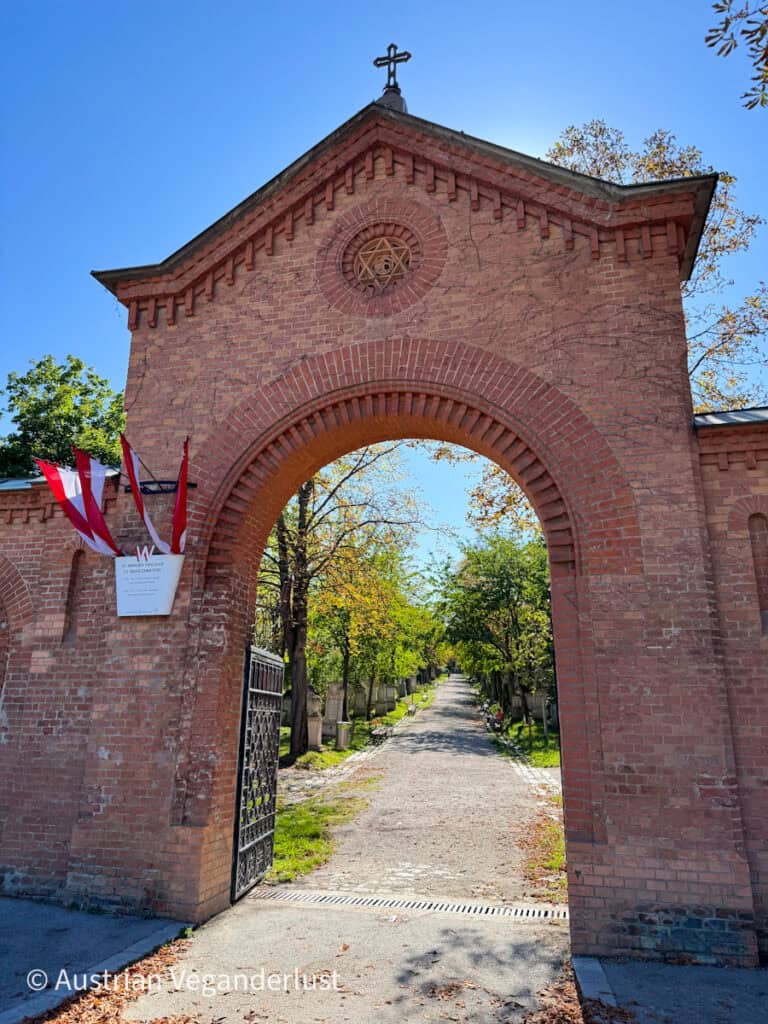
St. Marx is a little out of the way compared to other sights, but that’s part of what makes it so peaceful. You can reach St. Marx easily by S-Bahn or tram.
- By S-Bahn: Get off at St. Marx station, then it’s about a 10-minute walk to the cemetery.
- By tram (Line 71): Google Maps suggests to get off at Litfaßstraße, but I don’t recommend it, the walk takes you through a railway underpass that smelled strongly of pee. Instead, get off at St. Marx and walk down Leberstraße. If you follow Rennweg, you’ll hit the train tracks and end up in the same underpass.

Tips for Your Visit
- Stick to the paths: This is an old cemetery, and some gravestones are unstable. For safety, don’t touch or lean on them.
- Mosquito protection: If you visit in the evening, bring insect repellent or wear long sleeves. I had quite a few bites after my walk here.
- Bring water: Exploring feels more like walking through a park or forest, and there are no shops inside. A water bottle is a must, especially if you visit in summer.
- Facilities: There’s a toilet at the entrance, but no café or kiosk.
- Navigation: The cemetery is divided into sections, and there’s a sign at the entrance listing notable graves. Still, most names won’t mean much (except Mozart), and the signage inside isn’t as clear as at the Central Cemetery.
- Honestly, the best way to experience St. Marx is to wander without a plan and enjoy the overgrown, peaceful atmosphere.
Final Thoughts: St. Marx and Vienna’s Cemeteries
The Viennese have a very unique relationship with cemeteries and with death itself. Cemeteries aren’t just places of mourning, they’re also part of daily life, green spaces where history, culture, and nature meet.
The St. Marx Cemetery embodies this spirit in its own way. With its overgrown graves and quiet, almost mystical atmosphere, it shows a very different side of Vienna.
If you’re curious about Vienna beyond the usual tourist sights, exploring its cemeteries is a fascinating way to understand the city’s history and character.
The Central Cemetery impresses with its size, famous graves, and unique sections, while the Cemetery of the Nameless offers a haunting and little-known glimpse into the city’s past.
Read more about Vienna:
- 11 Absolute Best Things to Do in Vienna from a Local
- Where to Stay in Vienna: Best Areas & Hotels from a Local
- 7 Stunning Palaces in Vienna You Shouldn’t Miss
- Ultimate Guide to Schönbrunn Palace and Gardens in Vienna
- Hofburg Palace in Vienna: What to See & Ticket Comparison
- Sisi in Vienna: 10 Fascinating Places Linked to the Empress
- 13 Unbelievable Free Things to Do in Vienna from a Local
- Unique Things to Do in Vienna You Won’t Find Anywhere Else
- 33 Best Museums in Vienna Sorted by Category
- Free Museums in Vienna: Always Free & Special Free Days
- 13 Top Day Trips from Vienna You Can Do by Train
Pin it for later:

