
Austrian Veganderlust contains affiliate links and is a member of the Amazon Services LLC Associates Program. If you make a purchase using one of these Amazon links, I may receive compensation at no extra cost to you. For more info, see the Disclosure Policy.
Austrian New Year’s Traditions: How Locals Celebrate
New Year’s Eve in Austria is called Silvester, and it comes with a mix of fun and symbolic traditions. Some of them are centuries old, others are a little odd (at least to outsiders), and a few are fading with time.
Growing up in Austria, I celebrated many of these traditions with my family and friends, from watching Dinner for One to dancing a waltz at midnight. Some I still do today, others I’ve left behind.
All of these Austrian New Year’s traditions capture the way of “sliding into the new year”, as the phrase “Guten Rutsch” (literally translated: good slide) is the most common New Year’s greeting.
1. Watch Dinner for One
One of the quirkiest Austrian New Year’s Eve traditions is watching the short black-and-white sketch Dinner for One. It’s a British production from the 1960s, but while hardly anyone in the UK knows it, in Austria (and other countries) it’s a cult classic.
The 18-minute play shows a butler drinking his way through a dinner party for his elderly mistress, repeating the line “Same procedure as every year, James.” It’s silly, a little old-fashioned, and still a TV highlight every year.
When I was a kid, we watched it every year because my mum loved it. And I still find it funny that my British boyfriend had never even heard of it, while in Austria, it’s hard to imagine New Year’s Eve without it.
2. Lead Cast Your Future
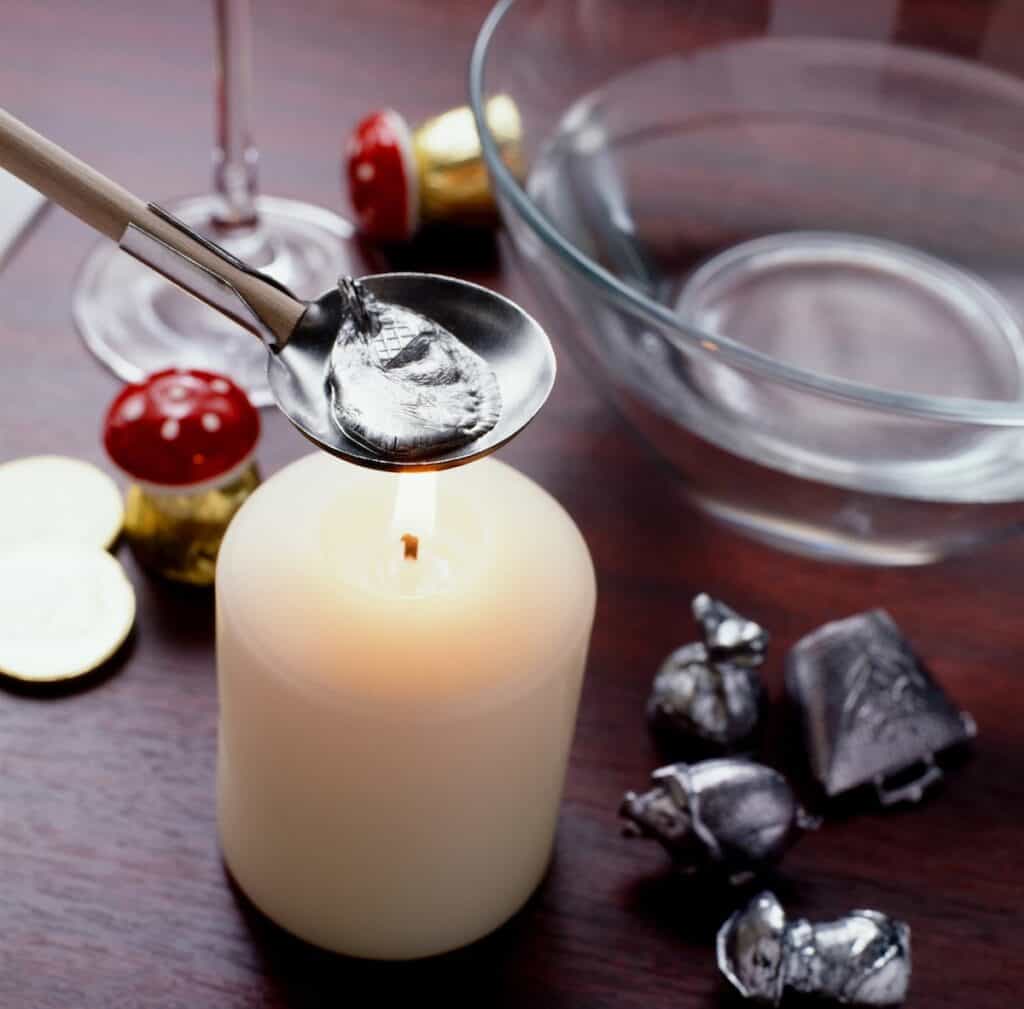
As a child, this was one of my favourite New Year’s traditions. The idea is simple: you melt a small piece of metal and drop it into cold water. The shape it forms is then “read” to predict your future for the coming year.
Traditionally, people used lead, but that has since been banned because of the toxic fumes. These days you can find safer alternatives using tin or wax.
The official English term for the practice is molybdomancy, though I’ll admit I had never heard that word before researching this tradition!
It’s a playful way to start the year, and while the shapes rarely make much sense, interpreting them together always leads to laughter.
3. Dance a Waltz at Midnight
When the clock strikes twelve, Austrians welcome the new year with a waltz. The famous Blue Danube Waltz by Johann Strauss is broadcast on TV, radio, and even played in public squares, so wherever you are, it’s almost impossible to miss.
For me, dancing the waltz has always been part of New Year’s, no matter where I was. Once, I was in Venice with friends and we were the only ones dancing on the street. Another year, I danced with my boyfriend on a warm New Year’s Eve in Bali.
It may look a little unusual outside Austria, but for us it’s tradition.

4. Hear the Pummerin Announce the New Year
At midnight, the sound of the Pummerin, the bell of St. Stephen’s Cathedral in Vienna, announces the arrival of the new year. It’s the largest bell in Austria and only rings on special occasions, which makes hearing it on New Year’s Eve more special.
Most Austrians don’t hear it live, but it’s broadcast on TV and radio right as the year changes. For many, the deep, resonant chime of the Pummerin is just as much a symbol of New Year’s Eve as fireworks or champagne.
5. Protect Yourself from Evil Spirits
New Year’s Eve is one of the most important Raunächte, the mystical nights between Christmas and Epiphany, they’re part of Austria’s Christmas and New Year traditions.
According to tradition, this is when the veil between worlds is thinnest, so people burn incense to cleanse their homes and invite good fortune for the year ahead.
Another custom says you shouldn’t leave laundry hanging out to dry during this time, as evil spirits might get caught in your clothes.
Most people don’t believe in spirits anymore, but many Austrian households still keep these traditions alive, avoiding laundry and burning incense on New Year’s Eve.
6. Give Good Luck Charms
Another Austrian New Year’s tradition is exchanging small good luck charms with friends and family. They’re usually inexpensive little tokens you can buy at markets or even supermarkets in the days leading up to New Year’s Eve.
The most common charms include:
- 🍀 Four-leaf clovers: the classic symbol of luck as
- 🐷 Pigs: representing prosperity, wealth and fertility
- 🍄 Red and white toadstools: for happiness and protection
- 🥷 Chimney sweeps: brings luck as they keep the house warm and save
- 🐎 Horseshoes: another well-known symbol of luck as it protects the horse
- 🐞 Ladybugs: believed to be a heavenly messenger from Mother Mary, protects children and heals the sick
- 💰 Coins: symbolising wealth and financial luck in the new year
7. Eat Lentils to Get Rich
Food is always tied to symbolism at New Year, and in Austria the most common tradition is eating lentils. Their round shape resembles coins, so the more lentils you eat, the wealthier you’ll be in the new year, at least according to superstition.
It’s also one of the few traditions that’s naturally vegan, which makes it my favourite.
Some families eat fish instead, since fish are always moving forward and are seen as a symbol of progress. Personally, I find that logic a bit odd, if you eat the thing that moves forward, it can’t keep moving forward!

8. Watch Fireworks
For many Austrians, fireworks are still part of ringing in the new year. When I was a child, we set off our own, but that has changed a lot in recent years. In most cities and towns, private fireworks are now banned for safety and environmental reasons.
Instead, there are official displays organised by the city. Only in very rural areas do people still light their own fireworks. Even if you don’t set any off yourself, watching the sky light up at midnight is still a big part of the celebration.

9. Drink Champagne or Sparkling Wine
Right after midnight, it’s tradition to toast the new year with a glass of champagne or sparkling wine. Everyone raises their glass, wishes each other “Prosit Neujahr” (Happy New Year), and shares a sip to welcome the year ahead.
It’s a simple ritual, but it wouldn’t feel like New Year’s without it.
10. Watch the New Year’s Concert
On January 1st, millions of Austrians start their year with the Vienna Philharmonic’s New Year’s Concert. Broadcast live from the Golden Hall of the Musikverein, it features waltzes, polkas, and classical pieces by the Strauss family.
My mum watches it every year on TV, and for many families it’s just as much a New Year’s tradition as fireworks the night before.
Even if you’re not a big fan of classical music, the concert is worth seeing at least once, it’s one of Austria’s most famous cultural exports and is broadcast in over 90 countries worldwide.
Final Thoughts: New Year’s in Austria
Austrian New Year’s traditions range from lighthearted to symbolic, from watching Dinner for One and setting off fireworks to eating lentils for luck and listening to the Pummerin at midnight.
Some are fading, some have adapted with time, but together they capture the spirit of Silvester: welcoming the year with joy, good fortune, and a little superstition.
In my family, some traditions have stuck more than others, like dancing a waltz and watching the New Year’s Concert. No matter which ones you choose to take part in, celebrating New Year’s in Austria always feels festive and memorable.
Read more:
- Top Christmas Markets in Vienna to Get You in a Festive Mood
- 11 Magical Things to Do in Vienna in December from a Local
- Must-Visit Christmas Markets in Salzburg This December
- 11 Things to Do in Salzburg in December for Your Winter Trip
- What to Do in Graz in Winter (From a Local)
- 17 Unique Christmas Traditions in Austria (From a Local)
- Austrian New Year’s Traditions: How Locals Celebrate
Pin it for later:


