
Austrian Veganderlust contains affiliate links and is a member of the Amazon Services LLC Associates Program. If you make a purchase using one of these Amazon links, I may receive compensation at no extra cost to you. For more info, see the Disclosure Policy.
17 Unique Christmas Traditions in Austria (From a Local)
Did you know in Austria, Baby Jesus, not Santa, brings the presents? As an Austrian, this tradition always felt perfectly normal, until I found myself explaining it to my English boyfriend, who couldn’t hide his astonishment.
That’s when I realized how unique some Christmas traditions in Austria truly are.
From burning incense to the scary visits of Krampus, Austria’s festive season is a interesting mix of historic rituals, delicious treats, and fascinating folklore.
By the end of this post, you’ll probably want to bring some Austrian traditions to your own holiday season or you’ll want to plan a visit to Austria.
1. Have an Advent Calendar
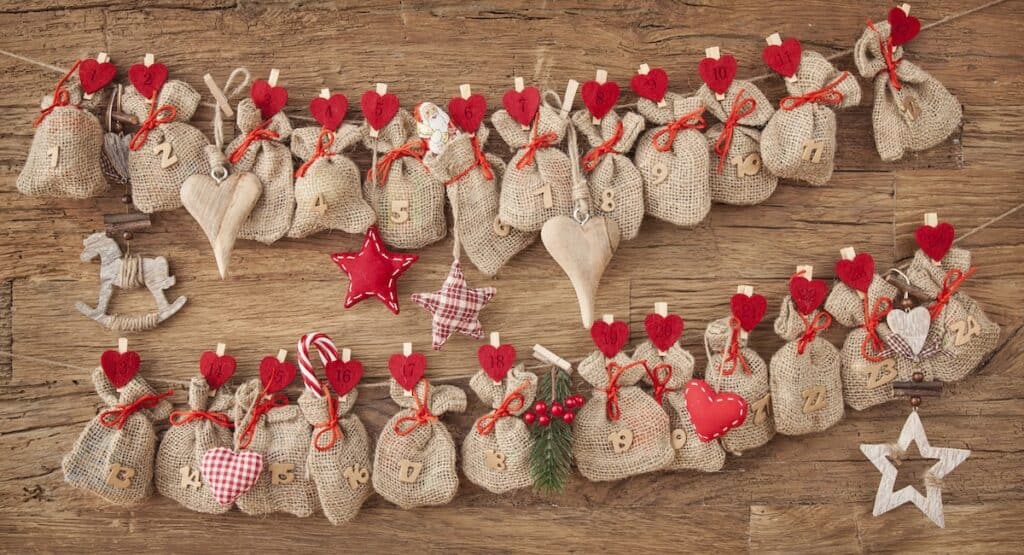
Advent calendars are really big in Austria and not just for kids!
Growing up, I remember opening a simple Advent calendar each day to reveal a tiny piece of chocolate.
Today, Advent calendars have become much more elaborate, offering everything from gourmet chocolates and teas to candles, lotions, and even specialty items from luxury brands. It seems like every company has their own version these days!
Many Austrians still prefer something more personal and fill their Advent calendars themselves for loved ones.
2. Make Your Own Advent Wreath
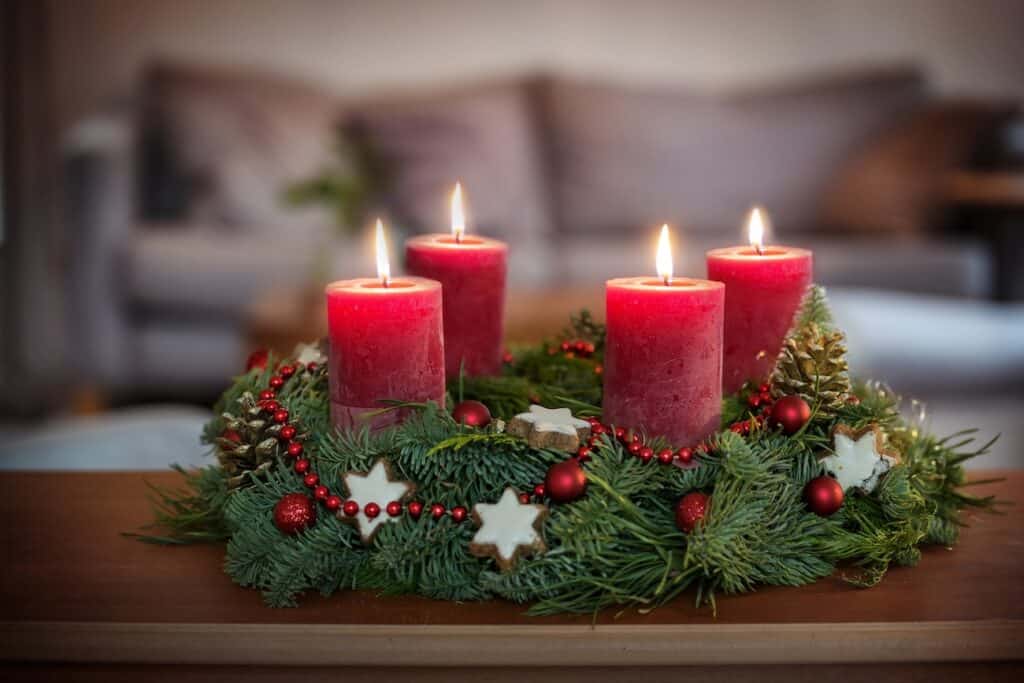
Advent wreaths are a another popular Austrian tradition, and the best ones are homemade.
While some enjoy crafting intricate wreaths with fresh fir branches and ornaments, I’ve always kept it simple, arranging a few fir branches, four candles, and festive decorations on a plate.
If DIY isn’t your style, you can find beautiful wreaths at Christmas markets or stores.
The four candles are lit one by one each Sunday leading up to Christmas. In my family, these Sundays were a time to gather around the wreath, share cookies, and sing carols. For me it was always a nice tradition that brings family together.
3. Celebrate Christmas on the 24th
While the 25th and 26th of December are public holidays in Austria, the main Christmas celebration happens on Christmas Eve.
Shops close around midday on the 24th, and in the evening families come together to celebrate with festive meals, gift exchanges, and special traditions.
The celebrations don’t end there! On the 25th and 26th, it’s common for families to visit other relatives. For instance, my sister spends Christmas Eve with her husband and kids, then divides the 25th and 26th between his family and ours.
4. Baby Jesus Brings the Presents & the Christmas Tree
One of Austria’s most unique traditions is that Santa Claus doesn’t bring the presents, Baby Jesus does! Known as the Christkind (Christ child), this figure is often depicted as a female angel with long blond hair.
Austrians are familiar with Santa Claus though, called Weihnachtsmann (Christmas man), and thanks to Hollywood movies, some children even believe in him too.
Traditionally, the Christkind not only delivers presents but also brings the fully decorated Christmas tree.
When I was young, my parents secretly decorated the tree. When we heard a small bell, it meant the Christkind had flown by and left the tree and presents. Only then could we enter the room with the decorated tree.

5. Traditional Christmas Tree Decorations
Unlike in many countries, Austrians typically put up their Christmas trees on Christmas Day or just a few days before, not weeks in advance. While modern Austrian trees often resemble those seen elsewhere, this wasn’t always the case.
Traditional Austrian Christmas trees were decorated with straw stars, gingerbread, and real candles. These days, most families opt for electric lights, and Christmas baubles have largely replaced the classic straw decorations.

6. Visit Some Christmas Markets
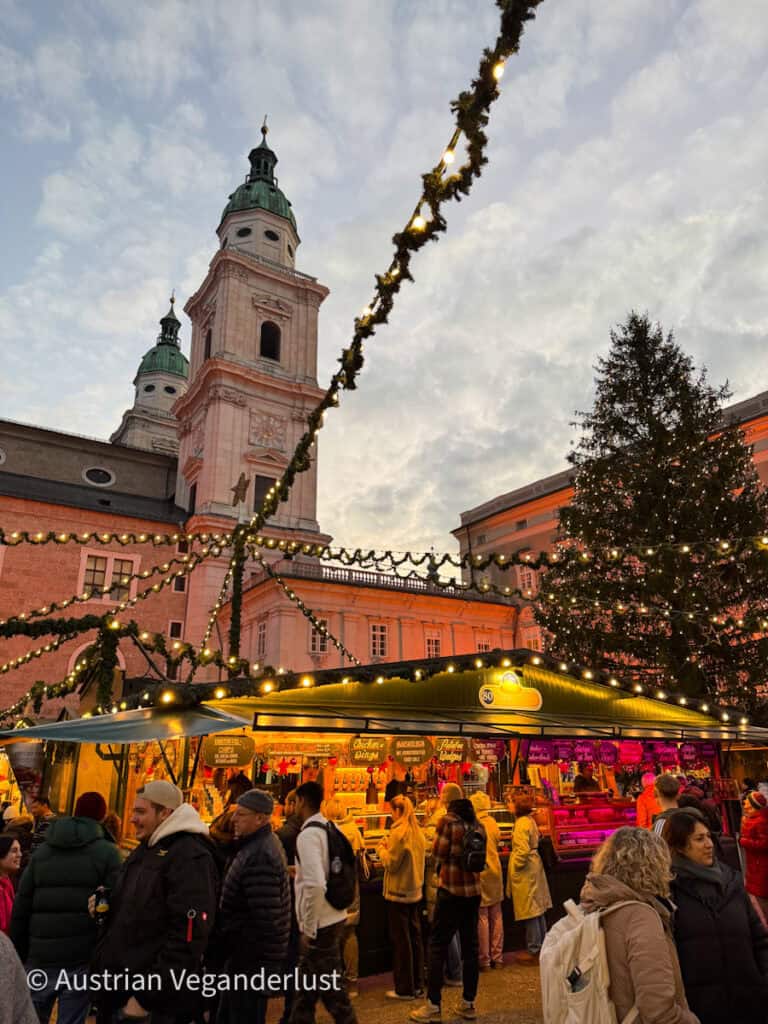
What’s Christmas without Christmas markets? Austria is home to some of the best in Europe, like the iconic Christkindlmarkt in Salzburg.
Most visitors flock to the larger markets in Austrias major cities, which are open daily. However, these can get overwhelmingly crowded, like the Vienna Christmas markets on weekends. But don’t worry there are plenty more things to do in Vienna in winter.
For a more relaxed experience I recommend visiting the big Christmas markets during the week and during the day. That way you’ll actually have space to browse.
For an even cozier, more authentic vibe, the markets in smaller towns are a hidden gem. Though they’re often only open for one weekend, their charm and idyllic atmosphere make them well worth the visit.


7. Drink Mulled Wine and Eat Roasted Chestnuts
No visit to a Christmas market is complete without a steaming cup of mulled wine or punch. If you prefer a non-alcoholic option, try Kinderpunsch (punch for kids), a sweet alternative found at every stall.
In city markets, you’ll typically pay a deposit for your cup, a system in place because the beautifully designed mugs are so tempting to keep as souvenirs.
For the perfect snack to pair with your drink, don’t miss some roasted chestnuts. Warm, healthy, and very delicious, they’re the perfect winter treat.
8. See Some Krampus
One of Austria’s weirdest holiday traditions is the Krampus, made famous by Christoph Waltz on The Tonight Show. These demon-like companions of Saint Nicholas have a grotesque face, horns, fur and carry bells and whips.
December 5th is Krampus Day, and December 6th is St. Nicholas Day. Each town has its own Krampus run on one day, starting as early as mid-November.
These demon-like figures whip naughty people and threaten to take misbehaving kids in the basket on their back. Nowadays, they usually don’t hit anyone, at least not in cities, and in the countryside, they only hit people they know.
I remember being so scared walking home from school on December 6th, when I heard their bells, I’d start running as fast as I could.

9. See Some Perchten
Similar to Krampus, the Perchten are not as widespread as the Krampus and many people mix them up anyway, but they are different in both appearance and function.
Perchten wear animalistic costumes with multiple horns and they’re supposed to scare away evil spirits and bring good fortune for the new year.
They’re often joined by witches and other figures when they roam the mountainous regions of Austria between Christmas and New Year’s.
10. Get Sweet Treats from St. Nicholas
The Krampus are the companions of Saint Nicholas, who was the inspiration for Santa Claus. He’s based on Saint Nicholas of Myra, an early Christian bishop in Turkey, who died on the 6th of December 343 AD.
In remembrance of him people dress up as Saint Nicholas on the 6th of December and give treats to well-behaved kids, traditionally mandarines, nuts and chocolate. His companions are the Krampus, who he has complete control over.
11. Bake Some Austrian Christmas Cookies
Speaking of Christmas treats, Austria has some delicious Christmas cookies, which people only make for Christmas.
My favourite Austrian Christmas cookies is gingerbread (Lebkuchen), these are probably the only cookies which are widely known.
Other popular Christmas cookies are Vanillekipferl (vanilla crescent cookies) or Linzer Augen (two plain cookies stuck together with jam).
12. Sing Silent Night Which Originated in Austria
Did you know the famous Christmas song Silent Night was composed and written in Austria? There it’s called Stille Nacht, Heilige Nacht. You can even visit the chapel where it was first performed, it’s a short drive outside of Salzburg.
It’s tradition to sing the song underneath the Christmas tree on Christmas day before you open the presents, at least it is tradition in my family.
Some other traditional Austrian Christmas Songs are O Tannenbaum, Leise rieselt der Schnee, Ihr Kinderlein kommet, Es wird scho glei dumpa, and Andachtsjodler (a special Christmas yodel song).
13. Burn Incense in the Raunächte
The so-called Raunächte (I couldn’t find an appropriate translation) are the twelve nights between Christmas and the 6th of January.
Legend has it that during that time the veil to the underworld is especially thin, people don’t believe that anymore but they kept the traditions which came with this believe.
For one, you shouldn’t let clothes hang out to dry during this time since evil spirits might get caught in your clothes.
But mostly, you go from room to room in your house with a special pan to burn incense to cleanse the house and bring positive energy for the new year.
The Raunächte are also supposed to be the best time for fortune telling. This part is still alive in the Austrian New Year’s Eve tradition of lead casting your future.
14. Pick up the Light of Peace on Christmas Day
Christmas in Austria is still a very religious holiday, so many people go to church on the 24th, either to the children’s mass in the afternoon or to the midnight mass (Christmette), well it’s supposed to be at midnight but often it’s at 10 or 11pm.
In church you can also pick up the Light of Peace (Friedenslicht) which gets transported to Austria from Betlehem by plane and then distributed throughout Austria by different organisations like the red cross or the firefighters.
15. Display a Nativity Scene in Your House
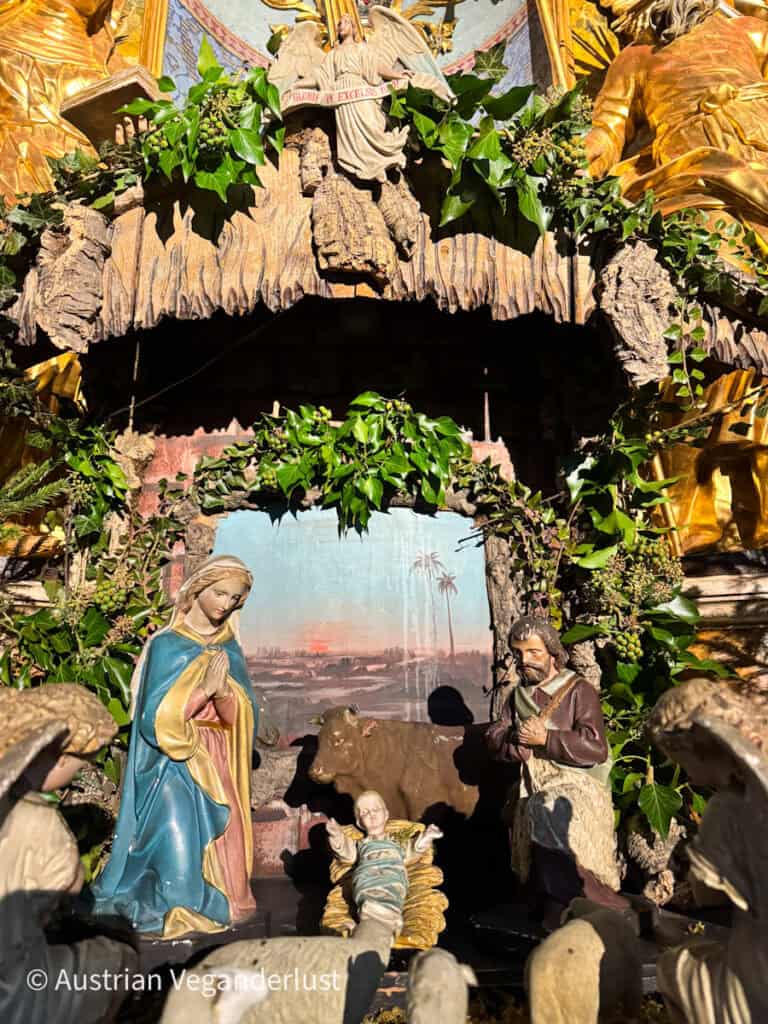
Another tradition you’ll see all over Austria is the Nativity scene (Krippe). Many families set one up in their living room during Advent, sometimes even building them by hand and passing them down for generations.
In the countryside, you’ll often find very detailed scenes with carved wooden figures, miniature stables, and little animals. For years we used the one my sister made at school and we would only add baby Jesus on the 24th of December.
16. Watch an Austrian Christmas Movie
Christmas wouldn’t be complete without a cosy film night. Two very different films have become Austrian Christmas traditions.
Many families rewatch the Sissi trilogy every December about the Empress Sisi of Austria, even though it isn’t set at Christmas. By the way, there are many places in Vienna where you can learn about the real Sisi.
A more typically Austrian choice is Single Bells (1997), a dark comedy about everything that can go wrong at Christmas, from family fights to a burning tree. It’s still a cult favourite here, even if it’s not quite my sense of humour.
17. Enjoy a Traditional Christmas Dinner
Unlike in some countries, there isn’t one traditional Christmas food in Austria that every family eats. In my own family, we never had a specific dish we made every year, and now that I’m vegan, I don’t really eat the typical Austrian options anyway.
I did some research though, and according to several polls it’s the same across Austria: more than half of families don’t stick to one particular meal, but rather eat something different each year.
Among the families who do keep a tradition, the most popular Christmas dinners in Austria are Raclette, sausages with sauerkraut, fish, or a cold cuts plate.
So while Austria has many unique holiday traditions, the Christmas dinner table is more varied than you might expect.
Final Thoughts: Christmas in Austria
Christmas in Austria is a blend of cosy traditions, folklore, and festive food. From Advent wreaths and mulled wine to Krampus runs and Silent Night under the tree, December here feels both magical and deeply rooted in history.
For me, these traditions are more than just customs, they’re memories of family gatherings, delicious treats, and the little rituals that make December feel so special.
If you’re staying through the holidays, the celebrations don’t stop at Christmas, take a look at my guide to New Year’s Eve traditions in Austria to see how Austrians ring in the new year.
Read more:
- Top Christmas Markets in Vienna to Get You in a Festive Mood
- 11 Magical Things to Do in Vienna in December from a Local
- Must-Visit Christmas Markets in Salzburg This December
- 11 Things to Do in Salzburg in December for Your Winter Trip
- What to Do in Graz in Winter (From a Local)
- 17 Unique Christmas Traditions in Austria (From a Local)
- Austrian New Year’s Traditions: How Locals Celebrate
Pin it for later:


