Austrian Veganderlust contains affiliate links and is a member of the Amazon Services LLC Associates Program. If you make a purchase using one of these Amazon links, I may receive compensation at no extra cost to you. For more info, see the Disclosure Policy.
Beethoven in Vienna: What’s Worth Visiting (and What’s Not)
I’ll admit: I was never a huge Beethoven fan and I knew almost nothing about his life.
Until I visited his house in Baden bei Wien. Honestly, I went because there wasn’t much else to do, but I left fascinated. I had no idea he kept composing long after going completely deaf. That visit changed how I saw him.
Back in Vienna, I started exploring more Beethoven spots. Some were surprisingly interesting, others not really worth the detour.
In this post, I’ll take you through the most important Beethoven-related places in Vienna, and give my honest take on which ones are actually worth visiting.
A Quick Look at Beethoven’s Life in Vienna
Ludwig van Beethoven was born in Bonn, Germany, in 1770, but he spent most of his adult life in Vienna, arriving in 1792 and staying until his death in 1827.
Vienna was the musical capital of Europe at the time, and it became the place where he truly made his name as a composer.
Over the years, he moved through countless apartments, composed legendary works and even continued writing music after losing his hearing completely.
Today, you can still walk in his footsteps.
1. Beethoven Museum Vienna: Best One for True Fans


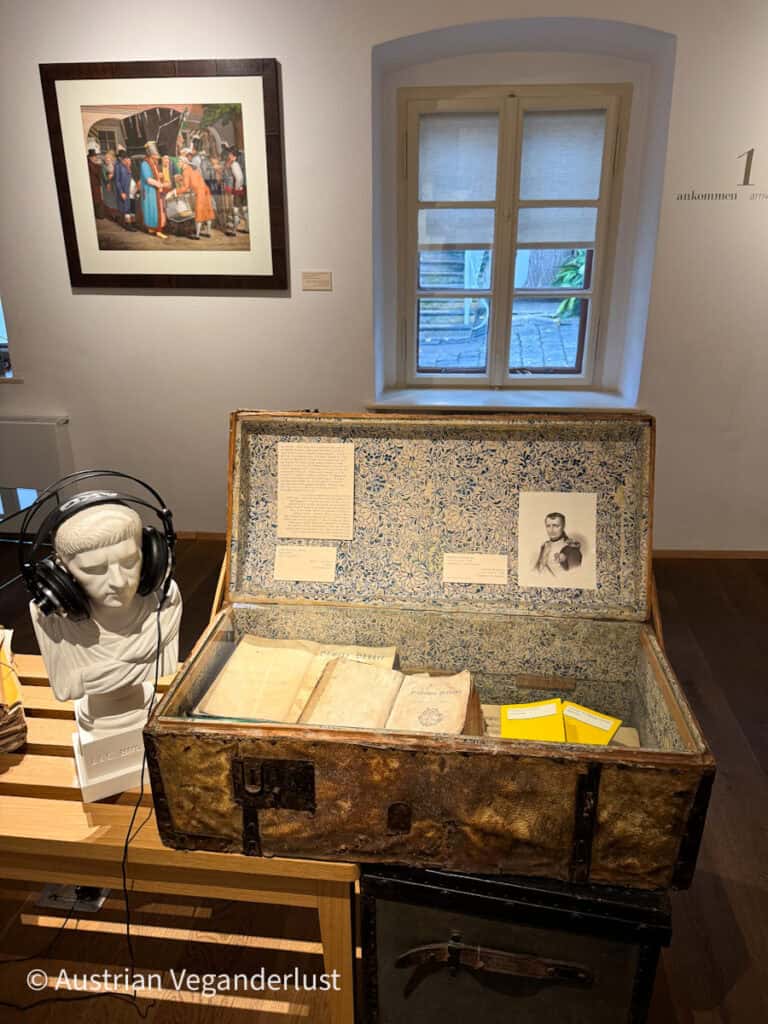

This Beethoven museum is inside one of Beethoven’s former homes in Heiligenstadt, a quiet part of Vienna’s 19th district. It’s where he wrote the famous Heiligenstadt Testament, a letter revealing how deeply he struggled with his hearing loss.
The museum covers his life in detail, from his arrival in Vienna to his final years, with displays of musical instruments, handwritten notes, and even his death mask.
One of the most memorable parts for me was an interactive station where you can hear music the way Beethoven did: by placing a device on your forehead to feel the vibrations, bypassing your ears completely. It’s so fascinating.
But here’s the thing: it’s really far out if you’re staying in the city centre. Getting there takes about 30–40 minutes one way, and while the museum is well done, I wouldn’t recommend it unless you’re already quite interested in Beethoven.
2. House of Music: A Broader Music Museum With a Beethoven Section


The House of Music is a huge, interactive museum in the city centre, and much more than just Beethoven. It spans four floors, with each level diving into different aspects of music and sound.
The Beethoven section at the House of Music is small but surprisingly engaging. You’ll find a few displays about his life, listen to some of his compositions, and see an AI-generated timeline showing how his appearance changed over time.
The rest of the museum covers everything from the Vienna Philharmonic to how humans perceive sound. It’s fun, hands-on, and definitely worth it if you’re interested in music more broadly, not just Beethoven.
3. Beethoven Pasqualatihaus: Nice Apartment, Underwhelming Museum


This small museum is inside an apartment where Beethoven lived several times, located near city hall. From the outside, it looks like any old building, and inside it feels like one too, no elevator, and the museum is on the 4th floor.
Unfortunately, I found the museum a bit disappointing. Most of it is just copies of portraits of people connected to Beethoven, with little about the composer himself.
The two highlights are his life mask (made with straws in his nose so he could breathe) and a realistic bust based on that mask.
If you want to learn about Beethoven, skip it. But if you’re curious to walk through an apartment he actually lived in, it does have that old-school Viennese charm, the staircase alone reminded me of a friend’s flat nearby.
4. Zentralfriedhof: Beethoven’s Final Resting Place
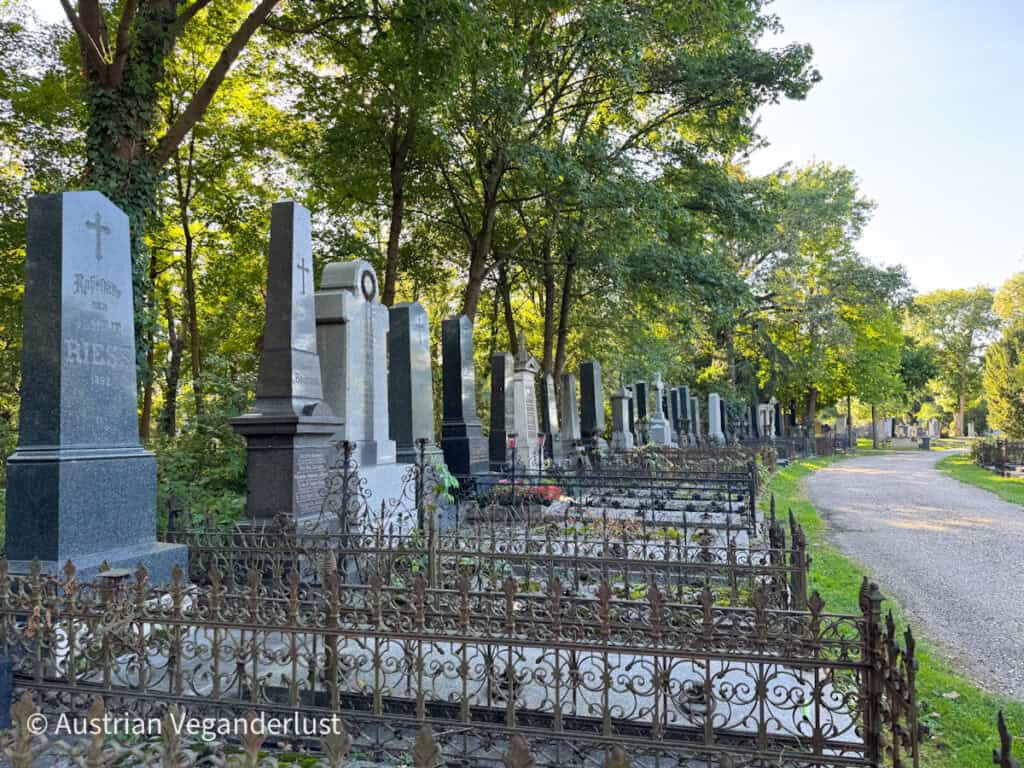

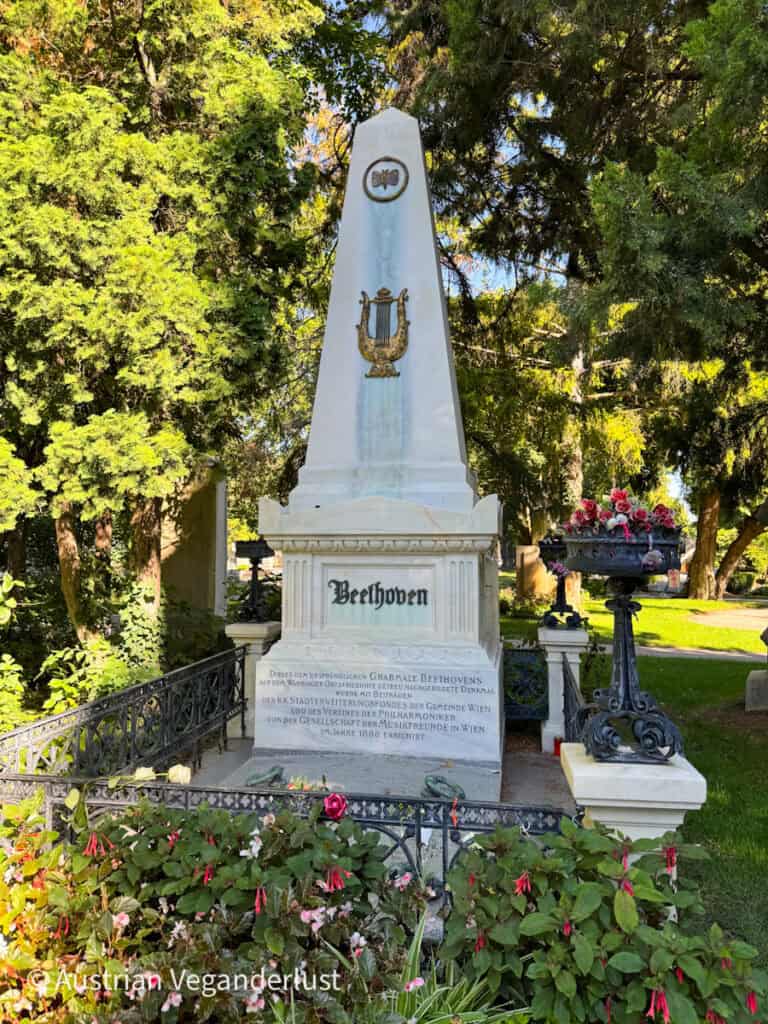
Beethoven is buried at the Zentralfriedhof (Central Cemetery), alongside other famous composers like Schubert, Brahms, and Johann Strauss. His grave is in the Ehrenhain, marked by a dramatic monument.
To be honest, it’s probably not worth the trip just to see his grave. But the cemetery itself is genuinely beautiful. Parts of it feel more like a quiet park than a burial ground, with wide lanes, tall trees, and peaceful corners to sit and reflect.
If you’re already into cemetery walks and want to see famous graves in one go, it’s definitely worth your time. I’ve written a full guide on how to visit the Zentralfriedhof, including how to get there and what else to look out for.
5. Beethoven Statue Vienna: Classical Meets Modern

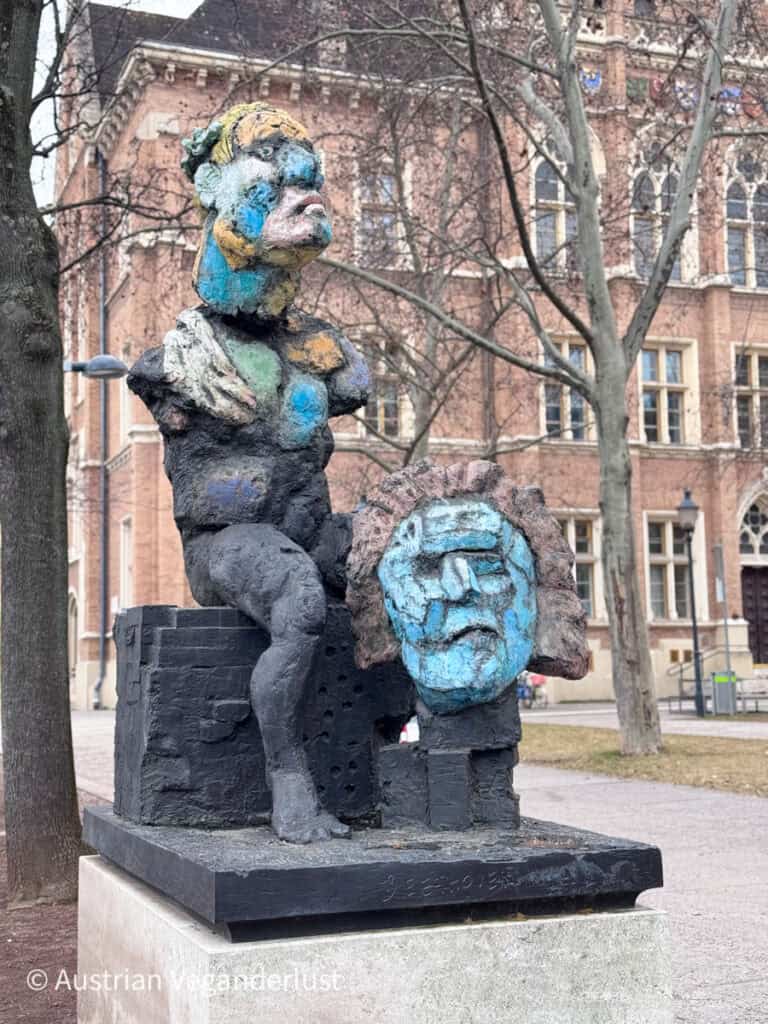
At Beethovenplatz in Vienna’s first district, next to the Stadtpark, you’ll find 2 statues dedicated to Beethoven, one grand and historical, the other modern.
The main statue is an impressive bronze monument created by the same sculptor behind the famous Maria Theresia statue, and you can really tell. It has that same monumental style, with Beethoven seated, surrounded by allegorical figures.
Right beside it, there’s also a much more modern statue, a fun contrast.
Are the statues worth going out of your way for? Probably not. But if you’re already strolling through the Stadtpark (which, by the way, is one of the most beautiful parks in Vienna), then definitely stop by.
6. Beethoven Frieze at the Secession: Tribute to Beethoven
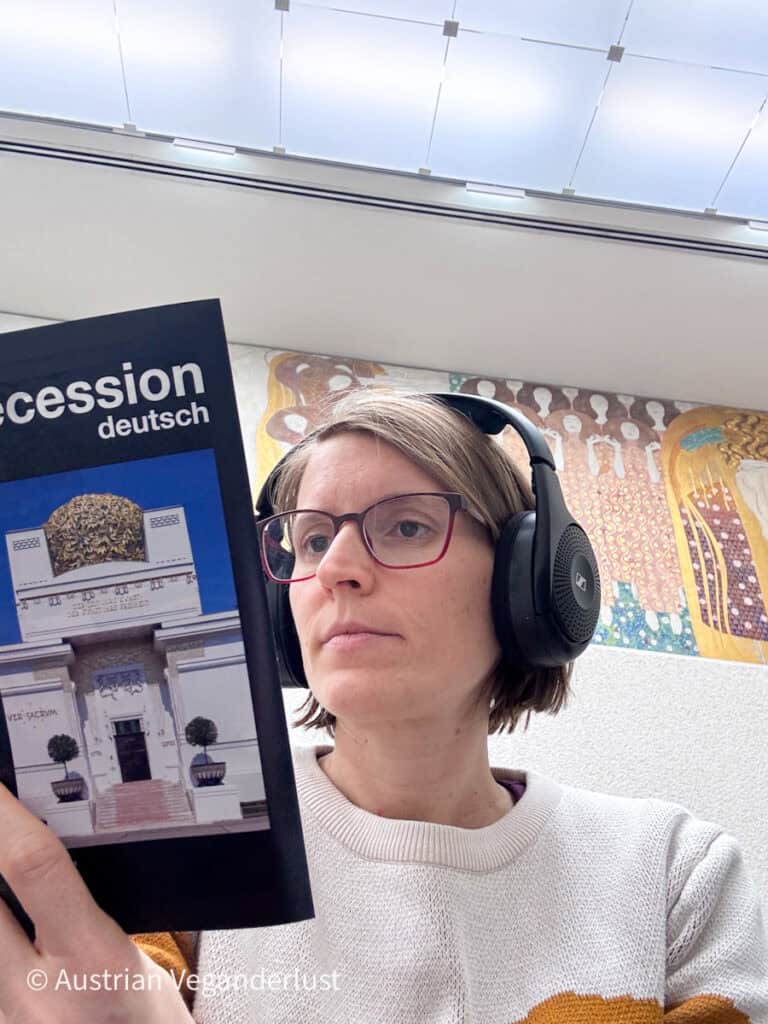


Inside the golden-domed Secession Museum, you’ll find one of the most stunning tributes to Beethoven: the Beethoven Frieze by Gustav Klimt. At the opening, Beethoven’s music was performed live.
Today, you can still relive that moment by putting on museum-provided headphones and listening to Beethoven’s music while standing in front of Klimt’s Art Nouveau masterpiece.
There’s also a photo of a now-removed statue of Beethoven that was once part of the exhibit, he’s depicted nude, seated in a chair. It’s a very unusual portrayal of Beethoven, very memorable, even if the statue is no longer in Vienna.
The rest of the museum features rotating contemporary art exhibitions. Personally, I wasn’t a big fan, so whether it’s worth the entry fee depends on what’s currently showing. That said, the museum is included in the NÖ Card.
7. Beethoven Plaques Around Vienna
Throughout Vienna, you’ll find buildings with plaques marking where Beethoven lived, composed, or died. Most of them are regular apartment buildings or shops now, and you can’t go inside. Personally, I don’t think they’re worth a dedicated visit.
- Schwarzspanierhaus: The house where Beethoven died in 1827. The original building was demolished, but the location is marked.
- Beethoven-Grillparzer House: Beethoven often visited this house, where poet Franz Grillparzer lived as they were good friends.
- Tiefer Graben 10–12: Another former residence. The plaque here notes Beethoven lived in the building for from 1815 to 1817.
- Landstraßer Hauptstraße 26: Beethoven lived at this location briefly in 1794, but the building itself doesn’t exist anymore, there’s a new one in its place.
- Laimgrubengasse 22: He lived here in 1822–1823 while composing parts of the Missa Solemnis.
- Ungargasse 5: A short-term residence in 1823-1824, where he finished his 9th symphony.
- Alserkirche: The church where Beethoven’s funeral was held.
Bonus: The Beethoven House in Baden bei Wien


This is where my whole Beethoven curiosity started, and I almost didn’t go. I was visiting Baden bei Wien, a charming spa town just outside Vienna, and ended up at the Beethovenhaus because there wasn’t much else to do.
But it turned out to be one of the most memorable stops on my Beethoven journey.
The museum focuses on the period when Beethoven stayed in Baden to seek relief from his health issues and work on his Ninth Symphony.
Baden itself is worth a visit too, especially as a half-day trip from Vienna. If you’re curious, I’ve put together a full guide on things to do in Baden bei Wien.
Map of Beethoven Places in Vienna
To make your Beethoven adventure easier to plan, I’ve put together a map with all the locations mentioned in this guide, including museums, memorials, and plaques.
More Famous People Who Lived in Vienna
Beethoven might be one of Vienna’s biggest names, but he’s far from the only one. Walking through the city, you’ll find traces of so many other brilliant minds who lived and worked here, from Mozart and Schubert, to Freud, Klimt, and Mahler.
One of the things I love most about Vienna is how the past is layered into the present. You might be grabbing a coffee where a composer once wrote an opera, or passing a street corner where a revolutionary idea was born.
If you enjoyed exploring Beethoven’s Vienna, I think you’ll love the stories of other famous people who shaped this city.
Read more about Vienna:
- 11 Absolute Best Things to Do in Vienna from a Local
- Where to Stay in Vienna: Best Areas & Hotels from a Local
- 7 Stunning Palaces in Vienna You Shouldn’t Miss
- Ultimate Guide to Schönbrunn Palace and Gardens in Vienna
- Hofburg Palace in Vienna: What to See & Ticket Comparison
- Sisi in Vienna: 10 Fascinating Places Linked to the Empress
- 13 Unbelievable Free Things to Do in Vienna from a Local
- Unique Things to Do in Vienna You Won’t Find Anywhere Else
- 33 Best Museums in Vienna Sorted by Category
- Free Museums in Vienna: Always Free & Special Free Days
- 13 Top Day Trips from Vienna You Can Do by Train
Pin it for later: