
Austrian Veganderlust contains affiliate links and is a member of the Amazon Services LLC Associates Program. If you make a purchase using one of these Amazon links, I may receive compensation at no extra cost to you. For more info, see the Disclosure Policy.
Hundertwasser in Vienna: Best Places to See His Architecture
Most visitors only know Hundertwasserhaus, Vienna’s most famous work by artist and architect Friedensreich Hundertwasser. But there is much more to discover.
After visiting all of Hundertwasser’s buildings in Vienna, I think many tourists miss the best one. While the colourful Hundertwasserhaus attracts the crowds, my personal favourite is Kunst Haus Wien, just a 5 minute walk away.
At Kunst Haus Wien, you can actually step inside a Hundertwasser designed building and learn more about the man behind these unusual creations.
In this guide, I’ll show you the best places to experience Hundertwasser in Vienna and share which ones are truly worth your time.
Who Was Friedensreich Hundertwasser?
Friedensreich Hundertwasser was an Austrian artist and architect known for his colourful buildings and his dislike of straight lines. He believed that architecture should work in harmony with nature rather than against it.
Born in Vienna in 1928 as Friedrich Stowasser, he survived the Second World War despite much of his Jewish family being killed in the Holocaust. He later became one of Austria’s most recognisable artists. (Read his full biography here)
Today, his ideas about sustainability and living closer to nature can still be seen in his buildings, many of which feature colourful highlights, roof gardens, trees growing out of the building, and uneven floors.
Hundertwasserhaus


Hundertwasserhaus is Vienna’s most famous building by Friedensreich Hundertwasser and one of the city’s most photographed attractions.
Completed in 1985, the apartment building stands out with its colourful façade and irregular shapes. There are hardly any straight lines, making it look very different from the historic buildings that Vienna is known for.
Hundertwasserhaus is still a residential apartment building. People live here, so you can’t go inside. When visiting, it’s important to respect the residents’ privacy.
Even so, it’s well worth a visit. The colourful exterior is fascinating to look at. Just be prepared to share the experience with plenty of other tourists, as this is by far the busiest of all the Hundertwasser attractions in Vienna.
Hundertwasser Village
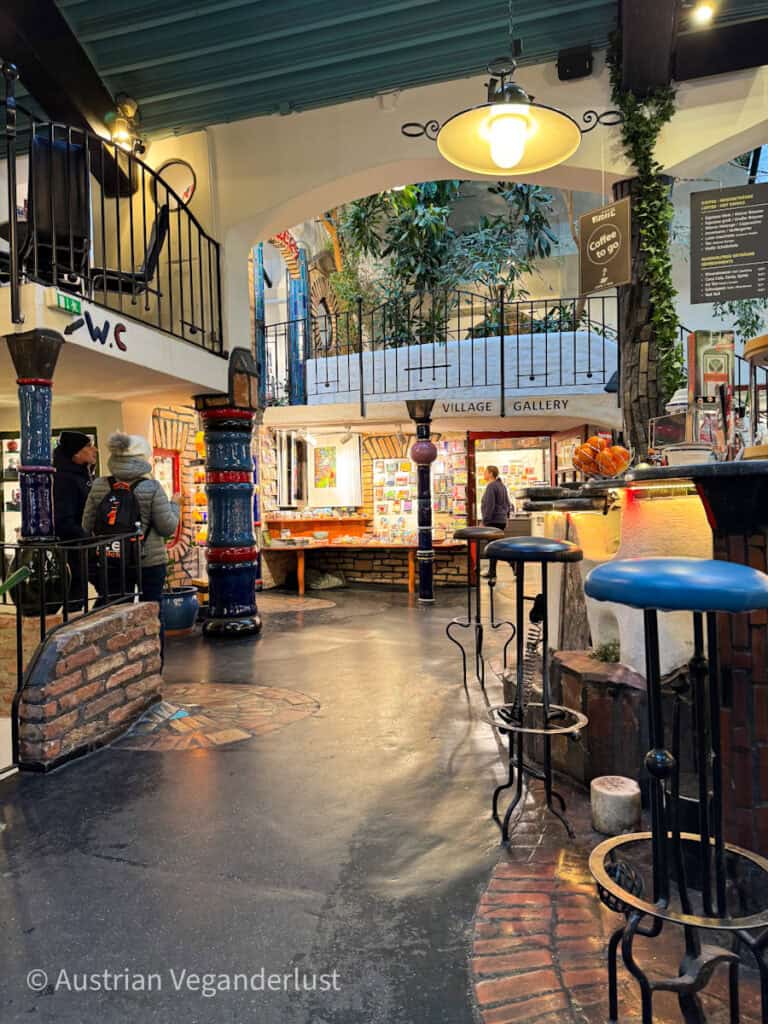
Directly opposite Hundertwasserhaus, you’ll find Hundertwasser Village. Since the two attractions are right next to each other, many visitors see them as a single stop.
Like Hundertwasserhaus, the village was designed by Hundertwasser and features colourful elements, uneven floors, greenery, and almost no straight lines.
Today, the village is home to souvenir shops and a café. There’s a small indoor square, where it’s worth taking a quick look around.
Personally, I found this to be the most touristy of all the Hundertwasser attractions in Vienna. Many of the souvenirs felt quite generic, and the area can get very crowded during the day.
Instead, I’d recommend walking five minutes further to Kunst Haus Wien, my favourite Hundertwasser building in Vienna.
Kunst Haus Wien

While Hundertwasserhaus is Vienna’s most famous Hundertwasser building, Kunst Haus Wien is my personal favourite. Located just a 5 minute walk away, it has a similar colourful design but attracts far fewer visitors.
There’s a museum inside dedicated to the life and work of Hundertwasser. But even the free lobby is worth stepping into. Here you’ll find the uneven floors that he became famous for and a fascinating fountain that appears to flow upwards.
Visit the Hundertwasser Museum

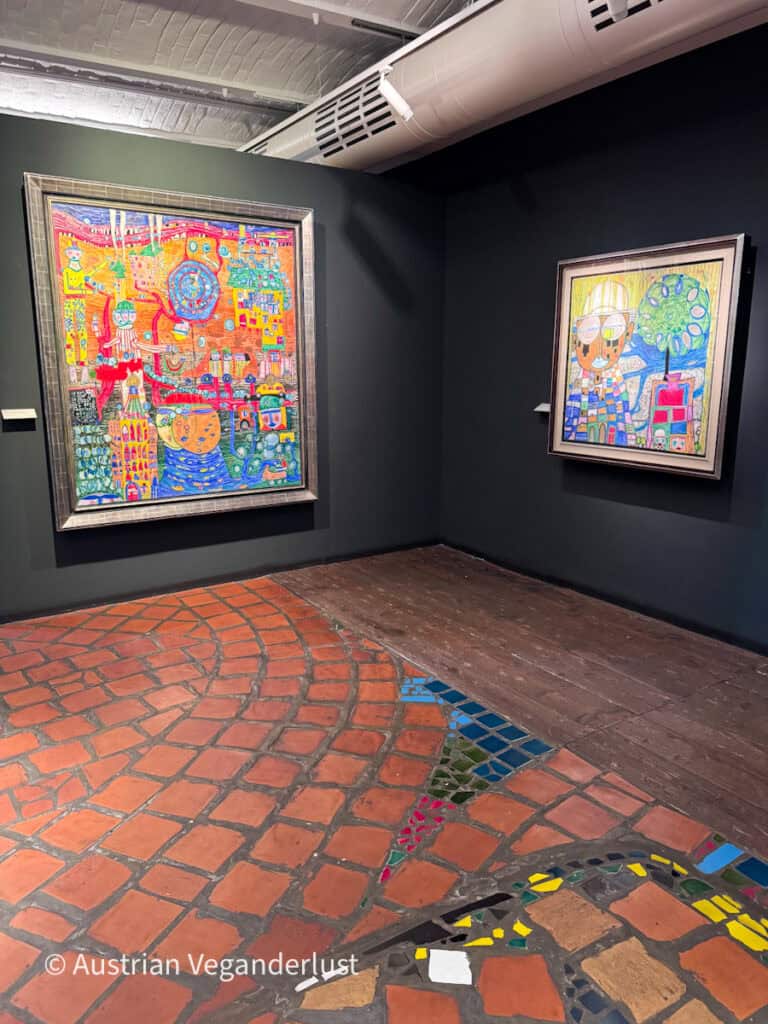
Before visiting, I mainly knew him as an architect, but I found it fascinating to learn more about his paintings. The exhibition includes many of his original artworks and shows how his style evolved throughout his life.
I also enjoyed learning more about his personal life and his travels. One exhibit that caught my attention was a model of his boat, which he used to travel extensively and even sail as far as New Zealand.
Another highlight is a model of the original project that eventually became Rogner Bad Blumau, my favourite thermal spa in Austria.
Stop for a Coffee
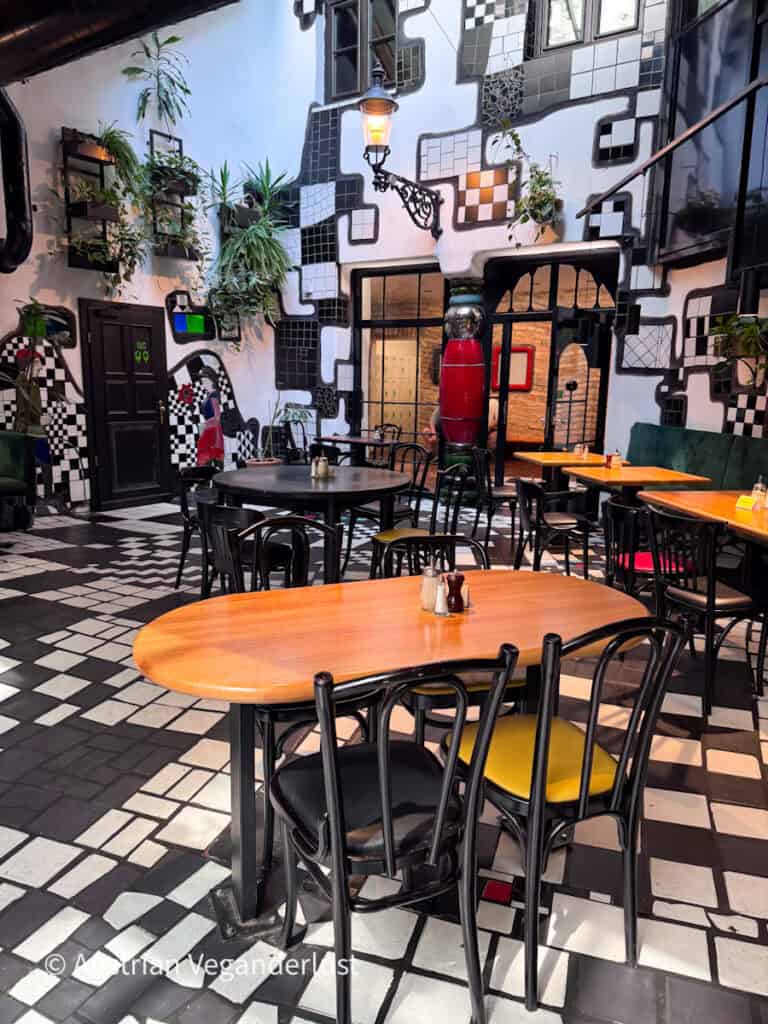

After exploring the museum, I recommend stopping by the café.
Compared to the busy café at Hundertwasser Village, it feels much more relaxed. During my visit, I enjoyed an avocado bread and a matcha with blackthorn juice in the peaceful courtyard. (Clearly labelled vegan options)
Spittelau Waste Incineration Plant

One of Hundertwasser’s most unusual projects in Vienna is the Spittelau Waste Incineration Plant.
At first glance, a waste incineration plant might not sound like a tourist attraction. But Hundertwasser transformed this practical building into a colourful landmark that can be spotted from quite far away thanks to its distinctive golden sphere.
For most visitors, I wouldn’t recommend travelling across Vienna just to see it. However, if you’re passing by on a train or visiting the area, it’s worth keeping an eye out for it.
You can usually only admire the building from the outside, but the plant also offers free guided tours. I’ve already booked a tour myself and will update this guide once I’ve had the chance to visit.
More Hundertwasser Buildings in Austria
If Hundertwasser’s architecture has captured your imagination, there are several more buildings worth visiting elsewhere in Austria and even more spread around the world. The most notable buildings in Austria are:
Rogner Bad Blumau
My personal favourite is Rogner Bad Blumau in Styria. This thermal spa was designed by Hundertwasser. With colourful buildings, curved lines, roof gardens, and plenty of greenery, it’s one of the most unique places to stay in Austria.
Interestingly, some of the designs were originally intended for a residential project near Vienna. You can even see a model of these plans at Kunst Haus Wien.
If you’re planning a trip to Styria, I highly recommend spending at least one night here.
🧖♀️ Book your stay in this unique spa here
St. Barbara Church in Bärnbach
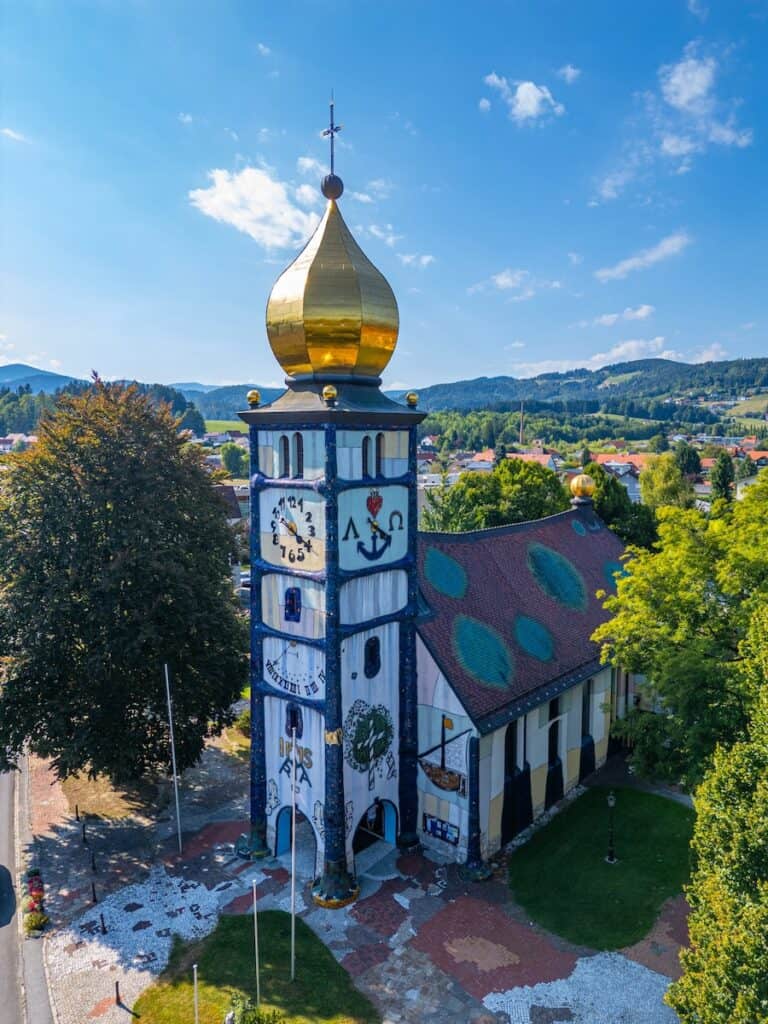
Another fascinating Hundertwasser project is St. Barbara Church in Bärnbach, a small town in Styria.
Hundertwasser redesigned the exterior of the church, adding colourful towers, unusual shapes, and artistic details that transformed it into one of Austria’s most distinctive churches.
Autobahnrasthaus Bad Fischau
One of Hundertwasser’s lesser known projects is the service station at Bad Fischau along the A2 motorway.
While it’s not a destination in itself, it’s a fun surprise if you’re driving between Vienna and Styria and want to see another example of his colourful architectural style.
Hundertwasser’s Ship in Tulln

At the Hundertwasser Museum, I was surprised to learn how much time Hundertwasser spent travelling by boat. One of the exhibits is a model of the ship he used to explore the Mediterranean and sail as far as New Zealand.
If you’d like to see the real ship, you can see it in Tulln, although entrance is only permitted a few times a year. While you’re there, it’s also worth exploring the rest of this charming town on the Danube.
More Unique Things in Vienna
Hundertwasser’s buildings are unlike anything else you’ll find in Vienna. Their colourful facades, uneven floors, and close connection to nature show that architecture doesn’t have to follow conventional rules.
If Hundertwasser’s unique vision appeals to you, Vienna has plenty more unusual places to discover. You can watch a breathtaking light show inside a historic church, explore a fascinating cemetery where nature is slowly reclaiming old graves.
For more unusual experiences, check out my guide to the best unique things to do in Vienna.
Read more about Vienna:
- 11 Absolute Best Things to Do in Vienna from a Local
- Where to Stay in Vienna: Best Areas & Hotels from a Local
- 7 Stunning Palaces in Vienna You Shouldn’t Miss
- Ultimate Guide to Schönbrunn Palace and Gardens in Vienna
- Hofburg Palace in Vienna: What to See & Ticket Comparison
- Sisi in Vienna: 10 Fascinating Places Linked to the Empress
- 13 Unbelievable Free Things to Do in Vienna from a Local
- Unique Things to Do in Vienna You Won’t Find Anywhere Else
- 33 Best Museums in Vienna Sorted by Category
- Free Museums in Vienna: Always Free & Special Free Days
- 13 Top Day Trips from Vienna You Can Do by Train
Pin it for later:


