Austrian Veganderlust contains affiliate links and is a member of the Amazon Services LLC Associates Program. If you make a purchase using one of these Amazon links, I may receive compensation at no extra cost to you. For more info, see the Disclosure Policy.
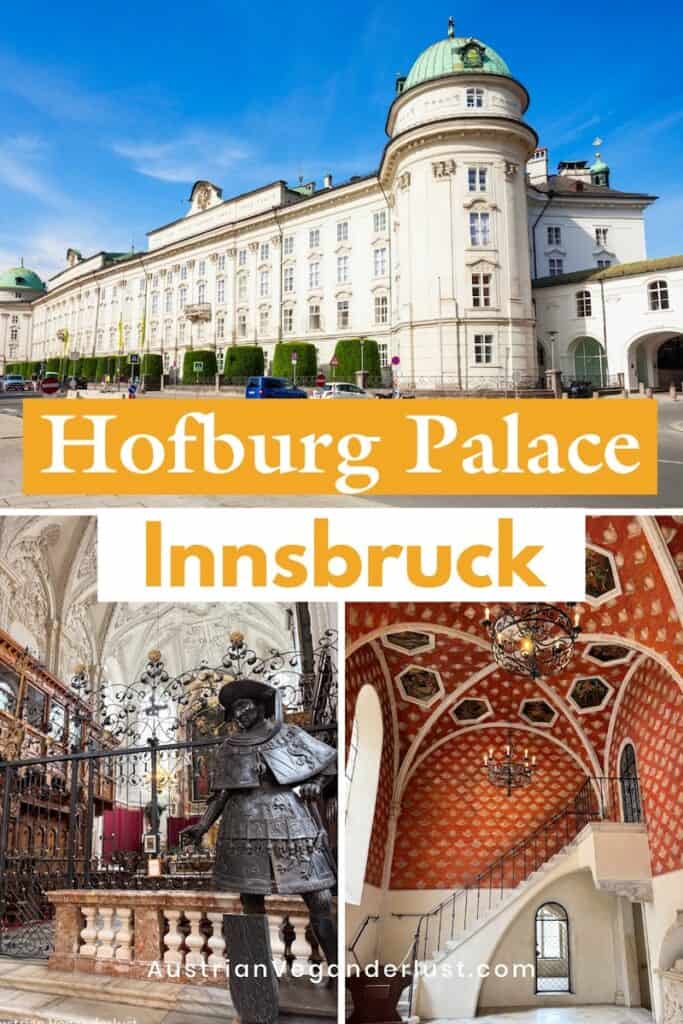
Hofburg Innsbruck: What to Expect at the Imperial Palace
If you’re looking to explore imperial history in Innsbruck, the Hofburg is a significant stop. Once the residence of Emperor Maximilian I and later remodelled by Maria Theresa, this palace has seen a lot of political power plays within its walls.
The interiors reminded me a lot of other Austrian palaces I’ve visited. What stood out was the peaceful atmosphere and the sense of stepping into centuries of Habsburg history without the crowds.
In this post, I’ll walk you through what’s inside the Hofburg Imperial Palace Innsbruck, plus nearby sights like the Hofkirche and the Hofgarten to round out your visit.
A Brief History of the Hofburg Imperial Palace Innsbruck
The Hofburg was originally built around 1500 under Emperor Maximilian I. In the 1700s, Maria Theresa transformed the palace into a late Baroque showpiece. In 1765 she had the chapel built, when her husband, Emperor Francis I, died.
In the 19th century, the palace was updated again for Empress Elisabeth (Sisi), with Rococo furnishings and coloured silk interiors. While she rarely visited, Emperor Franz Joseph stayed here more often.
Today, the Hofburg is one of Austria’s most important historic buildings, and a fascinating stop in Innsbruck.
What to See Inside the Hofburg Innsbruck
The Hofburg is divided into several sections. While the rooms are beautifully restored, if you’ve visited other imperial sites in Austria, like Schönbrunn or the Hofburg in Vienna, they may feel familiar, still, they’re worth seeing.
The State Rooms
The tour begins with the Guard Hall and leads into the Giant Hall, the palace’s most impressive space. This banquet hall features full-length portraits of Maria Theresa, Francis I, and their 16 children.
The Imperial Apartments
These rooms were redesigned in the 19th century for Empress Elisabeth (Sisi). Each room is decorated in a different colour, furnished in the Second Rococo style with matching silk wall coverings and curtains.
Although Sisi only visited a few times, the rooms reflect the courtly elegance associated with her era.
The Palace Chapel
This quiet space was created after Francis I’s death in 1765 by order of Maria Theresa, it’s where he passed away. The chapel is small but moving, with Baroque sculptures and a deeply personal history.
Crest Tower & Courtyard
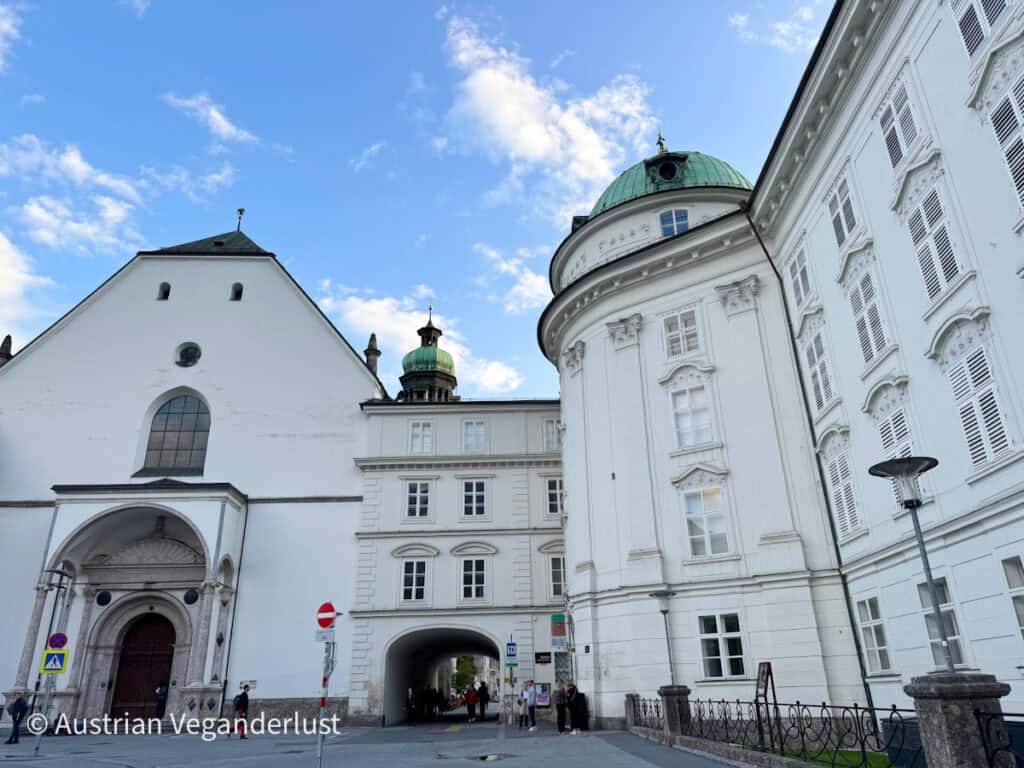
You’ll enter through the Great Courtyard, which still hints at the original Gothic design. The Crest Tower, once part of Maximilian’s palace, was rounded off during the Baroque renovations.
Practical Info & Tips
- Tickets: The Hofburg is included in the Innsbruck Card, or you can purchase individual tickets at the entrance.
- Opening hours: Typically open daily, check online for seasonal variations.
- Time needed: Around 30 to 60 minutes
- Photography: Photos are NOT allowed inside the museum rooms.
Tip: Don’t skip the Hofkirche or Tyrolean Folk Art Museum, they’re right next door. All three are included in the Innsbruck Card.
What’s Nearby: Hofkirche & Hofgarten
Hofkirche (Court Church)

Just a few steps from the Hofburg is the Hofkirche, home to one of Innsbruck’s most striking sights: the empty tomb of Emperor Maximilian I, surrounded by 28 life-sized bronze statues of ancestors and heroes.
You can enter the church through the Tyrolean Folk Art Museum, which is right next to the Hofburg. Both are included in the Innsbruck Card.
If you want a deeper look, I’ve written a full post about visiting the Hofkirche and Folk Art Museum.
Hofgarten

Across the street from the Hofburg, the Hofgarten is a peaceful green space perfect for a short break after your palace visit. In summer, it’s ideal for a walk or picnic, in winter, it hosts a seasonal light show.
Keep an eye out for the Trompetenbaum tree and the statue of the Frog Prince near the music pavilion, my favourites.
Final Thoughts
If you’re interested in imperial history, or just want to walk in the footsteps of figures like Maximilian I, Maria Theresa, or Sisi, the Hofburg is absolutely worth a visit, especially with the Innsbruck Card.
Pair it with nearby sights like the Hofkirche and Hofgarten for a relaxed yet culturally rich morning or afternoon in the city.
Want to know more about what’s next door? Check out my full post on the Hofkirche and Tyrolean Folk Art Museum, it was one of my favourite stops in Innsbruck.
Read more:
Pin it for later: