Austrian Veganderlust contains affiliate links and is a member of the Amazon Services LLC Associates Program. If you make a purchase using one of these Amazon links, I may receive compensation at no extra cost to you. For more info, see the Disclosure Policy.
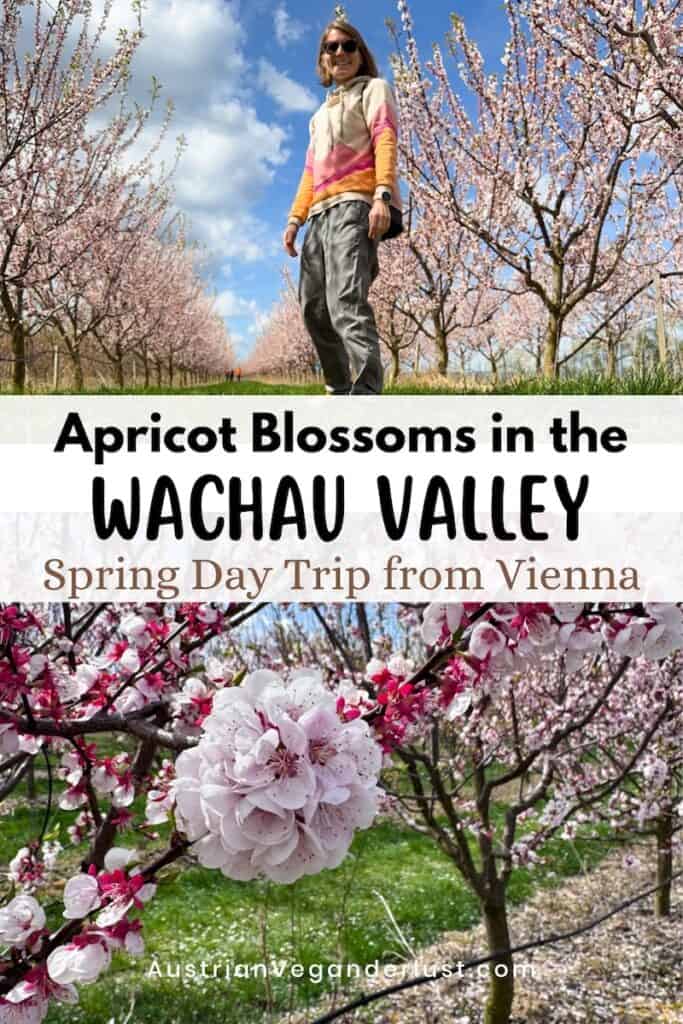
Apricot Blossoms in the Wachau Valley: Best Places + Tips
I almost missed the apricot blossoms in the Wachau Valley completely.
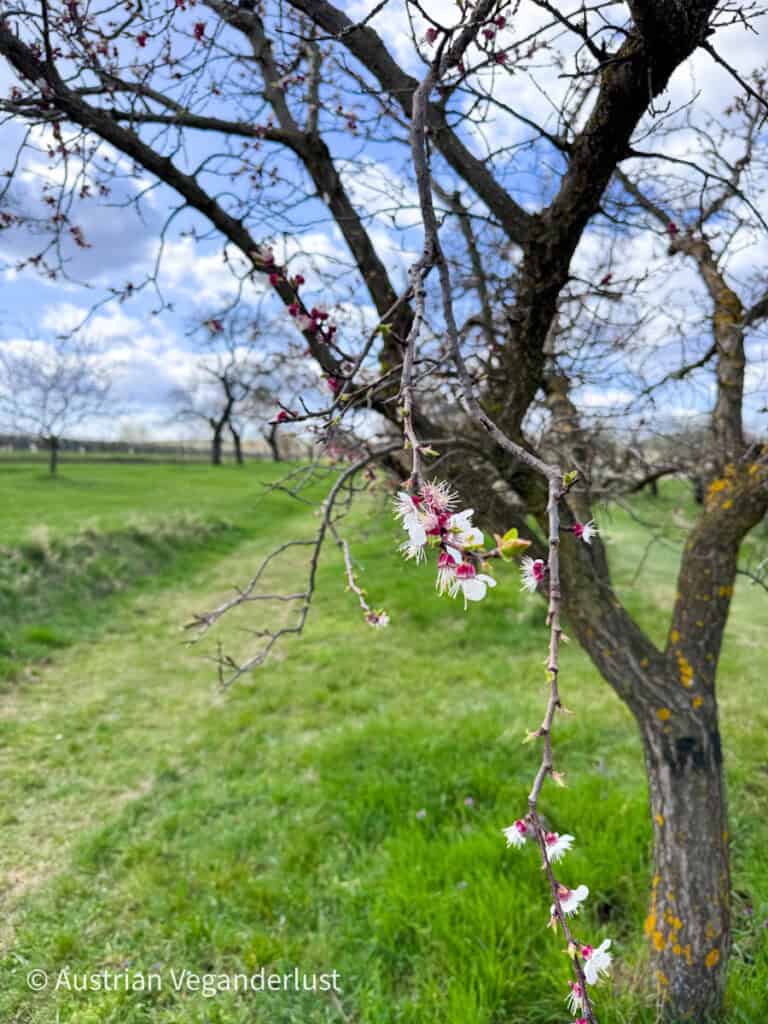
Apricot blossom season here is beautiful, but the timing is tricky. The day before my trip, everything looked perfect on the webcams. I waited just one more day, and by the time I arrived, most of the blossoms were already gone.
I kept walking anyway and managed to find a few trees still in full bloom, which taught me two things: timing really is everything here, and knowing where to go can save the day.
In this guide, I’ll show you where to see apricot blossoms, how to get there by public transport, and how to turn it into a full day trip, including combining it with a visit to Göttweig Abbey.
When to See Apricot Blossoms (Timing Is Everything)
If you take one thing away from this post, let it be this: timing matters more than anything else.
Apricot blossoms in the Wachau Valley usually bloom between late March and early April, but the exact timing changes every year. And even more frustrating, it can change within days.
When I visited, I checked the webcams the day before and everything looked perfect. One day later, most of the blossoms were already gone. That’s how quickly things can shift.

What makes timing so tricky
- The bloom only lasts about 10 days to maximum of 3 weeks
- Warm weather can make blossoms appear earlier
- Wind or rain can end the season very quickly
- Not all trees bloom at the same time (some areas last longer than others)
How to time your visit right
- Check live webcams before you go
- Don’t delay your trip if it looks good, go as soon as you can
- Be flexible with your plans if possible

Marillen-Erlebnisweg: Scenic & Easy Walk
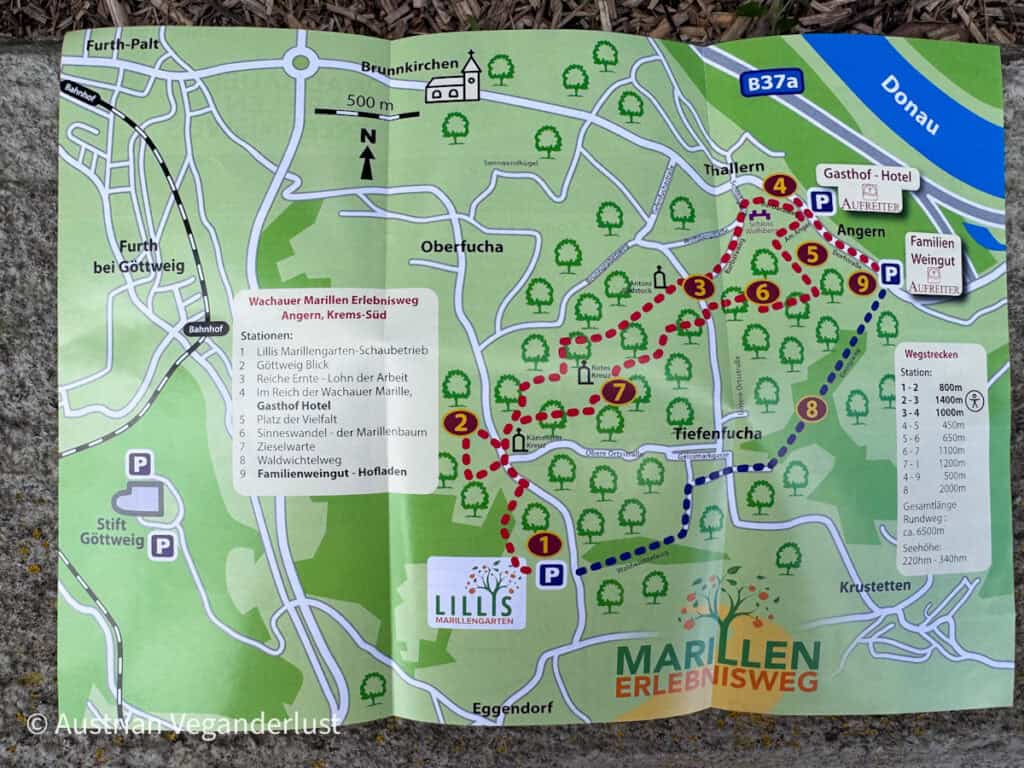
If you want to actually walk through apricot orchards, the Marillen Erlebnisweg is one of the best places to do it.
This trail takes you right through the fields, so you’re not just looking at blossoms from a distance, you’re surrounded by them.
How to Get There Without a Car
I did this trip entirely by public transport from Vienna, and it’s very doable.
- Take a train + bus combination to Angern (Krems)
- There are multiple connections, so I recommend checking them on the VOR AnachB website (more reliable than Google Maps)
- Important: Make sure you choose the correct Angern stop near Krems an der Donau. There are multiple places with that name.
Also good to know:
- Train tickets → buy in advance (online or at the station)
- Bus tickets → buy directly from the driver
- Wachau Ticket → between 13. March and 30. April you can also get a special spring ticket for €14 that’s valid for all buses, ships and trains in the Wachau Valley
What the Trail Is Really Like
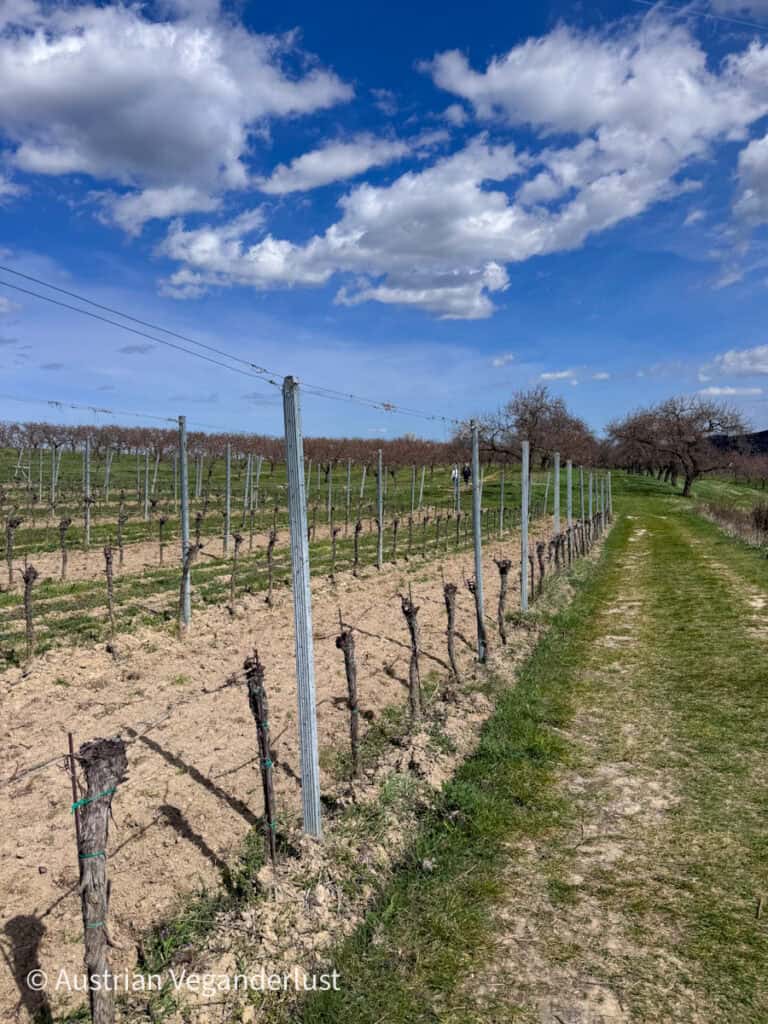
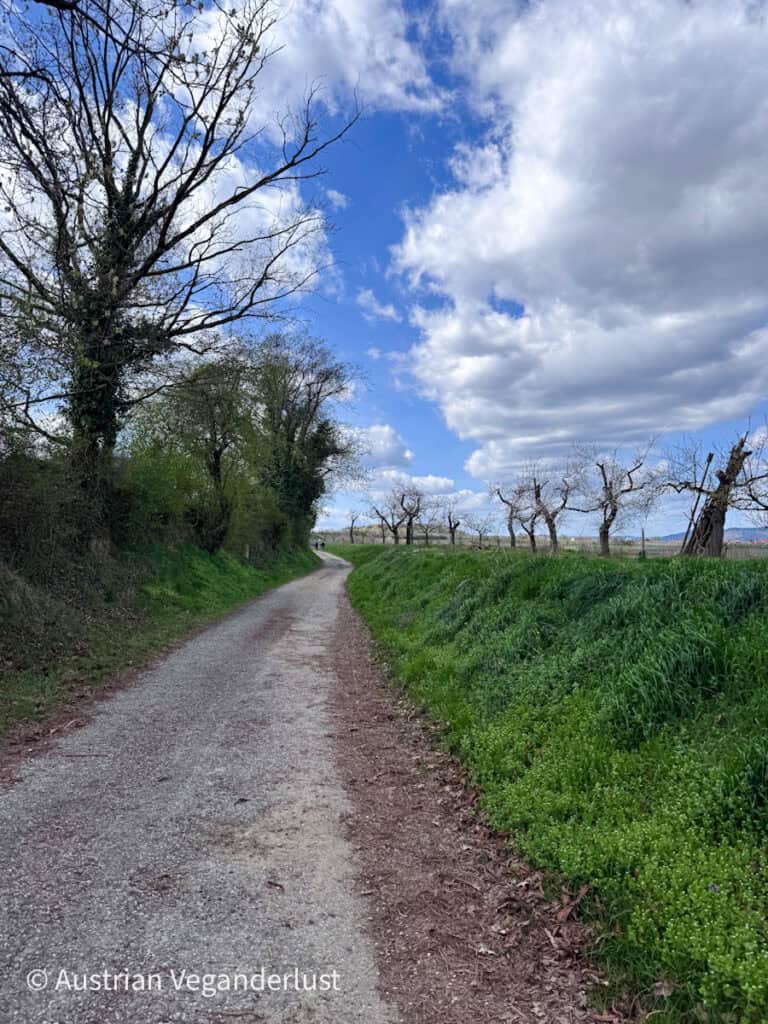
The walk itself is easy and doesn’t feel like a hike.
- Takes about 2 hours (if you do the full loop)
- Terrain:
- concrete roads
- paths through orchards and grass
- No special gear needed, just comfortable shoes, a water bottle and maybe some snacks
In terms of crowds:
- Not empty, but not crowded either
- Most people arrive in waves with the bus
- If you walk a bit faster or slower, you’ll often have stretches to yourself

What I Loved (and Didn’t)
What I loved:
- Walking directly through apricot fields
- Finding trees still in full bloom, even when others had already lost their blossoms
What I didn’t love:
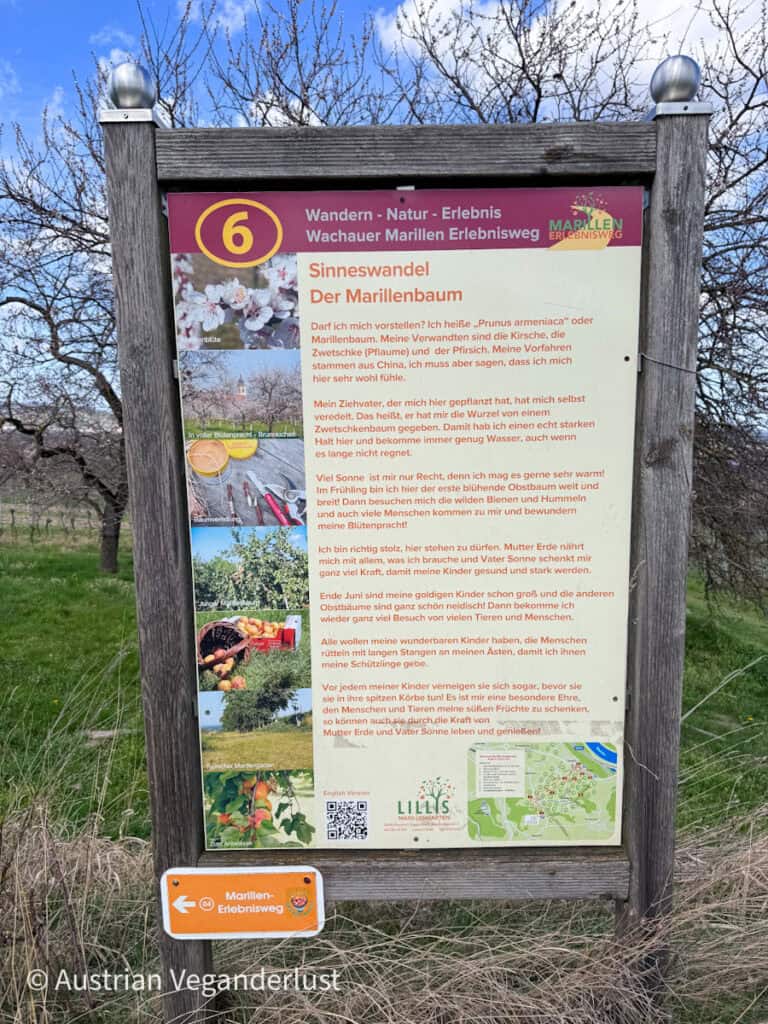
- The information stops at the so called experience trail (that what Erlebnisweg translates to) weren’t that interesting
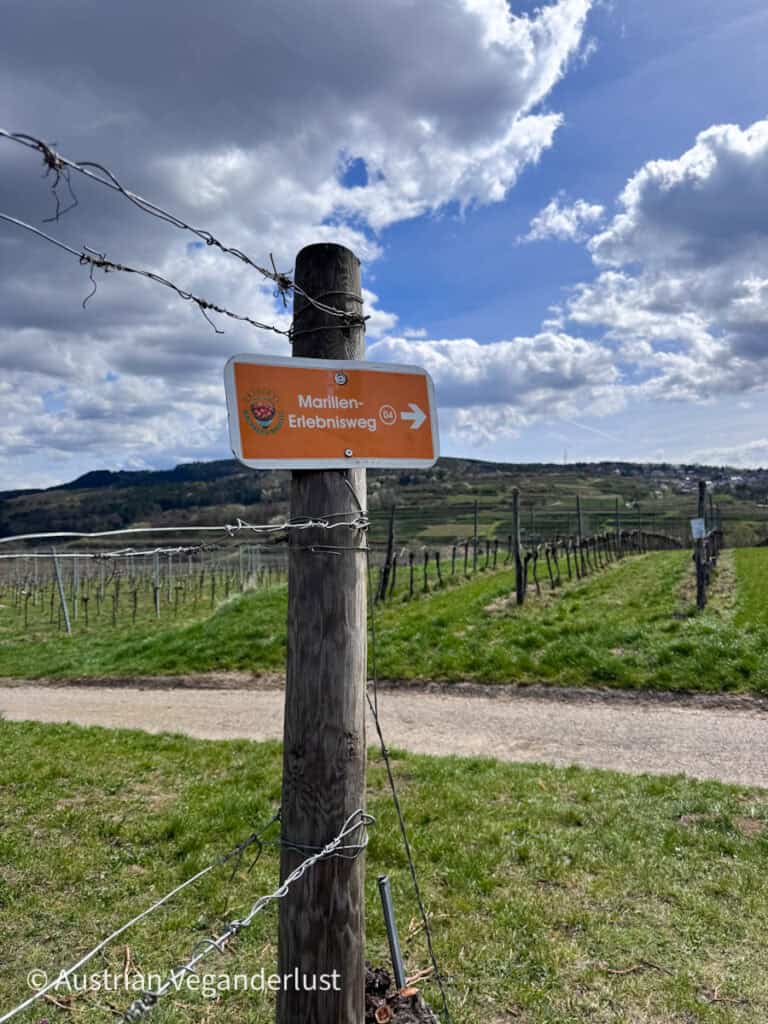
- The signage gets worse the further you go
- There’s not that much too see if apricot blossoms aren’t in bloom, although it might be great in summer or autumn as well since you also walk past vineyards
Food & Drinks Along the Way (Vegan Tips)
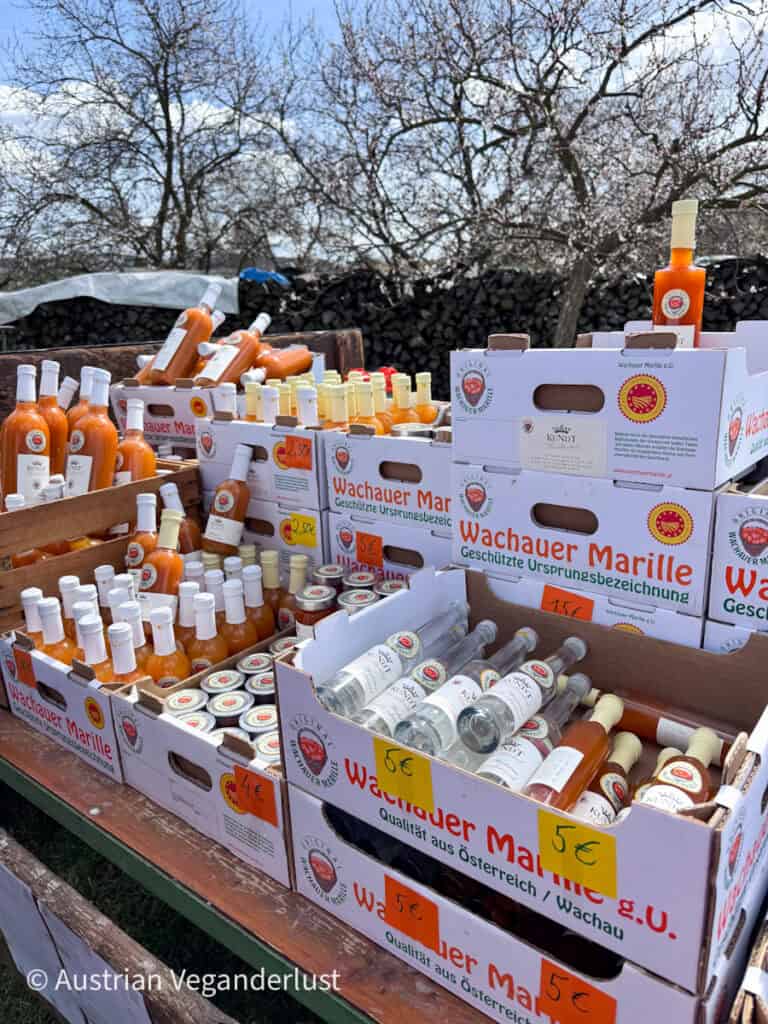
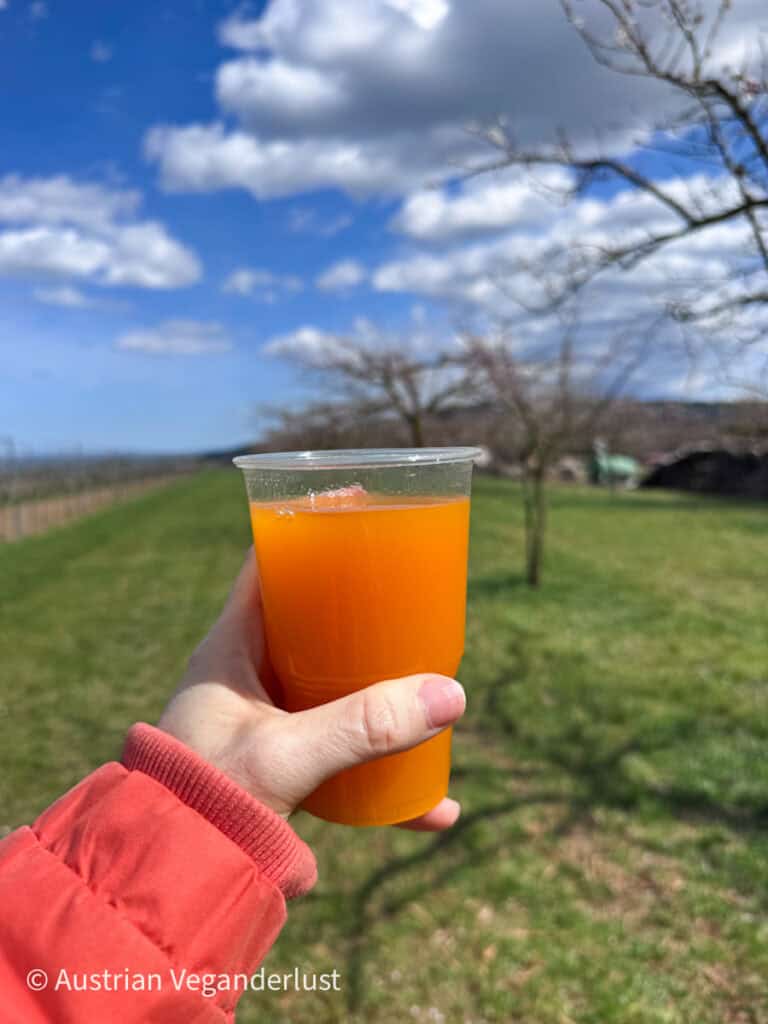
During apricot blossom season there’s a small stall along the route where you can buy drinks and local products.
- They sell apricot and grape products, drinks, traditional Austrian doughnuts, and flat bread
- Cash only
- I paid about €1.50 for apricot juice with water, so it’s very reasonable priced
- No vegan food options
- I recommend to bring your own snacks and water as there’s no guarantee the stall is always there and having a picnic somewhere is a great add on to your trip

Extend Your Walk to Göttweig Abbey
If you want to turn this into a full day trip, I highly recommend continuing your walk to Göttweig Abbey. It’s especially great if it’s not high blossom season yet and you want a bit of a change of scenery.
I didn’t plan this at first, but I’m really glad I did.
The Walk There

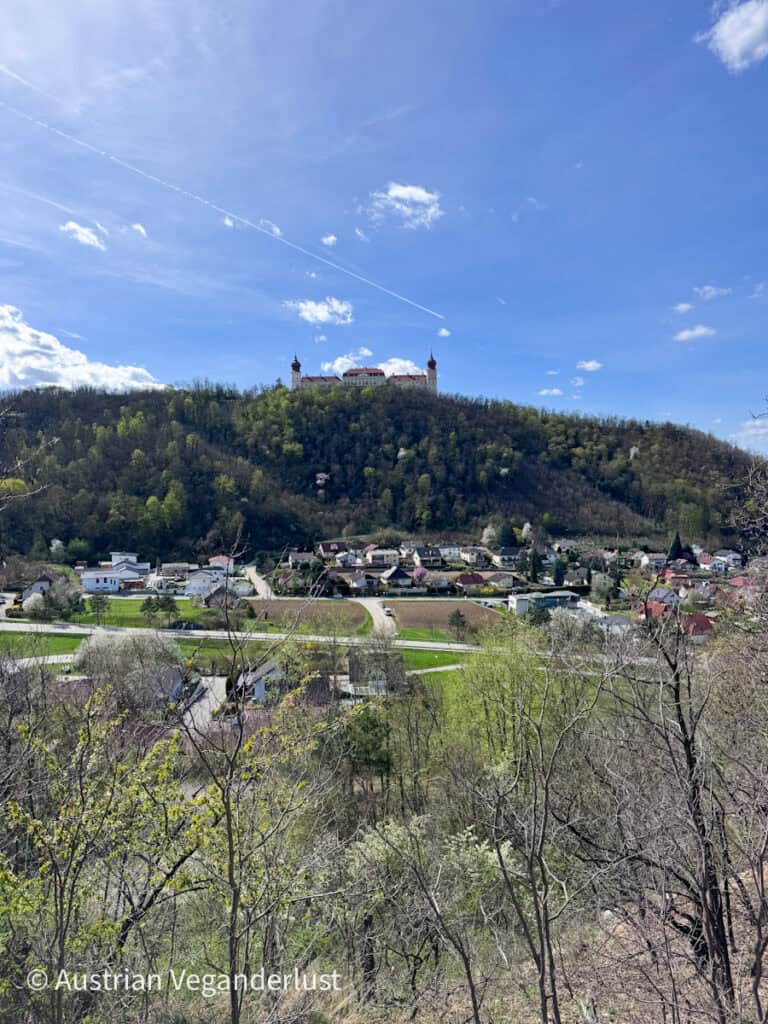
From the half way point of the Marillen-Erlebnisweg, the stop number 2 “Göttweig Blick”, where you have the great view of the abbey and where you can find the snack and drink stall. From there it took me about 1 hour to reach the abbey.
- The walk is more challenging than the trail
- You’ll go:
- Straight through a wooden trail and a bit uphill
- downhill into a valley
- then uphill again through the woods
- The last part is a steep, serpentine forest path
I was honestly quite exhausted by the time I arrived, but it was a nice forest hike (and a short walk through a small town).
There’s also a really nice picnic spot on the hill:
- bench and table
- great view of the abbey
- less wind and some shade
Where It Gets Confusing (Important Navigation Tip)


This part is easy to get wrong.
- You’ll reach a big road, use the tunnel underneath
- Afterwards you’ll come to a T-junction in a small village area, go left
- Google Maps will tell you to stay on the road, don’t follow it, instead take the first right this leads onto a gravel path, then into a forest trail (which can’t be found on Google Maps)
- Important: Some paths are mountain biking trails, don’t walk on those, it’s dangerous, stick to hiking paths only

Is Göttweig Abbey Worth Visiting?
Yes, absolutely.
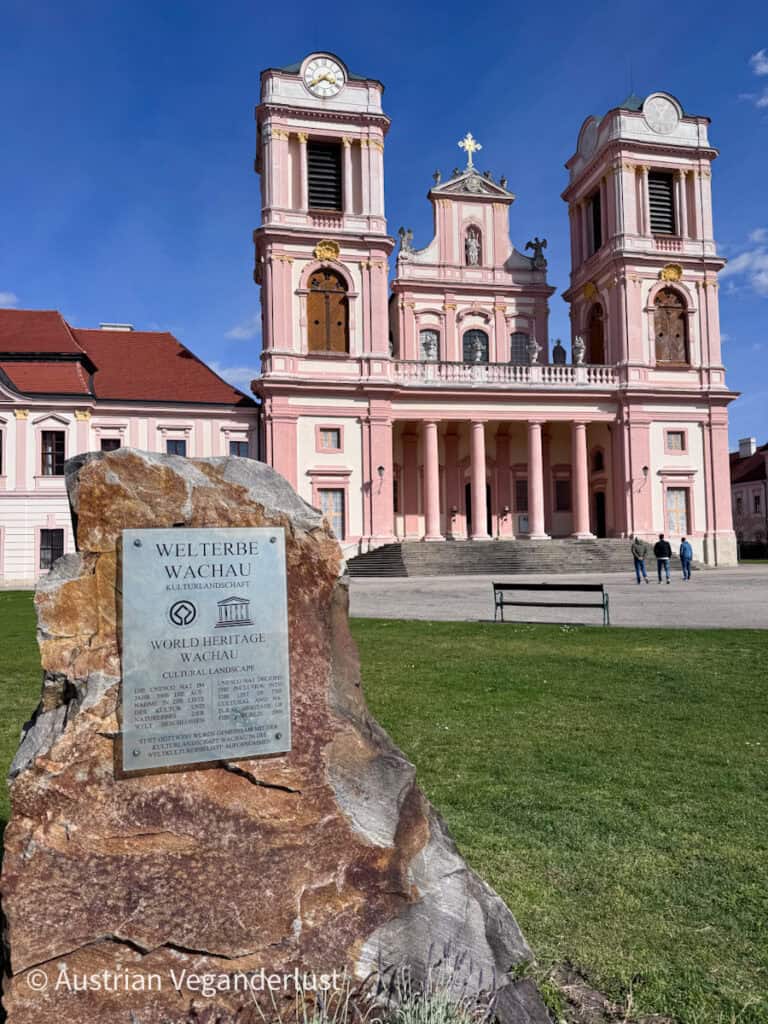
The highlight for me was the museum. You get to see
- Imperial-style state rooms inside an abbey
- There’s even a Napoleon room
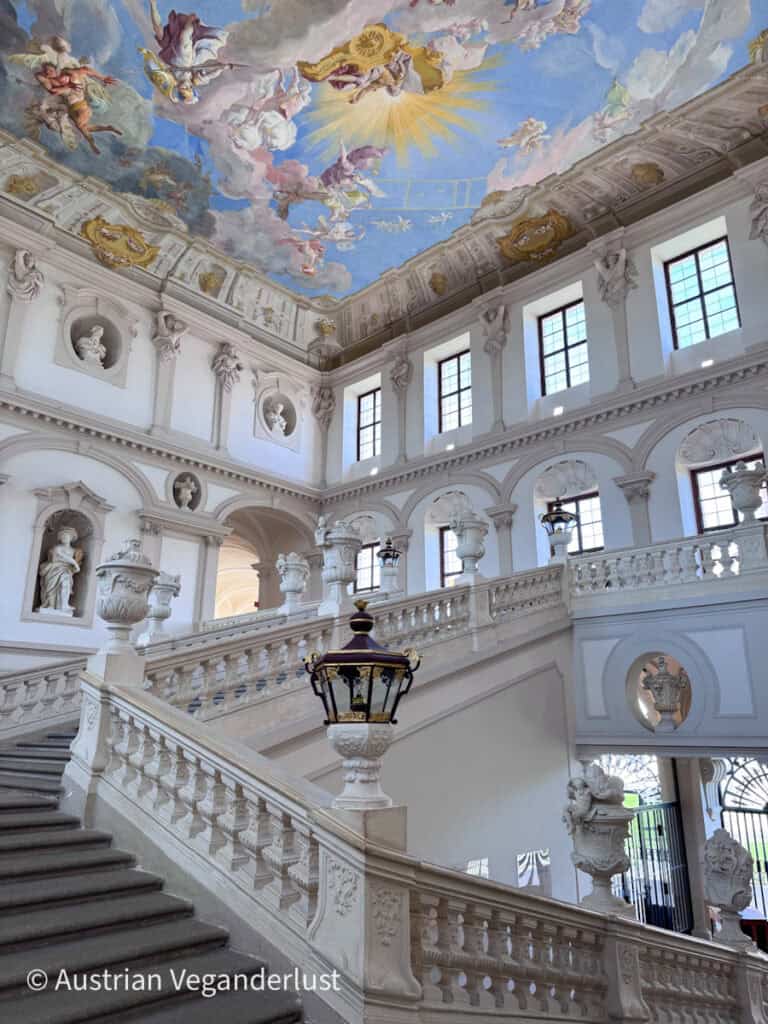
- The staircase is stunning
- And best of all: no crowds
It felt like visiting a palace, but without the crowds you usually get at palaces like Schönbrunn in Vienna.
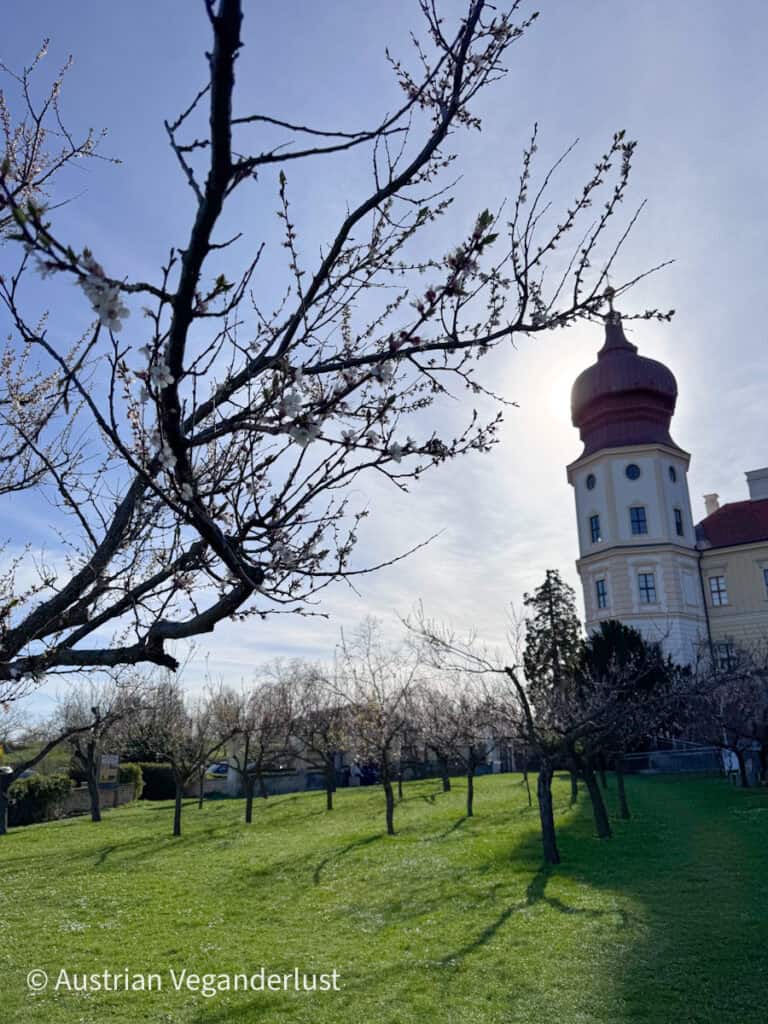
If you don’t want to pay the museum entrance you can visit the church and the apricot & herb garden for free. The garden must be nice when the trees bloom or when it’s all green, when I visited it looked a little bit bleak.


What to Know Before You Go
- Church → free to enter
- Apricot & herb garden → free
- Museum:
- paid entry
- included with the Niederösterreich Card
- audio guide included (English & German)
- You can also stay overnight at the abbey, which is a really unique option. Just don’t expect anything fancy, it’s inside a monastery after all.
- The restaurant has no vegan options
- The walk up is more tiring than expected
How to Get Back
This is the biggest downside. There are only two buses per day (at 9:43am and at 4:10pm) and they only go on weekdays.
Timing your visit perfectly for the bus is quite difficult. I didn’t manage it, so I had to walk on a forest path about 30 minutes to Furth to catch a train.
It’s an easy walk, but after a full day, I definitely felt it in my legs.
Marillenmeile in Rossatz-Arnsdorf (Next on My List)
Another place that’s often recommended for seeing apricot blossoms is the Marillenmeile in Rossatz-Arnsdorf.
I haven’t done this walk myself yet, but it kept coming up while I was researching and planning my trip, so I definitely want to try it next year and update this guide.
There are different circular routes, depending on where you start:
- East routes (Rossatz-Arnsdorf):
Walk through apricot orchards with beautiful views across the Danube to Dürnstein. This is also where Richard the Lionheart was imprisoned, and the village itself is incredibly picturesque. - West routes (Oberarnsdorf):
More focused on wide views of the orchards and the Danube river, which looks especially beautiful during blossom season.

Is It Worth Visiting for Apricot Blossoms?
Apricot blossoms in the Wachau Valley are truly beautiful, there’s no doubt about that.
But I’ll be honest, I also found the whole experience a bit stressful. Everything depends on timing, and it can change so quickly that it almost feels like pressure to get it right.
Personally, I actually prefer visiting the Wachau Valley in summer, or even more in autumn, when the vineyards turn golden. It’s much more relaxed, and you don’t have to worry about missing the highlight by just a day.
If you’re planning your visit (whatever time of year you choose), I’d recommend staying in the Wachau Valley and exploring from there instead of doing it as a rushed day trip.
👉 I’ve put together a full guide on the best places to stay in the Wachau Valley, so you can plan your trip more easily.
Read more:
- Where to Stay in Wachau Valley: Best Towns & Hotels
- How to Get to the Wachau Valley from Vienna without a Car
- Best Things to Do in Melk: Explore the Abbey & More
- How to Plan the Perfect Day Trip to Melk from Vienna
- How to Visit Dürnstein Austria: Wachau’s Fairytale Village
- Dürnstein Castle: How to Visit the Wachau’s Most Iconic Ruin
- Hiking Near Dürnstein: Scenic Trails in the Wachau Valley
- Weißenkirchen in der Wachau: Peaceful Stop Between Vineyards
- How to Visit Spitz Wachau: Austria’s Beautiful Wine Village
Pin it for later: