Austrian Veganderlust contains affiliate links and is a member of the Amazon Services LLC Associates Program. If you make a purchase using one of these Amazon links, I may receive compensation at no extra cost to you. For more info, see the Disclosure Policy.
Mendlingtal: My Guide to This Easy Valley Hike
It took me moving to Vienna to finally visit Mendlingtal, even though I grew up only about a 30 minute drive away. Getting the Niederösterreich Card, which includes admission, finally gave me the push I needed.
I visited with my parents on a sunny Saturday in August and found a peaceful forest walk that reminded me of an Austrian Klamm, just without all the exhausting climbing.
The trail is mostly flat and easy, making it a great choice even if you’re not much of a hiker.
In this guide, I’ll share what hiking through Mendlingtal is actually like and everything you need to know for your visit.
What Is the Mendlingtal?
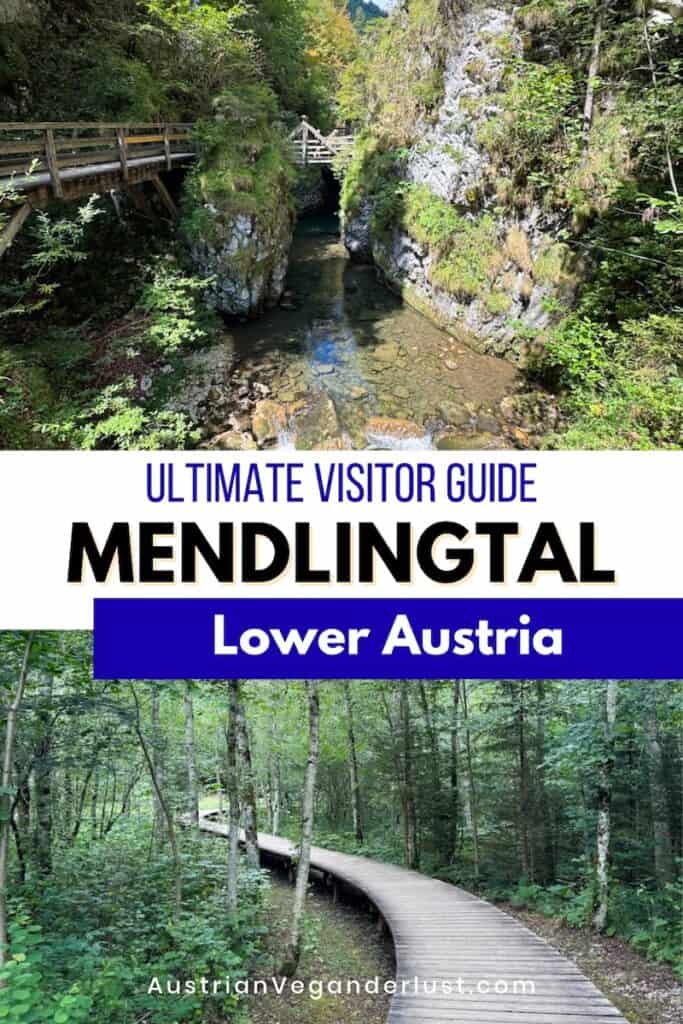
Mendlingtal is a narrow valley near Göstling an der Ybbs in Lower Austria, close to the Styrian border. The 3.5 km (2.2 miles) themed trail follows the stream through the forest, crossing wooden bridges and walkways along the way.
But it’s not just about nature. The valley also gives you a glimpse into how people once lived and worked here.
Mendlingtal is open from May to October, so keep in mind that you can’t visit year round.

A Short History of Mendlingtal
Mendlingtal has a long connection to forestry. Wood was once transported through the valley using the water of the Mendlingbach, a process known as Holztrift.
You can still see this history along the trail today. There’s a reconstructed dam that created the water needed to transport the timber, as well as a working historic mill.
You’ll also find a working Venetian sawmill, a forge and the old blacksmith journeymen’s hostel.
I really liked that these historic elements are spread throughout the valley. It means you’re not just walking through the forest, but discovering little pieces of its history as you go.


Watch a Historic Holztrift Demonstration
If you time your visit right, you can even see how timber was once transported through Mendlingtal during a Schautrift demonstration.
The demonstrations take place on the first Sunday and third Saturday of each month, with visitors meeting at the Klaushütte at 1:30 pm.
The mill also operates from 10 am and the Venetian sawmill from 1 pm on these days.
You don’t need to register in advance. However, the Schautrift depends on the water level and can be cancelled when there isn’t enough water in the stream.
Check the official Mendlingtal website before your visit for the latest information.

Is Mendlingtal Worth Visiting?
I think Mendlingtal is well worth visiting if you’re already in the area. It’s a peaceful place to spend a few hours in nature, especially if you like the idea of hiking through an Austrian gorge but don’t want lots of steep climbs.
However, I wouldn’t travel all the way from Vienna just to visit Mendlingtal. There are more impressive gorges in Austria, with bigger waterfalls and more dramatic scenery.
For me, Mendlingtal is best as a relaxed and easy nature walk rather than a spectacular hike. It’s particularly good if you don’t hike often but still want that Austrian forest and gorge experience.
Walking Through the Mendlingtal Valley
Parking and Walking to the Entrance
We started our walk at the entrance in Lassing, where you’ll find a car park above the ticket office.
The car park was almost full when we arrived on a sunny Saturday in August. Surprisingly, though, Mendlingtal never felt crowded. The trail is long enough that everyone spreads out quite well.
One thing I wasn’t expecting was that the walk between the car park and ticket office would be the steepest part of our entire hike. It’s downhill on the way there, which of course means you’ll have to walk all the way back uphill at the end of your visit.
Tickets and the Niederösterreich Card
Entrance to Mendlingtal was included with my Niederösterreich Card, while my parents paid the regular admission fee of €12 per person.
If you’re using the Niederösterreich Card, you still need to stop at the ticket office. During my visit, they scanned my card and printed a separate entrance ticket for me, which I then used at the barrier.
Make sure you keep this ticket until the end of your visit. You’ll need it if you leave through the barrier at the other end of the valley to visit the restaurant and want to walk back.
Don’t Skip the Small Museum
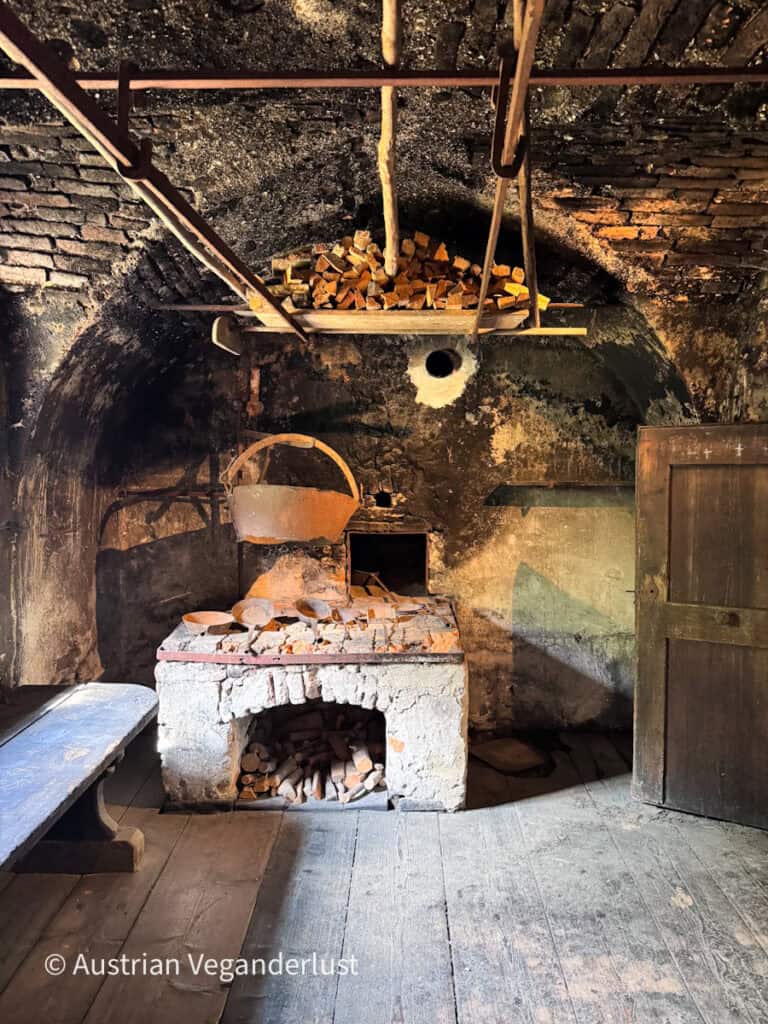
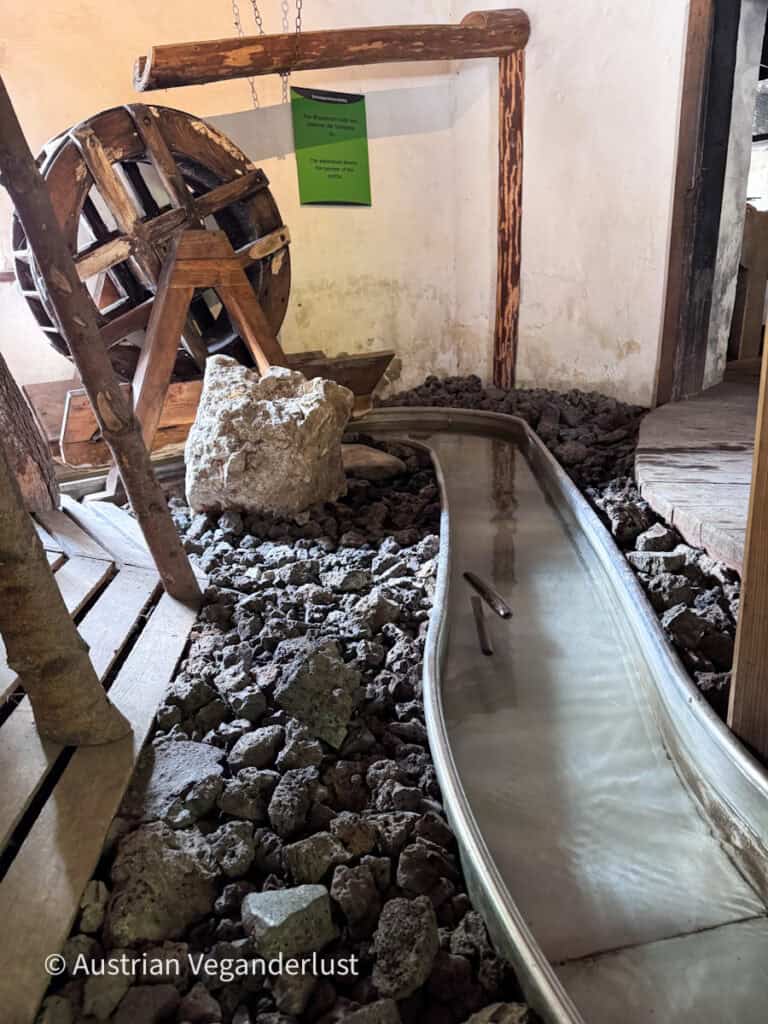
Before starting the actual walk, I recommend having a quick look around the small museum near the entrance.
Inside, you can see historic rooms, including the original Rauchkuchl, or smoke kitchen, and learn more about the people who worked in Mendlingtal. The information boards were in both German and English when I visited.
There are also silhouettes of former workers that start talking when you press a button. These stories were only available in German during my visit, but I still think the museum is worth a quick stop before heading into the valley.
Explore the Historic Area Around the Entrance
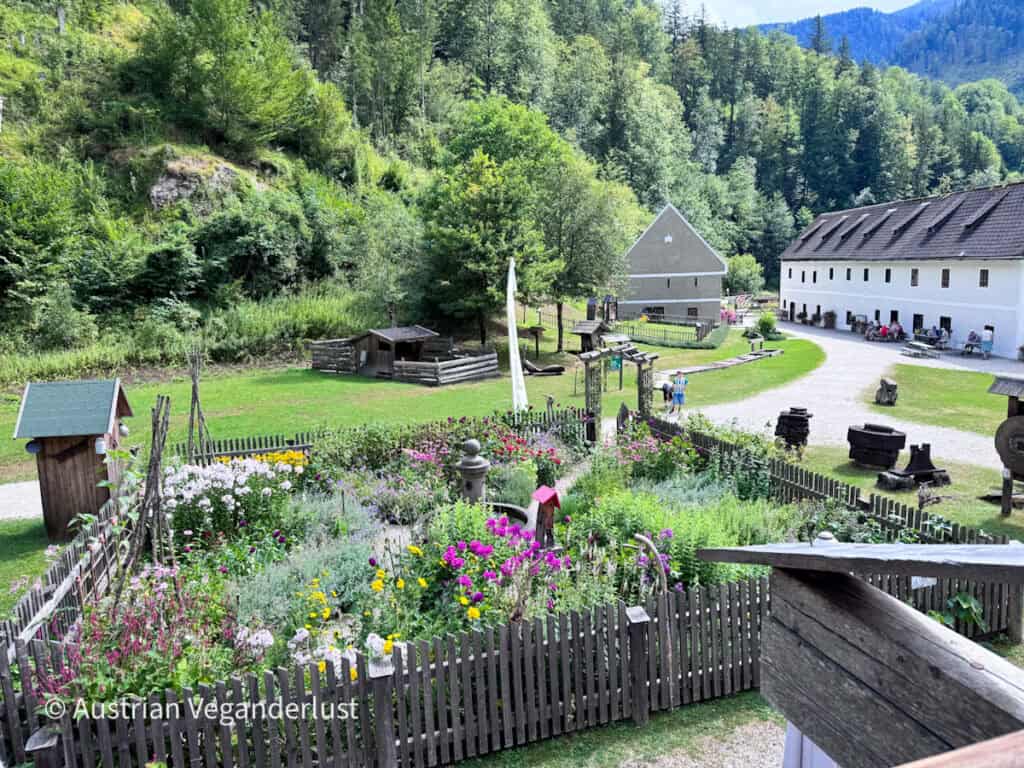
Before you head deeper into the valley, take some time to explore the area around the entrance. This is where you’ll find the working Venetian sawmill and historic forge, as well as benches and a small garden.
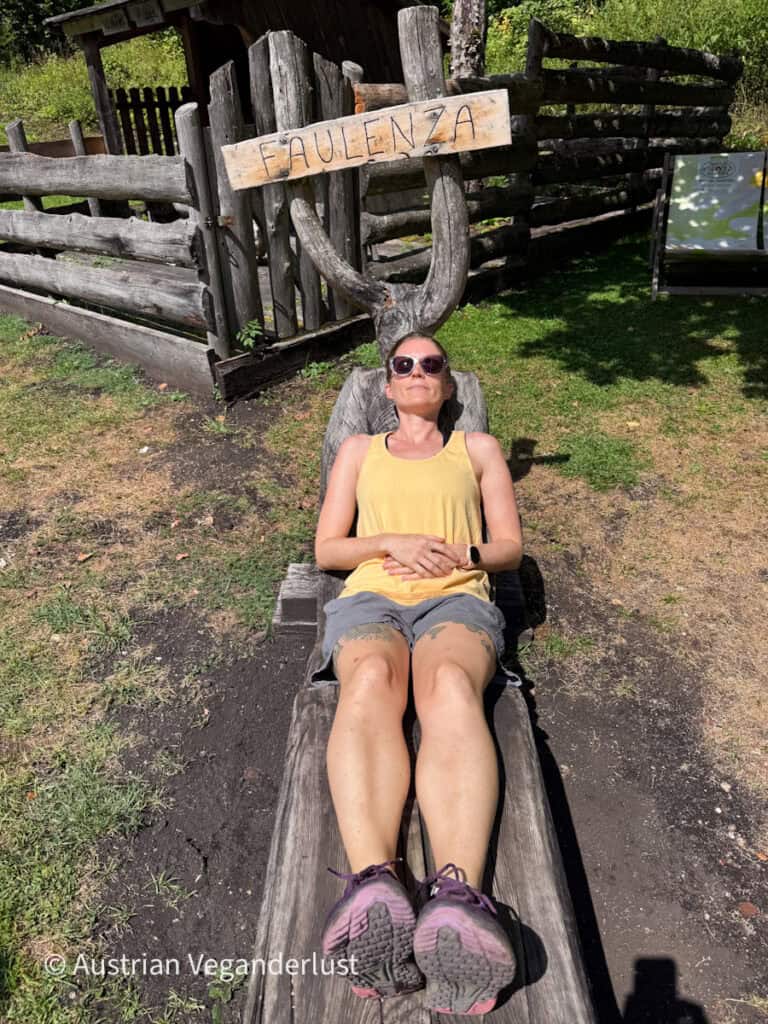
I also loved the little details showing what life here once looked like. Instead of keeping farm animals, there are wooden pigs and even a wooden cow you can try milking it. I thought this was a fun way to recreate the historic setting.
After exploring this area, you can follow the wooden paths and bridges into the valley itself, which is where my favourite part of the visit began.
Hiking Through Mendlingtal Valley
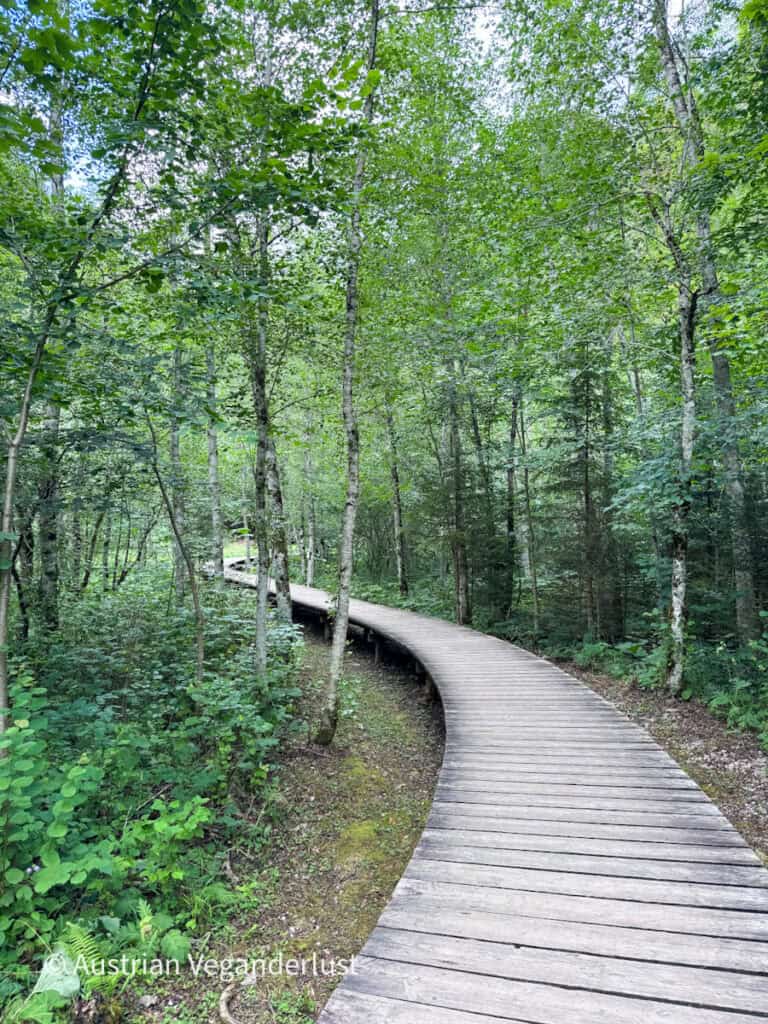
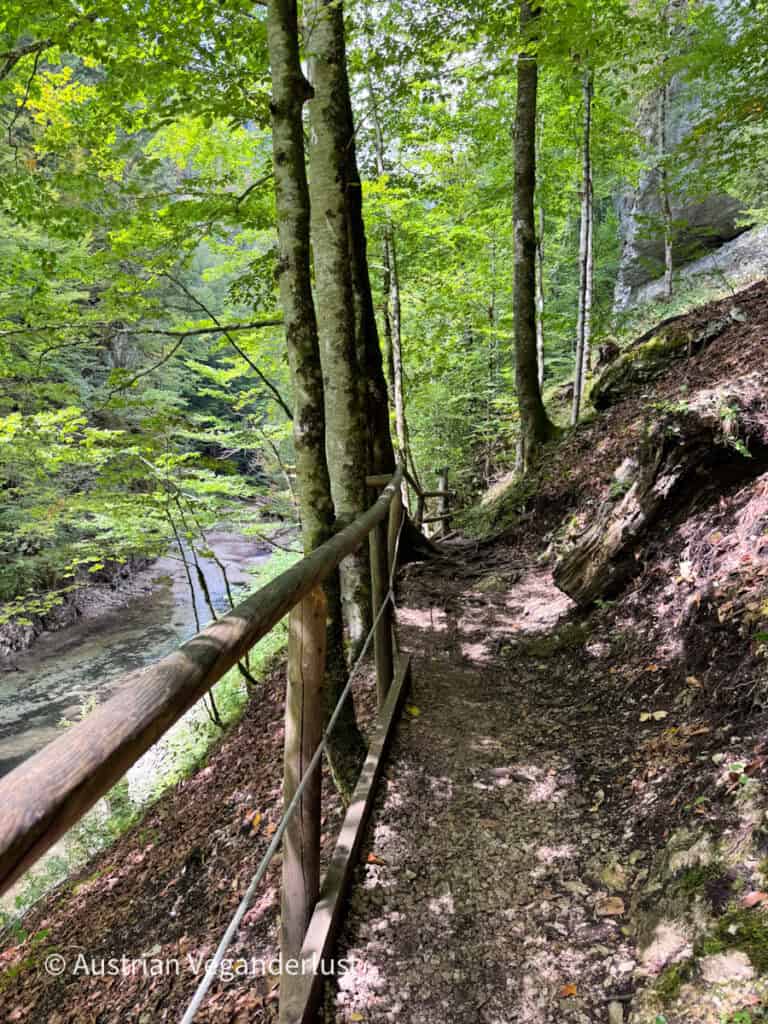
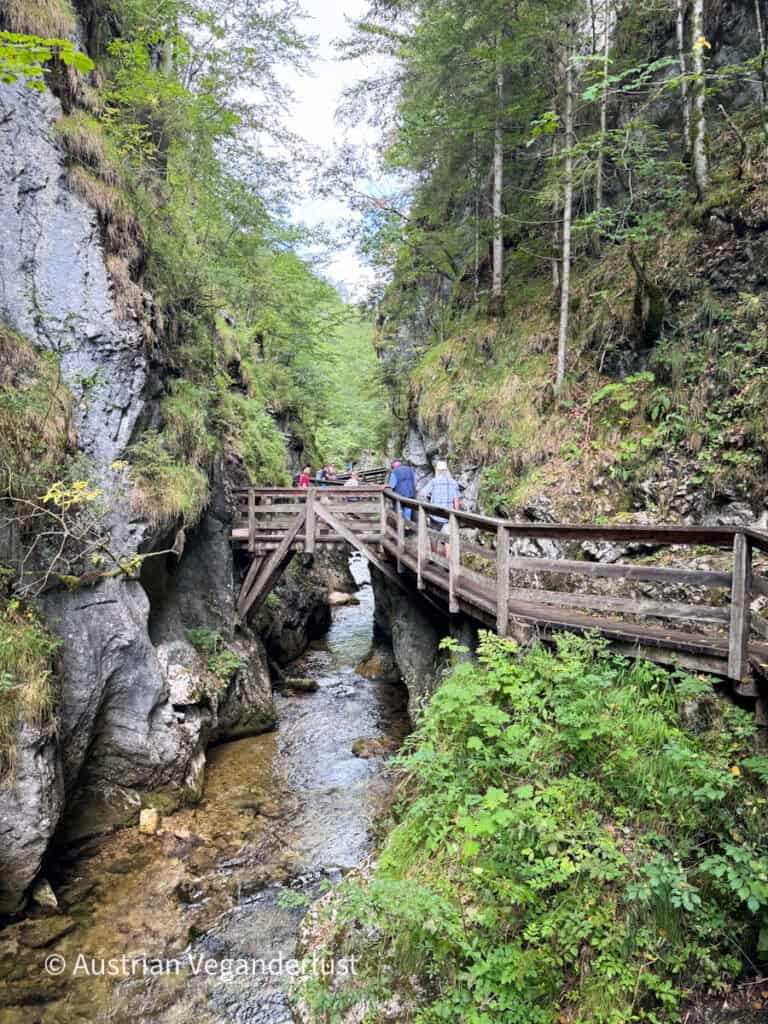
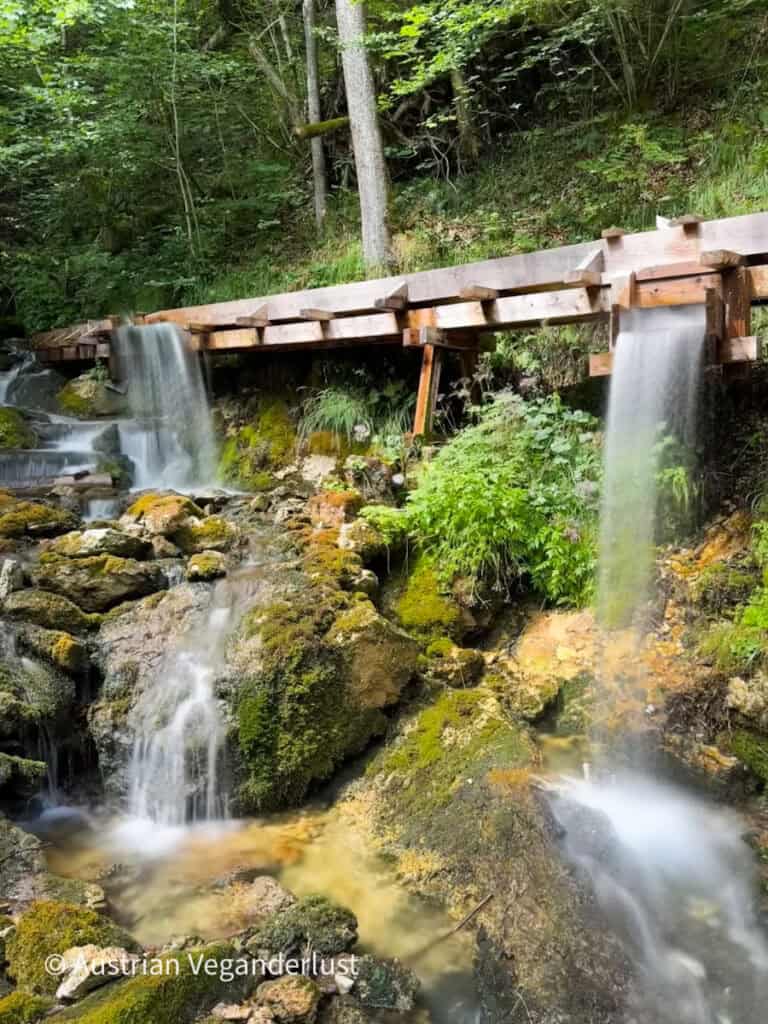
Walking through Mendlingtal reminded me a little of hiking through an Austrian gorge. You follow the stream through the forest, with much of the route taking you across wooden walkways and bridges.
The difference is that Mendlingtal is much easier. There isn’t much uphill or downhill walking, so you get some of that gorge hiking feeling without the exhausting climb.
We visited in August and the wooden walkways were dry and easy to walk on. I can imagine the wood getting slippery when wet though.
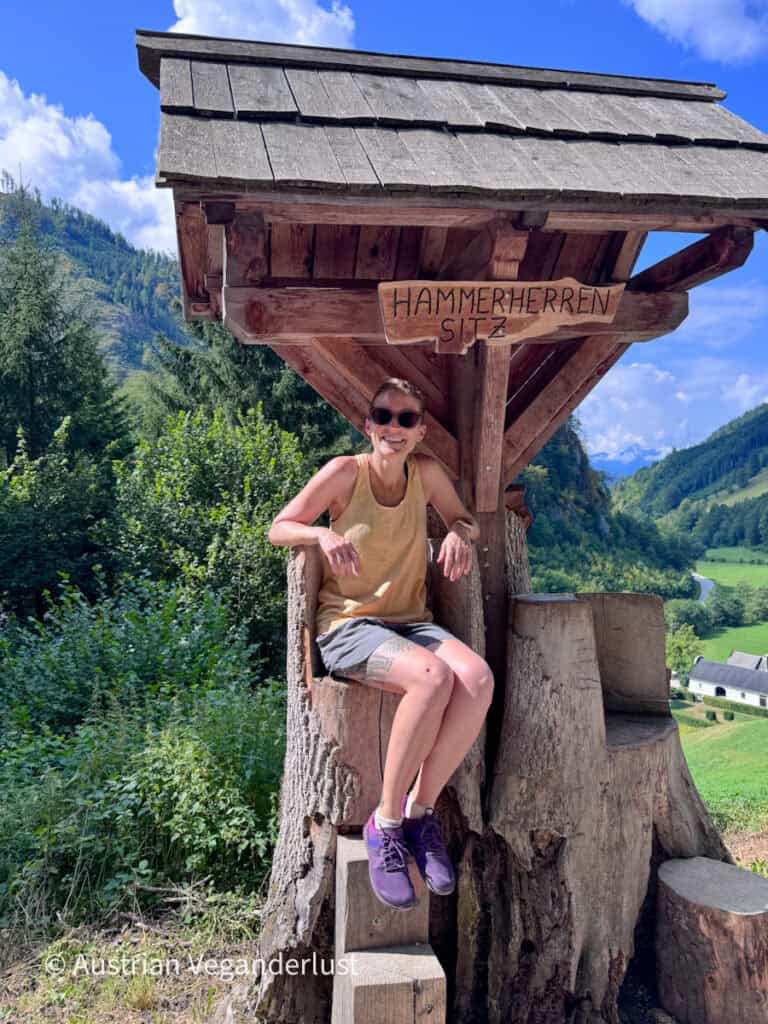
There are plenty of small details to look out for too. I particularly liked the Austrian sayings written in dialect along the trail. One bench told us to “Rost amoi”, the Austrian version of the German “Raste einmal”, which means “have a rest”.
Dip Your Feet in the Water
One of my favourite parts was actually getting into the stream. There are spots where you can easily reach the water, so we took off our shoes and cooled our feet in the cold water.
This was especially nice on a hot summer day. When I visited, the water level was quite low after a dry period, so expect the valley to look a little different depending on the weather and time of year.
Herrenhaus Mendlingtal at the End of the Valley
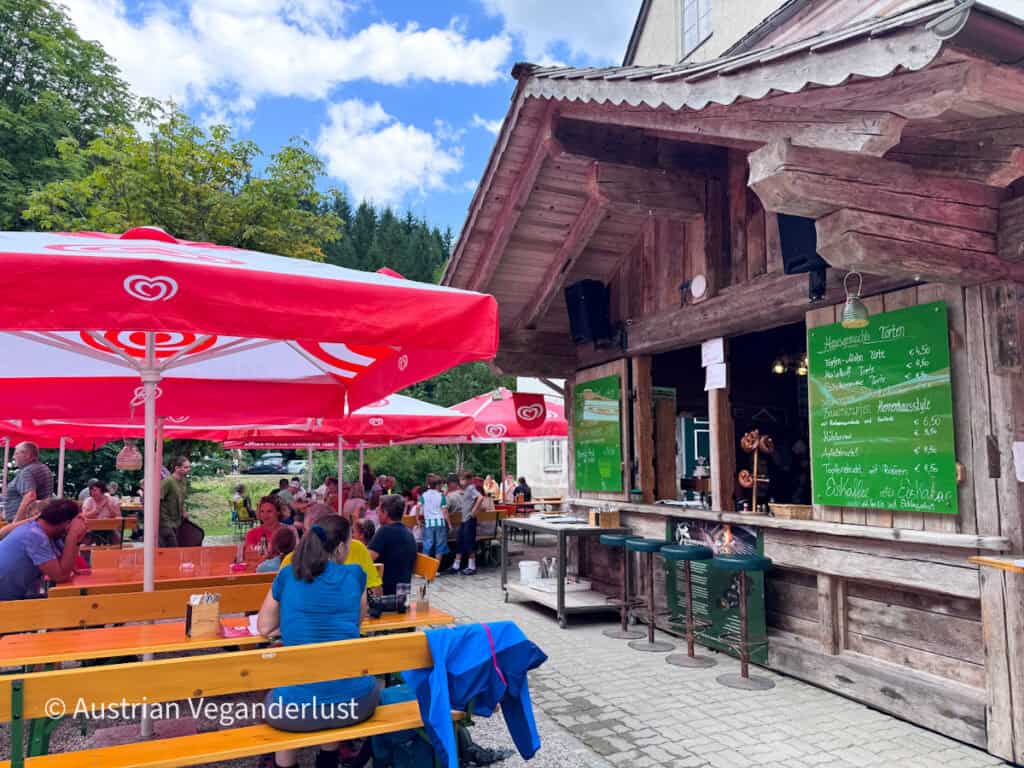
At the end of the trail there’s the restaurant Herrenhaus Mendlingtal, making it a good place to stop before heading back. There weren’t any vegan food options when I visited, so I wouldn’t rely on the restaurant for lunch, but you can stop for a drink.
The restaurant is outside the Mendlingtal ticket barrier. You’ll need to scan your ticket again if you want to walk back through the valley!
Walk Back or Take the Mendlingtal Taxi?
If you don’t want to walk the 3.5 km (2.2 miles) back, you can take the Mendlingtal Taxi to your starting point instead. I’d check the current price and availability at the ticket office when you arrive, as the service can vary.
We chose to walk back, and I’m glad we did. The trail looks surprisingly different from the other direction, and we noticed things we’d completely missed on our first walk.
Unless you’re tired or short on time, I’d recommend walking back. The trail is mostly easy and flat, so the return journey didn’t feel like a chore.
How Long Does the Mendlingtal Walk Take?
It took us around 1 hour and 20 minutes to walk the 3.5 km (2.2 miles) trail one way. We walked at a relaxed pace and only stopped briefly to eat an apple.
We decided to walk back through the valley rather than take the Mendlingtal Taxi. I actually recommend doing the same if you have enough time. Walking in the opposite direction, we noticed several little things we’d missed the first time around.
Altogether, we spent just under four hours at Mendlingtal, including visiting the museum, exploring the historic area and walking the trail in both directions.
What to Bring to Mendlingtal
- Comfortable shoes with good grip: Hiking trainers or sturdy walking shoes should be enough in dry conditions. I was wearing my Xero hiking shoes and they were perfect for the hike.
- Water: Bring a reusable water bottle, especially on a hot summer day.
- Snacks or a packed lunch: We brought some fruit with us, and I’d particularly recommend bringing food if you’re vegan.
- Niederösterreich Card: Don’t forget it if you have one, as admission is included.
- Your entrance ticket: Once you’re inside, keep it with you. You’ll need it to pass through the barriers at the other end.

Getting to Mendlingtal
By Car
I recommend visiting Mendlingtal by car. There are entrances at both ends of the valley, in Lassing and next to Herrenhaus Mendlingtal. We started from the main entrance in Lassing, where there is a car park above the entrance.
The car park isn’t huge and was almost full when we visited on a sunny Saturday in August.
By Public Transport
You can get to Mendlingtal by public transport. The closest bus stop to the Lassing entrance is Lassing Abzw. Hochkar, served by bus 643 between Göstling an der Ybbs and Palfau.
The problem is that connections are limited. On weekends, the bus only runs a few times per day, so always check the timetable before your trip and plan your return journey as well.
Getting here from a larger Austrian city will also usually take several hours and require multiple changes. I normally travel around Austria by public transport, but for Mendlingtal, I think coming by car is the much easier option.
If you’re already staying in the area, the bus can work with some planning. But I wouldn’t spend several hours travelling here just for Mendlingtal.

Mendlingtal vs an Austrian Gorge
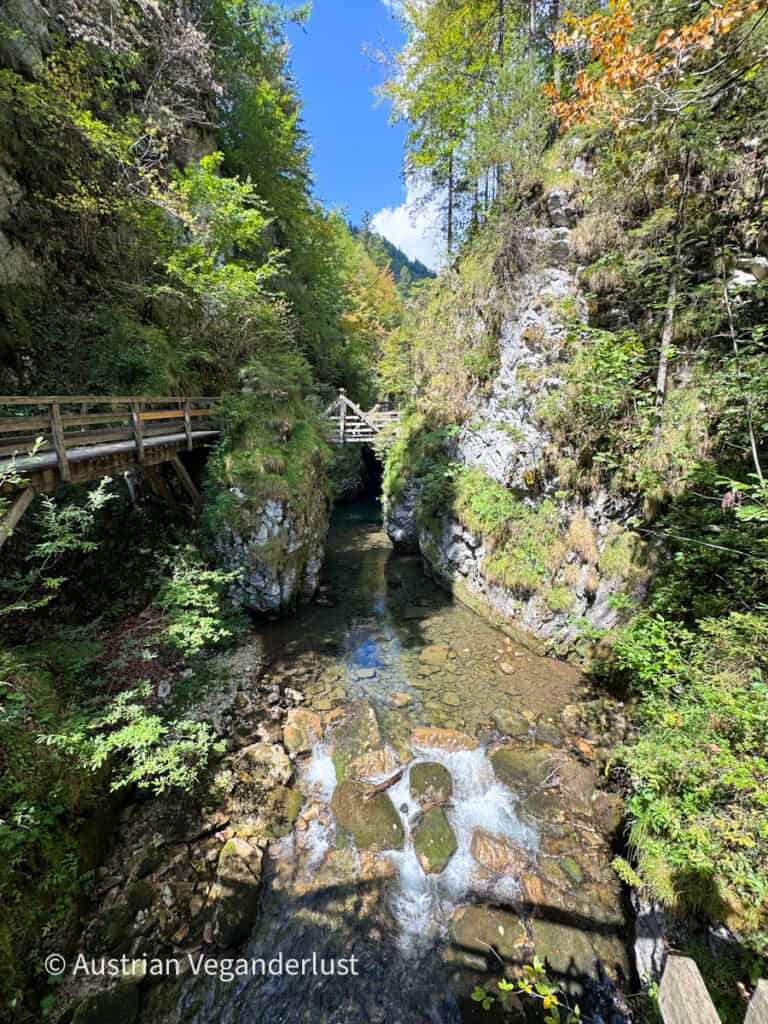
Mendlingtal reminded me of walking through an Austrian Gorge (Klamm), with the stream, forest and wooden walkways. But if you’ve visited some of Austria’s more dramatic gorges before, don’t expect the same experience here.
There aren’t any big waterfalls, and the landscape isn’t nearly as dramatic. On the other hand, Mendlingtal is much easier to walk because you don’t have to tackle lots of steep steps or climbs.
It reminded me a little of the nearby Wasserlochklamm in Palfau, but Wasserlochklamm is much steeper, more exhausting and also more impressive.
I’d choose Mendlingtal when you want a relaxed forest walk with a bit of that Austrian gorge feeling. If you’re after dramatic scenery and don’t mind a more strenuous hike, I’d choose a proper gorge instead.
Visiting Mendlingtal With the Niederösterreich Card
If you have the Niederösterreich Card, entrance to Mendlingtal is included, which is actually what finally convinced me to visit after growing up so close by.
For me, Mendlingtal is exactly the kind of attraction that makes the card fun to have. I probably wouldn’t have bought a separate ticket and planned a trip specifically to come here, but with admission already included, it was an easy choice.
And I’m glad we went. Walking through the forest, following the wooden walkways and cooling our feet in the stream made for a lovely summer afternoon.
If you’re planning to visit more attractions in Lower Austria, check out my guide to the Niederösterreich Card next to see what else is included and whether the card is worth buying for your trip.
Read more:
- 5 Beautiful Castles Near Vienna You Can Visit Without A Car
- Schloss Hof Estate: Peaceful Day Trip from Vienna by Bus
- Laxenburg Castle Park: A Peaceful Day Trip from Vienna
- How to Visit Liechtenstein Castle Near Vienna Without a Car
- Kreuzenstein Castle: A Fairytale Fortress Near Vienna
- 11 Things to Do in Baden: The Famous Spa Town Near Vienna
- 15 Things to Do in St Pölten: A Non-Touristy Side of Austria
Pin it for later: