Austrian Veganderlust contains affiliate links and is a member of the Amazon Services LLC Associates Program. If you make a purchase using one of these Amazon links, I may receive compensation at no extra cost to you. For more info, see the Disclosure Policy.
How to Get to the Wachau Valley from Vienna without a Car
Dreaming of vineyards, river views, and quiet villages just a stone’s throw from Vienna? The Wachau Valley is one of Austria’s most scenic regions, and yes, it’s completely doable without a car.
I’ve visited the valley multiple ways in every way imaginable: by train, by boat, by bike, and even hiking between the towns. So, I know all the ins and outs.
Whether you’re planning a full weekend or just a day trip, this guide breaks down how to get to the Wachau Valley from Vienna, and how to explore it once you’re there.
Let’s figure out the option that fits your plans best.
How to Get to the Wachau Valley from Vienna
To reach the Wachau Valley by public transport, you’ve got two main entry points: Krems an der Donau in the east and Melk in the west. Both are well connected to Vienna by train. Depending on where you want to start exploring, either one works.
By Train
- To Krems an der Donau
Take a direct train from Wien Spittelau or Wien Heiligenstadt. The ride takes just over an hour and brings you straight to the eastern entrance of the Wachau. This is the best starting point if you’re heading to Dürnstein or Weißenkirchen. - To Melk
If you’re coming from Wien Hütteldorf, you can catch a direct train to Melk. Melk is the better option if you want to explore the valley from west to east or start with a visit to Melk Abbey.
Trains run frequently throughout the day, and tickets can be bought at the station or online through the ÖBB website. There’s no need to reserve seats.
From Vienna’s main station (Hauptbahnhof) trains are even more frequent but you’ll need to change trains once.

How to Get Around the Wachau Valley Without a Car
You really don’t need a car to explore the Wachau, and honestly, it’s better without one. Here’s a breakdown of each option I’ve personally used:
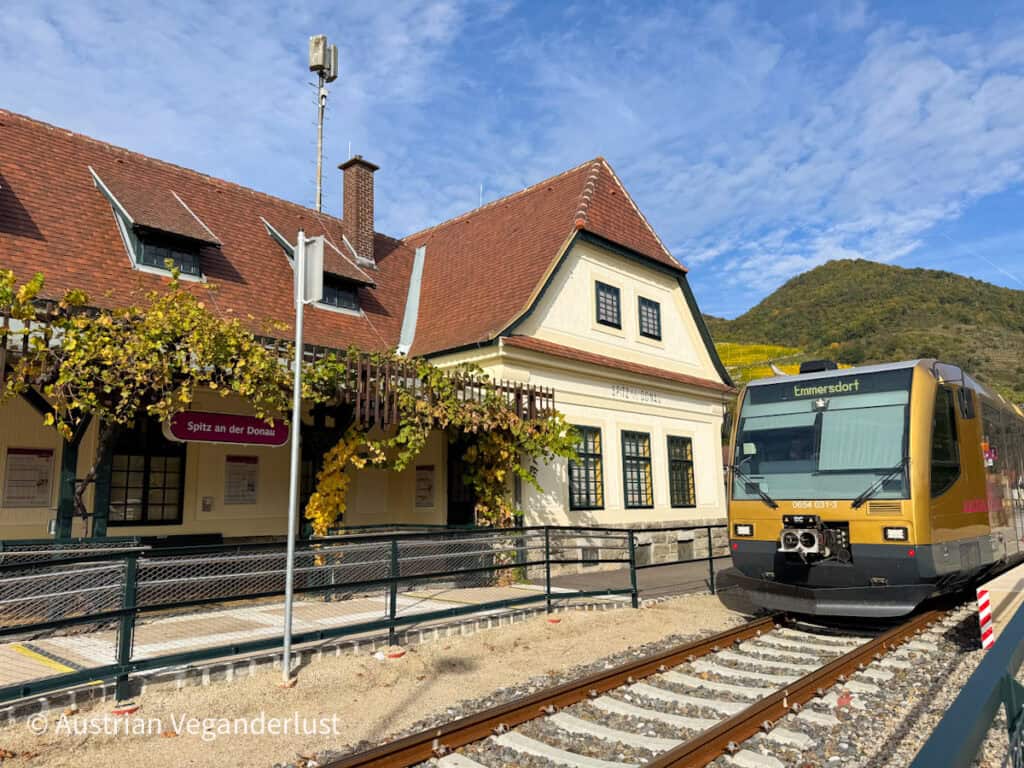
Wachaubahn
The scenic railway between Krems and Emmersdorf (near Melk) is one of the prettiest train rides in Austria. It runs on the north side of the Danube and stops in key towns like Dürnstein, Weißenkirchen, and Spitz.
- Seasonal schedule:
- Daily: Early May to end of October
- Weekends only: Mid-March to end of April, and November
- Frequency: Only 4 times a day in each direction, check timetable here
- Tickets: €2.50 per stop (the whole way is 12 stops), or €27 for a day ticket
- Note: You’ll need to take a bus between Emmersdorf and Melk
The views are gorgeous, vineyards, hills, river, but the ticket price felt steep. I used my NÖ Card so it didn’t hurt as much, but otherwise, it’s best for visitors with a fixed plan and good time management.
Bus 715 (North Side)
This is the most practical and affordable way to get around.
- Connects Krems, Dürnstein, Weißenkirchen, Spitz, and Melk
- Tickets are inexpensive, and you can buy them directly from the driver
- Downside: The scenery isn’t that special from the window, and it’s not very frequent
- Not visible on Google Maps, check the VOR AnachB app for schedules
If you want to visit multiple towns in one day without breaking the bank, this is your best bet.
Bus 720 (South Side)
This line runs between Melk and Krems on the opposite bank of the Danube and is especially useful if you’re visiting Aggstein Castle.
That’s how I got there for the medieval Christmas market at Aggstein Castle. Just like the 715, it’s cheap but not frequent, check the schedule in advance.

River Cruise
The most picturesque, but also the slowest and priciest.
- Around 4 departures per day in each direction, check schedule here
- Not all boats stop in every town, check your route carefully
- You can’t hop off and back on with a single ticket
- Return tickets don’t give you enough time to explore during the stop (30 minutes max)
- There’s audio commentary, but I couldn’t hear it from my seat.
I sat on the open-air deck the whole way, the views were lovely, but the ride from Krems to Melk took 3 hours. One way was more than enough for me.

Cycling
Rent a bike and cruise along the Danube Cycle Path. I expected a riverside ride, but it mostly winds through vineyards and villages, still stunning.
The Nextbike app makes rentals super easy, but they’re not the most comfortable. Great for short distances like Krems to Dürnstein, but longer rides might get uncomfortable.

Hiking
The Welterbesteig Wachau trail connects many towns through scenic routes. You’ll need time and sturdy shoes, but the views are unforgettable.
Just be prepared, signage is usually good, but the signs never show travel times, so planning ahead helps.
Tips for Exploring the Wachau Valley Without a Car
- Mix and match your transport
The best way to explore is a combo of options. Take the train or bus one way, a cruise the other, and maybe rent a bike or walk between towns. - Plan ahead
Transport options like the Wachaubahn, cruise, and buses aren’t that frequent. Use the VOR AnachB app or website to check current timetables (Google Maps won’t show any local buses). - Consider a return trip from a different point
For example, travel in via Krems and return from Melk, or the other way around. It lets you see more of the valley without doubling back. - Check seasonal schedules
Especially for the Wachaubahn and the cruise, they don’t run year-round and weekend-only service outside summer can limit your options. - Use the bus if you’re short on time
It’s not glamorous, but it gets you from A to B quickly and affordably. - Be flexible
Things don’t always run on time and small towns shut down earlier than you might expect. If your plan includes hiking or biking, allow for plenty of daylight and bring snacks and water. - Get the NÖ Card if you’re visiting several places
Some transport options (like the Wachaubahn and the river cruise) and attractions are included and can save you money if you visit more attractions in Lower Austria / the surroundings of Vienna.

Should You Take a Guided Tour?
You don’t need a guided tour to explore the Wachau Valley, but it can be a smart choice if you’re short on time or want to experience more without the hassle of planning.
Tours often include stops in charming towns like Dürnstein and Spitz, along with wine tastings, a Danube river cruise, and even a visit to Melk Abbey.
Perfect if you want to sit back, enjoy the views, and maybe discover a new favourite wine along the way without having to deal with public transport..
🍇 Book your day tour from Vienna to the Wachau Valley now!

Final Thoughts about Where Do Go
The valley is one of Austria’s most stunning regions, and going by boat, train, or bike lets you soak in the scenery rather than stress about parking or traffic.
I’ve tried just about every route and combination, and my advice is to stay flexible. Pair practicality (bus or train) with slower, scenic options like a short cruise or a vineyard-side cycle ride. That way you’ll get the best of both worlds.
Not sure where to go first? Check out my guide to which town in the Wachau Valley is right for you. Whether you’re into castles, wine tasting, or slow strolls through cobblestone streets, there’s a spot that fits your vibe.
Read more:
- Where to Stay in Wachau Valley: Best Towns & Hotels
- How to Get to the Wachau Valley from Vienna without a Car
- Best Things to Do in Melk: Explore the Abbey & More
- How to Plan the Perfect Day Trip to Melk from Vienna
- How to Visit Dürnstein Austria: Wachau’s Fairytale Village
- Dürnstein Castle: How to Visit the Wachau’s Most Iconic Ruin
- Hiking Near Dürnstein: Scenic Trails in the Wachau Valley
- Weißenkirchen in der Wachau: Peaceful Stop Between Vineyards
- How to Visit Spitz Wachau: Austria’s Beautiful Wine Village
Pin it for later: