
Austrian Veganderlust contains affiliate links and is a member of the Amazon Services LLC Associates Program. If you make a purchase using one of these Amazon links, I may receive compensation at no extra cost to you. For more info, see the Disclosure Policy.
Dürnstein Castle: How to Visit the Wachau’s Most Iconic Ruin
High above the pastel rooftops of Dürnstein, the crumbling walls of a medieval castle watch over the Danube, and the short hike up to get there is one of the most rewarding experiences in the Wachau Valley.
I thought it might be one of those spots you visit just to “tick it off.” But as I stood among the ruins, reading the story of a kidnapped king and looking out over golden vineyards in the evening light, I realized this was far more than just a photo stop.
Whether you’re into history, hiking, or simply love a good view, Dürnstein Castle is absolutely worth the climb. Here’s everything you need to know to plan your visit.
Quick History of Dürnstein Castle
Dürnstein Castle dates back to the 12th century, and while it now stands in ruins, it once played a dramatic role in European history.
Its most famous moment came in 1192, when King Richard the Lionheart of England was captured near Vienna while returning from the Crusades. He was imprisoned right here in Dürnstein Castle, an event that caused international uproar.
To secure his release, the English crown paid a staggering 100,000 silver marks in ransom, an astronomical sum at the time. For context: a horse cost 3 silver marks back then.
Austria used the money to strengthen cities, build defences, and found new towns. So while Richard’s stay was short-lived, his legacy quite literally shaped the region.
Today, all that remains of the castle are its weathered stone walls, but the story lives on, especially along the easy hiking path, where the tale unfolds step by step.
How to Get to Dürnstein Castle
Dürnstein Castle sits just above the old town. At the Kremser Tor, the main gate into the old town, you’ll see a sign pointing to two different trails:
Leichte Variante (Easy Path)

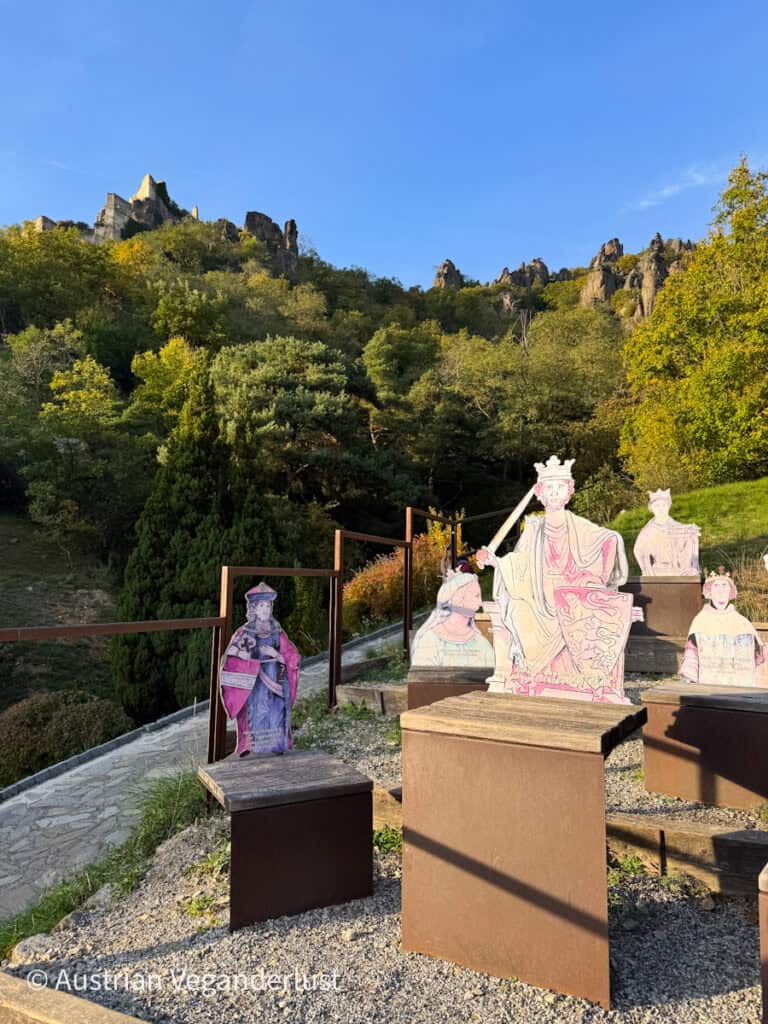
This is a wide gravel path that winds gently through the forest. It’s signposted as the “Leichte Variante” and marked as part of the Ruinenweg on Google Maps. It starts just after the Kremser Tor, heading uphill.
Along the way, you’ll find bilingual information signs (German and English) telling the fascinating story of Richard the Lionheart, who was imprisoned in the castle in the 12th century.
The signs are in chronological order, so I highly recommend this route for the way up. It’s listed as 25 minutes, but depending on your pace and how long you stop to read the signs, expect a bit more. It took me about 30 min.
Eselsteig (Steeper Path)
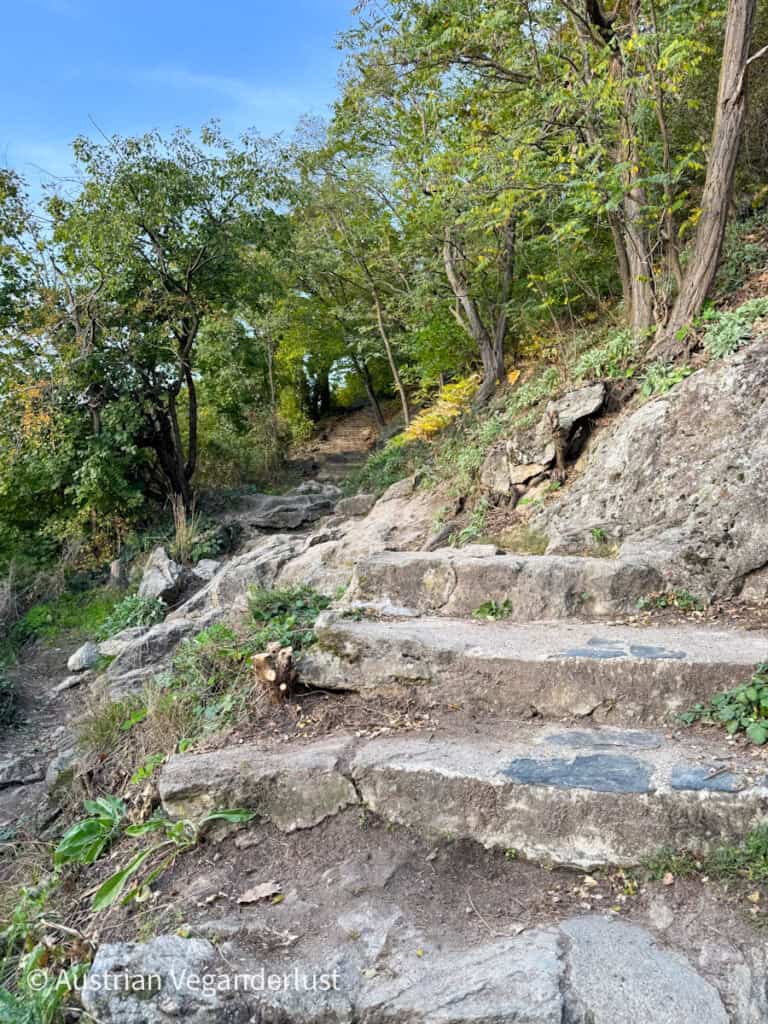

The “Eselsteig” is signposted as taking 20 minutes, but the path is steeper and uneven, with lots of rocky steps.
I took this trail on the way down, and while it’s not technically difficult, you’ll want sturdy shoes and a bit of care, especially if it’s wet. You can choose this path for the way down if you don’t want to walk the same way back.
Not sure how to get to Dürnstein itself? I’ve got you covered, check out my Dürnstein Austria travel guide for transport options.

What to Expect at the Top
Once you reach the top, you’re free to wander through the ruins, no ticket, no opening hours, and no fences. It’s one of those rare places that still feels a bit wild.
You’ll find crumbling walls, old staircases, and incredible viewpoints. There are no railings, so you do need to be careful, especially if you’re exploring with kids or in less-than-perfect weather.
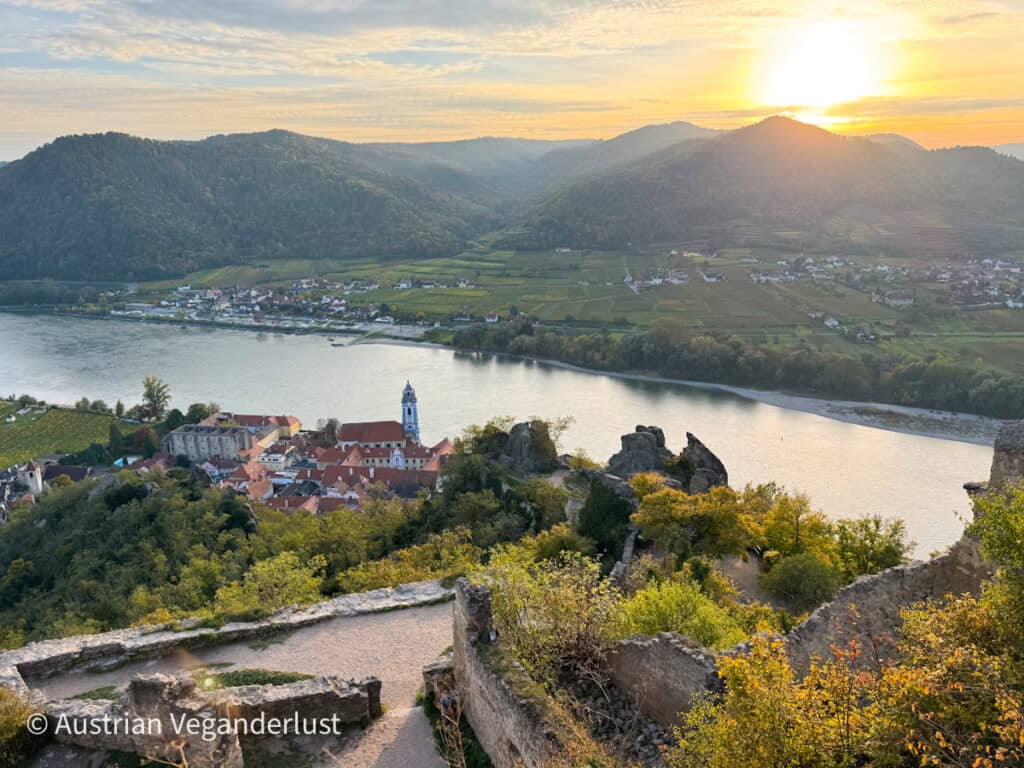
The views? Absolutely stunning. From the top, you get a panoramic look over Dürnstein, the winding Danube, and the vineyard-covered hills of the Wachau Valley. I visited near sunset, and the golden light across the valley made it truly incredible.
Even though the castle is one of Dürnstein’s most popular attractions, I was surprised how peaceful and empty it felt up there when I visited late October.
Best Time to Visit Dürnstein Castle
You can visit the castle year-round, but not every season, or every time of day, offers the same experience.
Best Seasons to Visit
- Autumn is one of the most beautiful times to hike up, the vineyards turn golden and the valley glows with colour. It’s when I visited and I loved it!
- Spring brings the famous Wachau apricot blossoms, and the trail feels especially fresh. You can even check the Apricot blossom webcam.
- Summer is perfect for clear skies, lush green hills, and long days, but it can get hot, so bring water.
- Winter or rainy days aren’t ideal, the stones can get slippery, and the ruins as well as the trail (especially the steeper one) become more hazardous.
Best Time of Day
I visited around sunset, and it was absolutely magical. The golden hour light over the Danube and the vineyards was one of the highlights of my whole trip.
But, there’s no lighting on the trail, so you need to head down immediately after sunset and be careful that you’re not caught in the dark.
Mornings are a great alternative if you prefer quieter trails and cooler temps. The castle often feels peaceful and empty before the midday visitors arrive.

Tips for Visiting Dürnstein Castle
- Take the easy way up: I recommend the Leichte Variante for the ascent so you can read the Richard the Lionheart story in order. For the way down, either path works fine.
- Wear good shoes: Even if you take the easy route up, the trail is still uphill and uneven in places. If you take the Eselsteig down, you’ll want something with grip.
- Avoid poor weather: The stones at the top can get dangerously slippery when it’s wet or icy.
- Bring water: Especially in summer, and especially if you’re continuing on to another hike afterwards.
- Don’t rush it: The view from the top is worth lingering. If the weather’s good, take your time and enjoy it.
- Come early or late: For fewer people and better light, mornings and just-before-sunset are ideal, but be careful not to stay too long after dark.

Final Thoughts: Hiking near Dürnstein
Whether you’re taking a short walk up from the village or setting off on a longer trail through vineyards and forested hills, this area is a dream for anyone who loves combining nature, views, and a bit of medieval drama.
The short hike to the castle is just the beginning. If you have more time and energy, there are plenty of scenic routes that start right from the village and lead to some of the most stunning viewpoints in the region.
Want to explore more trails? Head to my guide to hiking near Dürnstein for the best routes, tips, and panoramic lookouts you won’t want to miss.
Read more:
- Where to Stay in Wachau Valley: Best Towns & Hotels
- How to Get to the Wachau Valley from Vienna without a Car
- Best Things to Do in Melk: Explore the Abbey & More
- How to Plan the Perfect Day Trip to Melk from Vienna
- How to Visit Dürnstein Austria: Wachau’s Fairytale Village
- Dürnstein Castle: How to Visit the Wachau’s Most Iconic Ruin
- Hiking Near Dürnstein: Scenic Trails in the Wachau Valley
- Weißenkirchen in der Wachau: Peaceful Stop Between Vineyards
- How to Visit Spitz Wachau: Austria’s Beautiful Wine Village
Pin it for later:


